
Scotsman Obituaries: John P Dick, Keeper of Conservation at National Galleries of Scotland
John P Dick OBE, Keeper of Conservation. Born: 14 January 1936 in Leith. Died: 24 December 2025 aged 89
After a career spanning almost four decades, it was fitting that John Dick, the former Keeper of Conservation at the National Galleries of Scotland, should dedicate the last two years of his career to the restoration of arguably the collection’s most celebrated works, Titian’s Diana and Actaeon, and Diana and Callisto.
Painstakingly, over many months, the quietly spoken Dick set about the tasks of lining and cleaning the two enormous Renaissance masterpieces, mesmerising even experienced colleagues with his deep understanding of the artist’s techniques as he meticulously applied his own skills to reveal the canvases in all their glory.
“One of my strongest memories is of John cleaning the Titians and spending many hours looking with him, learning to see what he saw and watching them change as he worked on them,” recalled Nicola Christie, Head of Paintings Conservation at the Royal Collections Trust who worked with Dick at NGS in the Nineties.

His attitude to restoration, said Lesley Stevenson, NGS’s Senior Paintings Conservator, was simply remarkable. “Less is more was never more apt a description of how he worked,” she said. “John rightly insisted that the original artist’s work should never be outshone by the efforts of a later intervention.”
Dick, who retired from NGS in 1999, died on Christmas Eve, aged 89. In his later years, despite failing health, he retained an acerbic sense of humour and a delight in art. Duncan Thomson, the former Director of the Scottish National Portrait Gallery and contemporary of Dick, recalled a final outing together to visit cottages in the village of Temple once occupied by William Gillies, an artist Dick admired deeply. “Though frail, John was still himself, dryly witty, and happy,” he said.
If the restoration of the Titians was a fitting coda to his professional career, down the years Dick restored many great works in the national collection as well as quietly playing a key role in drawing together some of the galleries’ most important exhibitions.
According to former colleagues he could seem taciturn, sometimes “spiky”, but at close quarters he was patient, thoughtful and “generous with his immense knowledge”, an expert whose “keen eye and sharp intellect” could both inspire his staff and, when necessary, convince his bosses.
Michael Clarke, former Director of the Scottish National Gallery, recalled the cleaning of works by Raphael in the early 1990s, including the world-famous Bridgewater Madonna. “There was a strong conservative faction that was against any cleaning whatsoever,” Clarke said. “John always appraised the facts objectively and was up for the task. The results were brilliant and the pictures transformed.”
It was to NGS’s great benefit that Dick was also an innovator, helping to earn this relatively small department a global reputation for excellence. Quick to grasp the importance of new technology he was a pioneer in what today is called “technical art history”.
He invested in groundbreaking X-ray and infrared kit to peer under the surface of artworks and purchased specialist microscopes, which could analyse the tiniest fragments of paint. Original research driven by such innovations was published in numerous NGS catalogues, including the book for the major Raeburn exhibition of 1997, which transferred to London’s National Portrait Gallery.
These achievements, impressive in themselves, seem all the more extraordinary for a man who was born in a Leith tenement and left high school at 14. The son of Sandy, a boilermaker, and Elizabeth, he appears to have struggled with maths at school but his aptitude for art was obvious and as a teenager he was offered an apprenticeship as a carver and gilder at Aitken Dott. A privately owned gallery – the forebear of the Scottish Gallery on Edinburgh’s Dundas Street – Aitken Dott played a key role in promoting contemporary Scottish art in the aftermath of the Second World War, and as part of his duties, Dick met the artist Anne Redpath, and in Glasgow encountered Joan Eardley when he was sent to fetch new works from her studio for framing.
Recruited by NGS in the early Sixties, he was initially based at the conservation studios in Ainslie Place, Edinburgh as a technician before being trained as a specialist paintings conservator as planned successor to Harry Woolford, the Chief Restorer at NGS and a major figure in the conservation world at the time. Ainslie Place also housed the department of prints and drawings where Dick encountered Keith Andrews, the Keeper of the collection who would become a close friend and mentor, teaching Dick the German language in informal evening lessons, encouraging his love of classical music, and eventually helping him to establish links in the broader European art scene.
For his part, Dick was unfailingly thoughtful, helping Andrews, disabled by a childhood bout of polio, whenever he needed physical assistance.
Thomson recalled Dick attending painting classes at Edinburgh College of Art as part of his training. “This must have contributed to John's unrivalled understanding of the thought processes of the great painters of the past when he came to carry out conservation work on the collections,” said Thomson, who curated the famous 1997 Raeburn show.
“His knowledge of Raeburn's paintings and his stylistic characteristics was exceptional and contributed so much to my understanding of the artist, and to the success of the exhibition.
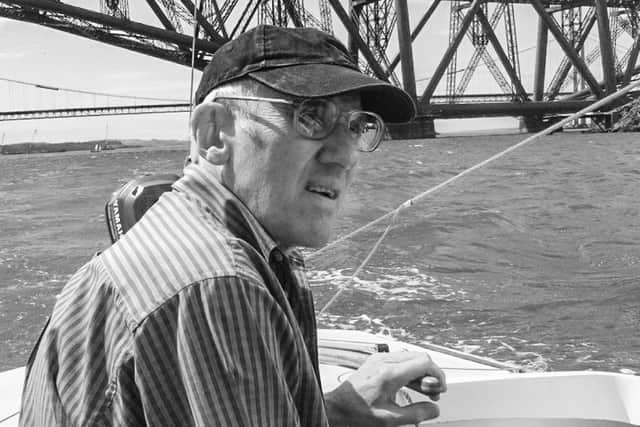
Away from the inevitable stresses and rigour of professional life in middle age he found an escape in sailing at Cramond on the Forth estuary and along the east coast, becoming Commodore of Cramond Boat Club from 1998-2001.
He was awarded the OBE, an honour he accepted in 1999 only “in order to please his by then very elderly mother”, a colleague recalled.
Dick was married to Margaret, from Stockbridge in Edinburgh, for 59 years until her death in 2017. He is survived by his two sisters, four children, six grandchildren and three great grandchildren.
Obituaries
If you would like to submit an obituary (800-1000 words preferred, with jpeg image), contact [email protected]