
Obituary: David Gow, former Scotsman and Guardian journalist
David Richard Gow, journalist. Born April 7, 1945; died November 3, 2025 aged 80
David Gow was a man fully engaged in the world. The former Scotsman journalist retired in 2012, but never ceased to be a player in civic society. As he hit his 80th birthday in April, he talked about slowing down but showed little sign of doing so.
Gow, who died in St Thomas’ Hospital after collapsing from a heart attack at a memorial event in London, was always up to something: tending the allotment he shared with social work consultant Maggie Mellon in Edinburgh; volunteering twice a week behind the counter at the British Red Cross charity shop on Leith Walk; publishing articles on the Sceptical Scot website three years after he and his co-editor Fay Young had officially called it a day.
He seemed indefatigable. Even while being fitted for a pacemaker at Edinburgh’s Royal Infirmary earlier this year he found the energy to email me from his hospital bed.
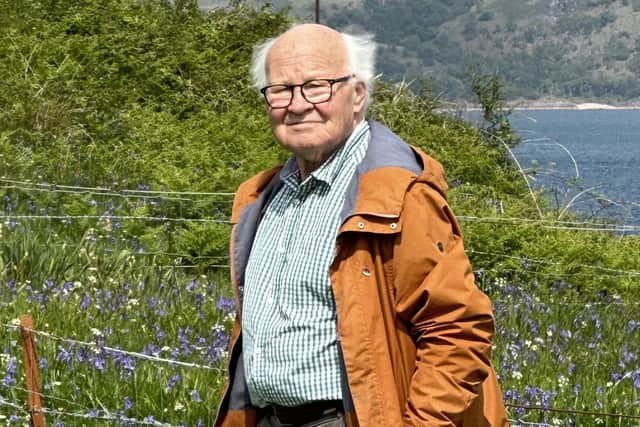

If he was not at home in his Edinburgh New Town flat, he would be with his wife Gayle at their lodge overlooking Loch Earn by St Fillans in Perthshire, cultivating its hillside plot. And if he was not there, this life-long “Francophile, Germanophile and all-round Europhile” would be on the continent, whether with friends in Brussels or holidaying in France or Portugal.
Until 2021, he had spent his summers in a cottage in Aumelas, near Montpellier, selling up as a consequence of Brexit. That only reinforced his dismay at the UK’s departure from the EU.
His co-founding of Sceptical Scot was characteristic of his social commitment. The website was aimed at “all who care about Scotland’s future, regardless of how they vote”. It was sceptical – as opposed to cynical, which Gow never was – because “none of us can lay claim to absolute truth”. That he named his Substack newsletter “Cosmopolitan Villager” neatly summed up his twin commitments to the international and the local.
“David was not only the best kind of journalist, but he was the best kind of Scot,” said Young. “He was interested and confrontational, often, but also willing to listen to other points of view and not taking a grudge if somebody had a different opinion. Sceptical Scot was tapping into that great desire for an honest, human discussion.”
Gow was born in Edinburgh in 1945 and grew up in York. His mother, Eve, was serving in the Women’s Royal Air Force when she met his father, Robin, an insurance worker. He was educated at the University of Oxford and studied modern languages.
His formative work as a journalist was on The Scotsman where he was taken on as a graduate trainee in 1969 and stayed for two decades. He was this newspaper’s first Europe correspondent just as Prime Minister Edward Heath was negotiating the UK’s entry to the European Economic Community. That was followed by stints covering industrial relations in the UK and reporting from London.
“His time at The Scotsman was hugely important,” said Young. “That time in Scotland was really exciting. In the lead-up to the devolution referendum of 1979, the polar opposites were Tam Dalyell, against devolution, and Jim Sillars, passionately for it. David had both Tam and Jim in him: he could see both sides and engage with all kinds of people in a lively way.”
From The Scotsman, he moved in 1989 to the Guardian newspaper. After a short spell as education editor, he was appointed German correspondent, his facility for languages serving him well in the wake of the fall of the Berlin Wall. Six years later, he returned to London and then to Brussels where he became European business editor, a post he held until his retirement.
In 1975, he contributed to The Red Paper On Scotland, a collection of essays edited by future prime minister Gordon Brown. In 2013, he co-wrote Basta! An End To Austerity Politics, about democratic and economic renewal in the EU. Other roles as a journalist included editor of Social Europe, a forum for the discussion of politics, economics and society. He was also a consultant editor of the Jacques Delors Centre, Berlin.
He married his first wife Sue Lewis in 1990 and had a daughter, Gemma. After Sue’s death from cancer in 2001, he was asked to cover for a colleague’s maternity leave on the Guardian’s Wall Street desk. In New York City, he met Gayle Brinkerhoff, an opera singer, whom he married in 2002.
After his retirement, he and Gayle returned to Scotland as the independence referendum approached. He set about cultivating discussion between both sides of the Yes/No divide. Sceptical Scot was a consequence of that.
In 2023, he was elected as a Fellow of Royal Society of Edinburgh, for which he chaired the RSE Scotland-Europe Initiative. As well as being a council member of the Federal Trust research institute, he was a trustee of the David Hume Institute, being attracted to its ambitions for a sustainable, inclusive and fair Scotland.
Gow wore these achievements lightly. He was serious in his commitment to social justice, but quick to chuckle and never without a mischievous sparkle in his eye. I knew him as a level-headed activist in the National Union of Journalists (NUJ), as good humoured as he was passionate about hot topics such as freedom of information and the wars in Gaza and Ukraine. He was the treasurer of Edinburgh Freelance Branch and sat on the union’s Scottish Executive Council and the National Executive Council.
“In the tributes coming into Sceptical Scot, the word ‘irreverent’ is coming up a lot,” said Young. “Somebody once asked him whether Sceptical Scot was a job description or a sign of his character. It was both! He was great fun.”
He is survived by Gayle, Gemma, three grandchildren, three great-grandchildren and his brother, Rod.
Obituaries
If you would like to submit an obituary (800-1000 words preferred, with jpeg image), contact [email protected]