
We need to have a discussion about rape in Scotland - just not the one Q Manivannan wants to have
While this week has focused on the poorly-judged comments of Q Manivannan, I hope we can move on by making things better for rape survivors

There has been a great deal of discussion this week about how we look at rape.
Q Manivannan MSP hit the headlines after comments they made in a podcast resurfaced, where the Edinburgh and Lothians East MSP said rape is a “spectrum” and rapists are “demonised”.
The discussion itself was very academic and it was very unclear what point Manivannan was trying to make. But, unsurprisingly and quite rightly, the comments that were decipherable have caused widespread upset.
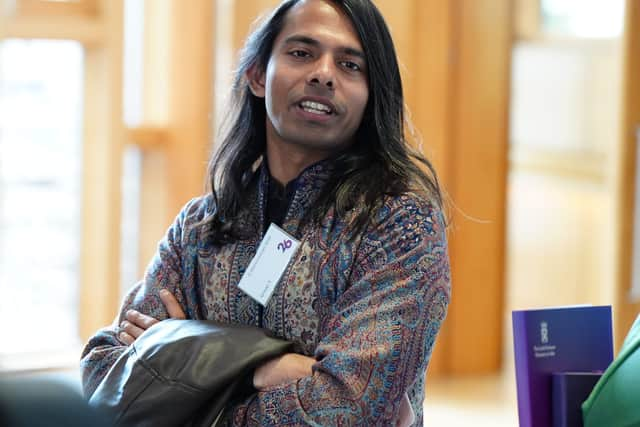

There have been calls for them to have the whip removed and for the Scottish Green co-leaders to make a public statement on the matter.
While there are many, many problems with Manivannan’s comments, it has at least sparked a widespread discussion about rape, and one that is long overdue here in Scotland.
Conviction rates for rape and attempted rape remain stubbornly low, amongst the lowest of any crime.
In 2021/22, just 48 per cent of rape cases that made it to court ended up in a conviction. This is compared to an overall conviction rate of 88 per cent.
Too many survivors say their experience of the justice system is just as traumatising as the rape itself, and while there have been changes to the requirements for corroboration in rape cases in recent years, it is still a barrier to justice.
There have been attempts to try and make things better for survivors.
Last year Holyrood passed the Victims, Witnesses and Justice Reform (Scotland) Act which will pave the way for the creation of a special sexual offences court. It also includes provisions for automatic independent legal representation when defence lawyers want to use evidence relating to a complainer’s sexual history or character, and restricting what can be said in court about a complainer’s sexual history.
However, proposals to have juryless trials for rape cases were dropped from the bill after criticism from lawyers.
This all shows there is still a lot that needs to be done to improve the justice system for rape survivors in Scotland. Hopefully on the back of Manivannan’s poorly-judged comments we can make some progress in this regard.
There is another interesting point that we can look at here. Manivannan said they were sorry for their use of “abstract language” in the podcast.
So often, rape happens between two individuals who already know each other, and either consent has not been explicitly given, or it has been ignored.
Here is where there is no “abstract language” - it is a simple case of “yes” or “no”. It is really important that everyone remembers this, and muddying the waters by using complicated language or making it seem more complex than it is, is not helpful.
Women have spent what seems like eons trying to highlight the importance of consent, and a lot of progress is being made. Just look at how often consent is made an integral part of sex scenes in film, television and books, for example.
But progress does not mean the problem is eradicated - far from it, in this case. We all need to do more to highlight the importance of consent, and I hope that is another discussion we as a country can now take.
Hopefully constructive discussions on how we treat rape, and more importantly how we treat survivors, can help us move on from what has been a rather bleak week for the safety of women and girls.
Comments
Want to join the conversation? Please or to comment on this article.