
We all need a stable and practical UK-EU relationship
Dr Irene Oldfather says that “against a backdrop of geopolitical instability and economic uncertainty, it is increasingly important that the UK and EU work together to deliver tangible benefits for businesses, workers and citizens”.
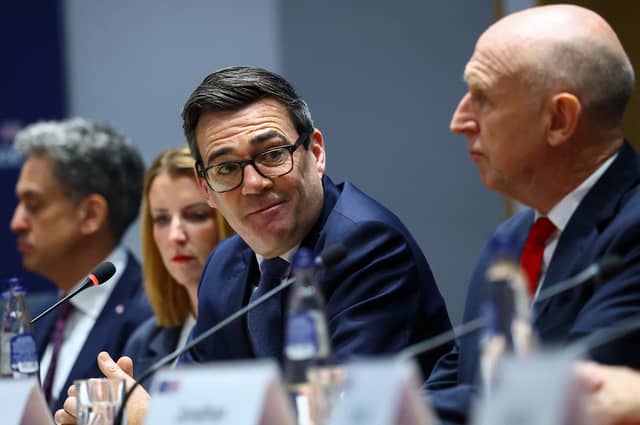

Leaders from the United Kingdom and European Union gathered once again to discuss the future of their relationship.
The continuing commitment from both sides to engage constructively and build on the progress made since the inaugural UK-EU Summit in May 2025 is welcomed.
That momentum matters.
The world is fragile and uncertain. Against a backdrop of geopolitical instability and economic uncertainty, it is increasingly important that the UK and EU work together to deliver tangible benefits for businesses, workers and citizens.
For the UK, the EU is not simply a near neighbour. Having been a Member State for almost 50 years, the UK shares common ambitions with the EU for peace, liberty, freedom, economic security and human rights.
Their economic progress has been built on these foundations and, in an increasingly fractured geopolitical landscape, it is clear that they remain trusted partners with common goals.

The UK and EU's shared commitments to labour rights, social standards and climate action are part of economic progress, not contrary to it.
The importance of this week's summit is reflected in the economic relationship between the UK and EU. The European Union remains the UK's largest and closest trading partner.
Recent British Chambers of Commerce analysis shows that trade with the EU accounts for 41.3 per cent of UK exports and 49 per cent of imports.
Enough Brexit damage has been done.
Read more: Scotland’s Brexit referendum result shows how rejoin EU campaign can be won – Martin Roche
The often quoted Office for Budget Responsibility report estimates that Brexit has reduced UK trade intensity by 15 per cent, lowered productivity by 4 per cent compared with what would otherwise have been expected, and reduced GDP by between six per cent and eight per cent.
The costs have accumulated over time. Post-Brexit red tape has imposed significant burdens on businesses on both sides.
Between 2018 and 2025, UK agri-food exports fell by £4.7 billion, representing a 24 per cent decline, while imports from the EU fell by £1.5 billion.
Brexit is not one single cost. It is the cumulative effect of multiple barriers and restrictions, including customs declarations, which have been estimated to cost businesses £1.8 billion, limited recognition of professional qualifications, restrictions on business mobility, the decline in language learning and restrictions on touring artists.
A decade on from the referendum and six years after the Trade and Cooperation Agreement came into force, issue by issue fixes will not provide the long term stability that this relationship requires.
Summits provide an opportunity to secure a relationship with Europe that is stable, practical and capable of supporting economic growth for a generation.
The shared ambition of making trade easier and cheaper is strongly supported.
A comprehensive Sanitary and Phytosanitary Agreement has the potential to reduce barriers, lower costs and deliver benefits for businesses of all sizes, particularly the small and medium sized enterprises that are the lifeblood of the UK economy. Such an agreement can also help bring down food inflation and reduce friction on goods moving to Northern Ireland.
Similarly, linking UK and EU emissions trading schemes would provide benefits for industry on both sides while supporting their shared environmental ambitions.
The establishment of a Youth Experience Scheme has long been supported. Opportunities for young people to once again live, work, travel and study across the UK and EU would strengthen ties between future generations and help rebuild connections that have been lost.
A structured security and defence partnership would also strengthen UK and EU support for Ukraine, improve European defence readiness and help address emerging hybrid and cyber threats.
Taken together, these developments would demonstrate that the UK-EU relationship has fundamentally shifted for the better.
However, the emerging ‘Made in Europe’ agenda presents challenges for both British industry and civil society. Industry has been clear that the most effective response to unfair trade practices affecting both sides is a collective one.
UK and EU supply chains remain deeply interconnected. For the European Union to achieve its industrial ambitions, the United Kingdom should be included on mutually beneficial terms.
Equally, if the UK and EU are to find solutions to their shared economic challenges, they must keep markets open and avoid actions that unintentionally harm one another.
Summits should also be viewed as an opportunity to broaden discussions about the future UK-EU relationship. While progress has undoubtedly been made, from the perspective of industry and civil society the partnership has not yet reached its full potential.
The messages from Brussels are becoming clearer. The period of common understanding is coming to a close, and there is no more room for cherry picking.
It's make your mind up time. Are we wanting to be in or out?
Dr Irene Oldfather is Director, Health and Social Care Alliance, Chair of the Scottish Advisory Forum on Europe and Chair of the UK Domestic Advisory Group
Comments
Want to join the conversation? Please or to comment on this article.