
What 22 years in Police Scotland taught Ryan MacDonald about leadership, trauma and survival
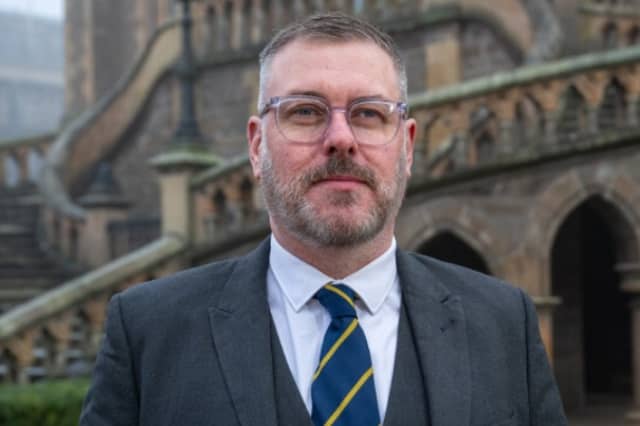

Ryan MacDonald shares insights from his 22 years in Police Scotland, highlighting leadership challenges, trauma management, and survival strategies.
Dundee-raised former senior inspector Ryan MacDonald reflects on 22 years in Scottish policing and the trauma officers carry behind the uniform.
Frontline leadership can mean making decisions within seconds, delivering devastating news to families and supporting colleagues before the next emergency call arrives. Ryan MacDonald experienced those pressures throughout more than 30 years of military and police service.
A former Police Scotland Senior Inspector and Royal Air Force Police veteran, Ryan served in counter-terrorism, intelligence, surveillance and major crime roles. As a Critical Incident Commander, he oversaw incidents involving homicide, suicide and serious violence. Years of repeated exposure to trauma eventually led to complex PTSD and his medical retirement. He later documented his experience in his bestselling memoir, Blue Lights, Dark Mind. Champions Speakers
In this exclusive interview with the Inspirational Leadership Speakers Agency, Ryan discusses the realities hidden behind the uniform, making high-stakes decisions and the police culture that can prevent officers from seeking support. He also explains why leaders must be able to speak openly about their mental health.
Q. What does the public misunderstand about the pressures facing frontline emergency workers?
Ryan MacDonald: “The thing most people never see or understand is what happens behind closed doors. Everybody sees the dramatic police interceptors or chases on television, or programmes with the ambulance service heading to people’s houses. What they do not see are the sudden deaths, the suicides and the family you have to pass a death message to.
“Even after that, as a leader, you have to make sure the staff are okay and that support is around them. Police officers are so busy now. They go from call to call every shift. It is relentless. There is no stopping, so finding time between incidents to make sure that support is there is challenging.
“That is the biggest part no one ever sees. People are quick to say: “I phoned the police and two hours later they’re still not there.” There might be some truth to that, but it is not because they are sitting having a lunch break.
“In nearly 25 years of working in the police, I could probably count on two hands the number of lunch breaks I have had. You just do not get a lunch break. That is what people do not see behind the uniform.”
Q. How do senior police officers make decisions when lives may depend on the outcome?
Ryan MacDonald: “Leadership in those circumstances can be varied. As a police leader, there are opportunities to take a slow, methodical approach to decision-making. For example, I might have had a search warrant come across my desk and needed to plan a team to execute that warrant and arrest someone.
“However, there are plenty of incidents where, as a duty officer, my radio would go and I would be told: “There’s a siege. There’s a major fire. You need to go there.” Those decisions have consequences, but they need to be made more rapidly and rely more heavily on experience.
“When you arrive, you must decide whether to close a street, evacuate properties, have the gas turned off or bring in the ambulance service or another partner agency. You have to think on your feet quickly.
“As a senior leader, much of it is quick-fire. With a high-risk missing person, for example, do I decide to track their phone or look at their bank accounts to see whether they are spending money? All of that has to be proportionate. When there are challenges and consequences behind a decision, it makes you think more.”
Q. Why does police culture still prevent some officers from seeking help after repeated exposure to trauma?
Ryan MacDonald: “You still have a job to do, so it becomes a matter of getting on with it. To rebuild purpose, you have to be honest with yourself and acknowledge that it needs to be rebuilt.
“The average member of the public might see two or three traumatic incidents in their lifetime. The average police officer might see between 300 and 400 during their career. Officers sometimes compartmentalise those experiences and say: “This is just part of the job.”
“Dealing with trauma is part of the job, but to deal with it properly, you have to acknowledge it first. Unfortunately, police culture does not always allow that. The bravado and the “it’s just part of the job” culture remain too prevalent in the blue-light services.
“People are afraid to stand up and ask for help because they do not want to be seen as a weak link in the chain. If the person they are working with is not seeking help, they are unlikely to seek help either. We need to change that culture to improve trauma management in the blue-light services.”
This exclusive interview with Ryan MacDonald was conducted by Tabish Ali of the Motivational Speakers Agency.