
Optometry Scotland: Eyecare can be delivered far cheaper and closer to home - if SNP ministers back us
A transformation in eyecare is taking place across Scotland - but it needs to be supported, writes Eilidh Thomson.
Across Scotland, a quiet, but vital transformation is happening in health and social care. Faced with overstretched hospital services and widening inequality in access, the conversation is finally shifting towards that of prevention and community-based care.
As the Scottish Government recently stated in its health and social care vision, it aims to “shift the balance of care into the community and homes”. While this idea now enjoys political consensus, some of the professionals already delivering this in practise, such as our local optometrists, remain largely under the radar.
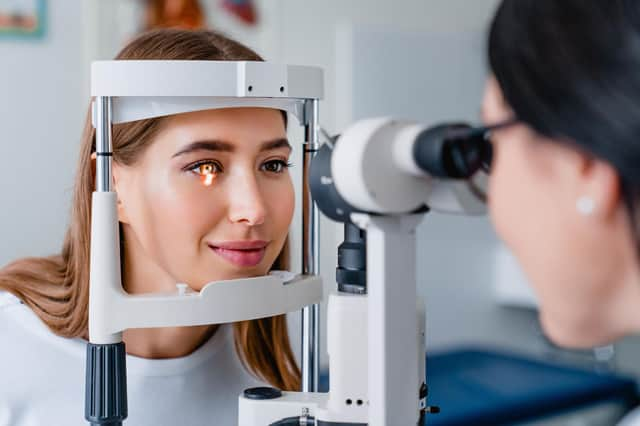

Optometrists are providing frontline NHS care that is preventative, accessible and, in many cases, life changing. And, despite their proven value to our health system, there is still the potential to deliver more.
Scotland’s world-leading General Ophthalmic Services (GOS) model is an NHS-funded framework that ensures every person, regardless of income or postcode, has free access to routine eye examinations.
This service, introduced in 2006, does far more than just provide new glasses. It allows optometrists to detect sight-threatening conditions such as glaucoma, diabetic retinopathy and macular degeneration, often at an earlier stage than other symptoms may present.
Ophthalmologists are reporting ever growing waiting lists and facing increased pressure in hospital eye departments. In recent Scottish Government data of hospital inpatient activity for ophthalmology, it was estimated that in 2023, there was a backlog of more than 35,000 patients. And without significant increase to current operational levels, the waiting lists will continue to worsen.
The Government is investing to reduce this backlog. Last year’s initial funding package of £30 million, included an allocation of around £2m specifically for ophthalmology, with Health Secretary Neil Gray highlighting there would be a focus on getting more patients through cataract surgery.

While this was a welcome start, increases in hospital capacity alone will not solve the systemic issues. There are many areas of eye care that could be managed efficiently within community optometry practices.
Glaucoma, for example, is a life-long condition that can be managed safely by optometrists with the right equipment and training. Thanks to programmes like the Community Glaucoma Scheme (CGS), many optometrists are already doing this, ensuring patients get timely, high-quality care closer to home and preserving capacity within hospital clinics for other vital services.
The problem is these services are not yet consistent across the country. The roll-out of these services has been slower than anticipated, delaying the discharge of suitable glaucoma patients to the specially trained optometrists who are waiting to deliver these community-based services.
The Scottish Government have recently launched another vital service for acute and urgent eye care utilising the network of specially trained Independent Prescribing (IP) optometrists across Scotland. Approximately one in four optometrists in Scotland have undertaken this additional qualification, the highest of all UK nations.
The new service will allow patients presenting with a range of ocular emergencies to be treated in their local optometry practice by an optometrist. The full launch of the service is expected at the end of the year, which will also allow optometrists without an additional prescribing qualification to refer within their community, saving the patient an unnecessary hospital visit.
The benefits here are clear to both the patient – quicker access to expert care, close to home and the NHS – delivering this service in the community is about half the cost of the same treatment in hospital.
This why we’re calling on the Scottish Government to put their vision of shifting the balance of care into practise, by continuing to support and develop community-based eye care services. It’s a model that reduces pressure on hospitals, improves outcomes for patients and lowers the NHS’s carbon footprint through reducing unnecessary travel. With health budgets under pressure, community optometry can offer one of the NHS’s most cost-effective ways to reduce waiting times and deliver better care.
To fully realise this opportunity, Scotland must invest in the infrastructure that enables it – from diagnostic technology like optical coherence tomography (OCT) to digital integration and shared patient records.
Delivering this vision also means making the most of the workforce in place now, while also planning for the future.
Scotland continues to lead the way with revolutionary changes to delivering undergraduate optometry training. From 2028, all new graduates will qualify with prescribing qualifications - the only nation in the UK to make this change.
This has the potential to deliver greater access to expert eyecare to the people of Scotland, but we must ensure enough students are being trained to support our ageing population.
Recruitment and retention of the workforce also create significant challenges, especially outside the Central Belt. A recent report conducted by Optometry Scotland, surveying over 300 practices, found a concerning vacancy rate of 10.3 per cent. It also found that almost 30 per cent of optometrists plan to reduce their hours in the coming years.
Without a national workforce plan and targeted incentives, rural and remote communities access to eye care services could be at risk.
A combination of a shift in working patterns and an ongoing struggle for remote practices to attract new optometrists means that, on top of investment, the future workforce and infrastructure in eye care must be secured. To achieve this, the Government must deliver a national strategy to plan for future demand, incentivise rural recruitment and invest in technology that allows local care to be delivered safely.

Since launching on August 1, the interim launch of the new community-based emergency eye service saw 100 patients in the first two days of operation. These early figures reflect the scale of the demand and how, if given the right support and funding, optometrists can alleviate pressure on hospital eye services.
That's 100 patients that could otherwise have ended up in out-of-hours services or acute referral centres in busy eye clinics.
Optometrists across the country are demonstrating that the Scottish Government’s broader vision for healthcare in Scotland is not a distant ambition. The profession is demonstrating that prioritising prevention and early intervention can deliver care that meets the very goals this health strategy aspires towards. However, we cannot do it alone. We need political support to fully realise this future for the NHS - one that works more efficiently and more fairly.
The question now is whether we can build on our opportunity to deliver this vision. As party manifestos are drafted ahead of the 2026 Holyrood elections, now is the time to commit to a national approach to community eye care - with consistent commissioning, fair funding, and a long-term workforce plan at its core.
- Eilidh Thomson is the chair of Optometry Scotland.
Comments
Want to join the conversation? Please or to comment on this article.