
Readers' Letters: Low Emission Zone results aren't that impressive


Reader attempts to drive a bus through LEZ policies
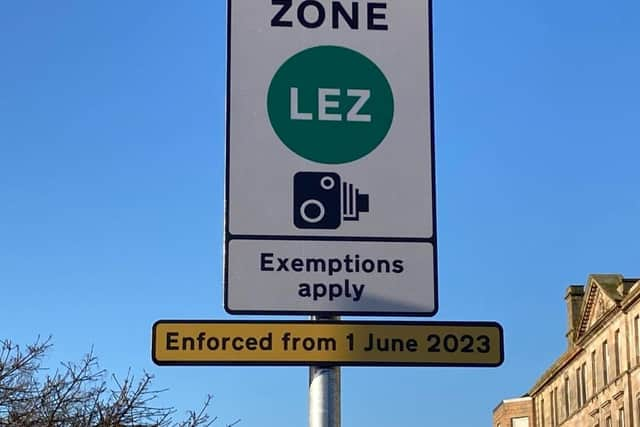
The figures just released from Glasgow over the “effectiveness” of its Low Emission Zone do not inspire confidence (your report, 19 September).
The reduction in nitrogen dioxide levels do not look statistically significant. What would be more interesting to learn is the loss of footfall and revenue from those city centre businesses and leisure facilities affected.
Given that LEZs have been rolled out to Scotland's other cities, particularly Edinburgh, this does not look like value for money so far. City councils appear to be using the public as guinea pigs for their strident climate change advocates. This is looking increasingly unfair.
When are public servants going to put the public first?
Gerald Edwards, Glasgow
Hard lesson
The Scotsman editorial of Friday 20 September was headlined: “Fining drivers is not the route to a greener nation”. I agree, but would add, “Fining parents who have already paid twice for their children's education is not the route to a fairer nation".
Margaret Adams, Edinburgh
Matter of pride
I was born and brought up in Manchester as the Second World War ended. It was tough, with food rationing continuing, poor heating, few clothes and shoes. Pensioners older than me would have fared even worse, enduring the war years with fathers away fighting and loss of life.
I suspect the people entitled to Pension Credit today, and not claiming, will mostly come from those times as there was a stigma from Victorian days of the shame of the workhouse – the Welfare State was created in 1947. There was a pride in managing on extraordinarily little. These people worked and rebuilt the country, starting to pay back the huge national debt from the war just as we are having to pay back the costs of the pandemic and fuel crisis, a war by another name. Debt after the war was 250 per cent of GDP compared to 100 per cent today. This pride and self-reliance are the best of Britishness. The idea of accepting money from a wealthy donor to pay for your clothes would be the last thing these types of people would do. One can still look tastefully dressed on a small budget, as befits the budget of the nation.
To say pensioners cannot complain because they will get £460 next April is unbelievable. That is the usual rise because of the triple lock. That payment is for younger pensioners on the new state pension, £176.30p for older pensioners. How did this huge discrepancy happen, anyway? They have lost a £900 a year cost-of-living payment. Does the Prime Minister understand anything about money and budgeting? Let pensioners have both warmth and cake next April.
Celia Hobbs, Penicuik, Midlothian
Bank of Alli
Sir Keir Starmer is unique in Britain in having his very own personal pension plan approved by an Act of Parliament. It now seems that he and his wife, together with other Labour Cabinet Ministers, also have private access to the Bank of Alli. The Prime Minister campaigned for a Government for “working people” but forgot to, or perhaps chose not to, mention the “elite” to which he and his cabal belong. Their shameless acceptance of freebies and demonstrable hypocrisy will not be forgotten.
Richard Allison, Edinburgh
Ignoring facts
In reflecting on the 2014 referendum, John Swinney repeats the nationalist mantra that “Scotland has been dragged out of the EU… against our democratic will” (18 September). The nationalists fail to acknowledge that as a result of leaving the UK post an Indyref Yes win in 2014, Scotland would actually have left the EU at that time. Alex Salmond himself would “have ripped Scotland out of the EU.” We would have had to apply for membership. One of the criteria for application would have been the existence of a Scottish Central Bank and our own currency. A new vulnerable currency supported by a weak, poorly financed central bank, combined with Scotland’s unsustainable structural fiscal deficit and crippling trade deficit, would have been a recipe for economic collapse and worse austerity than even the Tories imposed on us.
In 2014 there was no economic case for secession. After ten more years of the inept Nationalist Party government, that has not changed.
James Quinn, Lanark, South Lanarkshire
Wonkaland
This week, there’s been much embittered comment from the anti-growth, anti-capitalist losers of the 2014 referendum and 2024 election. Marjorie Ellis Thompson refers to “the golden ticket” of Scottish separatism (Letters, 19 September).
How appropriate that this golden ticket allusion comes from a Roald Dahl children’s novel featuring endless supplies of chocolate and Oompa-Loompas!
Ms Ellis Thompson speaks of “our vast natural resources” (presumably excluding fossil fuels) which will fund the secessionists’ sugar-candy mountain dreams; we’ve heard this unconvincing wind turbine hot air many times before.
She repeats previous arguments about Ireland’s alleged superiority, and how “our privatised industries have failed spectacularly and we have security guards in supermarkets to stop people stealing food”. Stroll down Dublin’s Grafton Street (or most other commercial streets in this aggressively free-market country) and you’ll find security guards aplenty, along with beggars, the homeless and people struggling with the cost of living.
Finally, we’re told GERS is “a discredited scheme ridiculed by top economists”. Are we permitted to know the identity of these renowned sages? Chances are they’ll be connected with the SNP’s very own Growth Commission.
Martin O’Gorman, Edinburgh
Write to The Scotsman
We welcome your thoughts – NO letters submitted elsewhere, please. Write to [email protected] including name, address and phone number – we won't print full details. Keep letters under 300 words, with no attachments, and avoid 'Letters to the Editor/Readers’ Letters' or similar in your subject line – be specific. If referring to an article, include date, page number and heading.
Comments
Want to join the conversation? Please or to comment on this article.