
Readers' Letters: Labour reforms will only harm disabled people's work prospects
The UK Government’s plan to slash disability benefits is just wrong, says reader
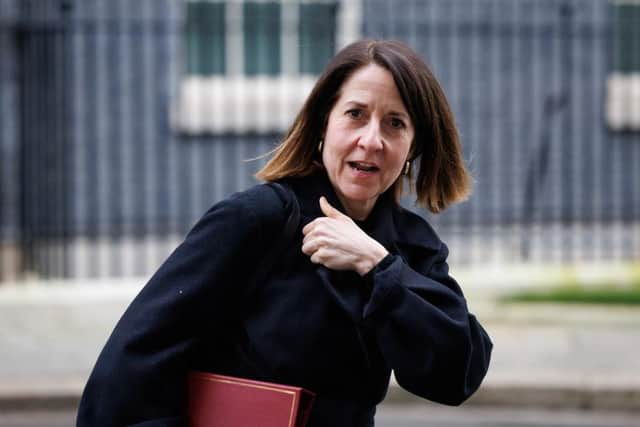
Last Wednesday Work and Pensions Secretary Liz Kendall insisted the massive cuts to disability benefits she was planning would improve people's lives and get more into work.
One of the purposes of the Personal Independence Payment (PiP) which will be affected by the cuts is to help finance the purchase of mobility aids such as wheelchairs and crutches, without which some disabled people would not be able to get into their jobs. It is surely absurd to maintain that slashing this “lifeline” benefit will improve disabled people's employment prospects!
I wonder if Ms Kendall has had an opportunity to study the recently published report by data experts Policy In Practice and think tank the Bevan Foundation on the likely impact of Labour's planned overhaul of disability benefits and universal credit in Wales? The bottom line is that an estimated £470 million is likely to be “sucked out” of the Welsh economy and poverty rates in affected households could more than triple (from 24.5 to 78.4 per cent).

Dr Steffan Evans of the Bevan Foundation said: “it is clear that the UK Government's proposed reforms to the benefits system will have a particularly severe impact on poverty in Wales, making life harder for thousands of disabled people.”
It is difficult to view Liz Kendall's cuts as anything other than one more austerity measure. How many Labour MPs will have the courage and compassion to vote against them?
Alan Woodcock, Dundee
Big deal?
As details of the UK-EU trade deal become clearer, the UK Government, even by its own admission, has highlighted that the economic gains resulting from it will be marginal.
At a recent meeting of G7 finance ministers in Canada, Chancellor Rachel Reeves claimed the deal would add nearly £9 billion to the UK economy by 2040 and boost trade with the EU as Britain’s single biggest trading partner. The UK Government estimates that material changes in areas covered, such as fisheries, food and energy, will increase GDP by 0.2 per cent by 2040.
Contrasting with this, the Office for Budget Responsibility estimates Brexit will reduce the UK's long-term GDP by approximately 4 per cent compared to remaining in the EU. The deal shows the UK clearly moving towards a relationship with the EU that is the worst of both worlds, formally sovereign, yet locked in ongoing negotiations and deeply enmeshed in EU frameworks across the entire economy.
Moreover, these conditions also mean the UK can’t strike a trade deal with the US involving food and agriculture unless there is no trans-shipment of goods, or unless the EU signs a trade deal with the US that solves this issue. Trade deals with the likes of India, US and EU simply limit the immense economic damage of Brexit to the UK economy, rather than bringing any benefits.
Alex Orr, Edinburgh
Reject zonal pricing
We all want lower energy bills in Scotland, but zonal pricing – as advocated by Greg Jackson (Perspective, 23 May) – is no magic solution. On the contrary, it risks causing irreparable harm to the country's economy, growth and jobs. Independent experts warn that zonal will increase bills.
The UK’s national pricing system ensures all consumers, regardless of location, pay the same wholesale price. This protects remote communities – like the Highlands and Islands – from disproportionately volatile costs due to their distance from demand centres. Zonal pricing would undermine this fairness.
A survey by Fairer Energy Future found only 18 per cent of consumers support zonal pricing, while over 60 per cent believe it would lead to higher bills in many areas. The public sees the risk: a postcode lottery where your bill depends not on usage, but on where you live.
If voters wanted regional price differences, the current system could be adapted without the disruption zonal pricing would bring. Ofgem previously blocked changes to transmission charges, which could save the taxpayer billions, and those rules could be reversed. Examples promoted by pro-zonal proponents are not success stories – they are a warning for the Government. In Norway, zonal pricing led to Oslo customers paying up to ten times more than those in the north. This disparity contributed to the government’s collapse in 2025. The new administration quickly introduced a national capped price option to restore fairness.
In Sweden, zonal price gaps have widened fivefold since 2020. Around Stockholm, customers faced volatile, elevated prices. In 2024, a 30 per cent zonal premium hit southern Sweden. When zonal markets go out of balance, they do so quickly – with sharp, unpredictable spikes in high-demand areas.
The reality is stark: £30 billion in renewable investment and 8,000 Scottish jobs are at risk if zonal pricing is introduced. It would also derail Labour’s ambitions for green jobs in Scotland, where floating wind represents a major growth opportunity.
Instead of breaking the system apart, we should modernise it with practical, fairer and greener steps – getting us to clean power by 2030 without the risks zonal pricing brings.
Graham Pannell, Fairer Energy Future
Unfair to islands
“What went wrong with Calmac under the SNP?” It's a fair question for a non-Scot to ask! I grew up in Ireland with the Mull of Kintrye and Islay in sight. But at age 32 I more fully experienced the glory of that pretty region as a relief GP and the attractive old world flavour of 1990s Calmac.
Everything was clean and neat, cheap tea or coffee was decent quality, and civil Calmac staff dished out generous portions of fried food at a fair price. The UK Government spends billions on overseas aid, and hotel rooms for illegal immigrants. So why shave or stunt lifeline services to remote Hebridean islanders? Labour (or the SNP) may be in no hurry to answer this query!
James Hardy, Belfast
Write to The Scotsman
We welcome your thoughts – NO letters submitted elsewhere, please. Write to [email protected] including name, address and phone number – we won't print full details. Keep letters under 300 words, with no attachments, and avoid 'Letters to the Editor/Readers’ Letters' or similar in your subject line – be specific. If referring to an article, include date, page number and heading.
Comments
Want to join the conversation? Please or to comment on this article.