
Readers' Letters: Households are being fleeced by food manufacturers
Politicians aren’t doing enough to help consumers in cost-of-living crisis, says reader
Up from 2.6 per cent in March, headline inflation in April rose to 3.5 per cent annually, according to the Office for National Statistics, moving it further away from the Bank of England’s 2 per cent target, thereby dampening hopes for more rapid interest rate reductions going forward. The remorseless pressure on the household budgets continues: according to the Bank of England the cumulative effect of general price increases post-Covid has eroded the purchasing power of consumers by 23.5 per cent.
This is not the only factor affecting value for money for the consumer. “Shrinkflation” (where the size or quantity of a product is reduced while the price rises marginally or remains similar) and “skimpflation” (where the quality or quantity of ingredients is reduced while the price rises marginally or remains similar) are now tactics that are commonly deployed by manufacturers and retailers to pass on rising production and retail costs to unwary customers in more subtle and opaque ways.
Consumer watchdogs, such as Which, continue to highlight this blight described by some as “exploitative” and “sneaky”.
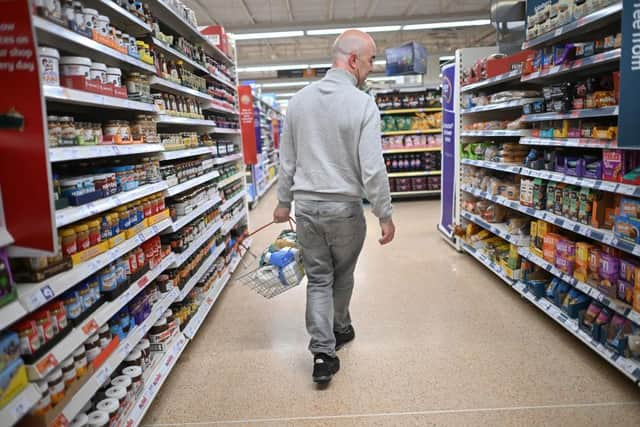

Ongoing research shows a wide range of well-known branded products are affected: toothpaste, mouthwash, tea, coffee, crisps, confectionary, biscuits, butter, yogurts, processed meats, ready meals etc.
Never has the phrase “caveat emptor” (buyer beware) been more appropriate. Related switching behaviour is now benefiting own-branded products and cheaper retail outlets.
Pressure is growing on supermarkets and manufacturers to become much more transparent and to ensure prominent and consistent unit pricing so consumers are better informed to make best choices.
So far, the Government has shown little appetite to fight for hard-pressed consumers.
Hopefully this changes as consumers are the largest of all voting constituencies and these issues provide an obvious focus for proactive policies designed to ameliorate the more subtle negative effects of a high and ever-rising cost of living and better protect the value of the pound in the consumer’s pocket.
Ewen Peters, Newton Mearns, East Renfrewshire
Nul points
What troubles me most about the “reset” with the EU is that the UK will have to abide by new regulations it will have no hand in framing. The surrender on fishing which was insisted upon if the reset was to be agreed indicates to me how the EU will use this power to advance the interests of European business at the expense of that of the UK.
In general the “concessions” that the EU has graciously allowed seem rather trivial and not always entirely to the advantage of the UK. For instance, making travel to EU countries slightly smoother is a boost to the European travel sector.
To cap it all I see that the UK will have to make an unspecified “financial contribution” to the EU’s coffers.
“Nul points” I think.
S Beck, Edinburgh
A bit fishy
You couldn’t make it up. SNP spokespersons, including Angus Robertson, have swooped on the fisheries aspect of the new UK-EU deal as a stick with which to beat the Starmer government. This is especially important to the SNP with the imminence and tireless campaigning against Labour of its MSPs and footsoldiers of the Hamilton, Larkhall and Stonehouse Holyrood by-election.
The irony of it appears to be lost on them. The SNP’s policy is for a separate Scotland to join the EU – not that Scotland is qualified to do so. Robertson is one of the most assiduous in demanding this. And yet that would mean Scottish fishing communities being once more subjected to the hated demands of the EU’s Common Fisheries Policy (CFP), which are more onerous than the new dispensation.
Jill Stephenson, Edinburgh
Doomed Labour?
Back in 1922 we saw the end of Liberal governments, as the party of David Lloyd George took a third of the votes and a quarter of the seats in the general election. Now, with the Labour U-turn over the wicked withdrawal of the Winter Fuel Payment, against the backdrop of the disastrous English local election results, where Professor Sir John Curtice projected a Labour share of the vote as 20 per cent, Labour may face a similar existential threat. The most recent British opinion polls have them on 22 per cent.
Gordon Brown was known to be seething over the withdrawal and, on Wednesday, in broadcast news, his fury was evident as he demanded Rachel Reeves take action now to ensure all OAPs receive it this coming winter, not some more pensioners maybe a year from now. English OAPs do not have a devolved government to mitigate the worst excesses of a callous Westminster government.
In party HQs all the big parties employ psephologists who examine opinion polls with a fine-tooth comb. Given that we have not witnessed such anger on an issue since the poll tax, and poor Anas Sarwar is reduced to making speeches wherein he will not utter Sir Keir Starmer’s name, I think we can infer their reading of the runes. The reality is the rest of Britain has now caught up with Scotland. We are a multi-party country with an electoral system no longer fit for purpose.
John V Lloyd, Inverkeithing, Fife
Easy target
After 7 October 2023 the pro-Palestine protestors who took to the streets were praised by Hamas, who also called them “helpful idiots”. Has the UK, Canada and France joined them? Possibly reacting to comments from the UN, which have been retracted, the three nations released a statement that didn’t even mention Hamas, nor that the suffering in Gaza could end tomorrow if Hamas released the hostages and laid down their arms.
Instead they threaten sanctions on the country trying get back its citizens. Is this truly the smartest way to act towards an ally that has fought for Western values. An appeal to help Gazans, who are indeed suffering, is warranted. But by ignoring who is to blame for the carnage in Gaza they are simply going for the easy target in Israel. Hamas stated they welcome the joint statement. Perhaps when the terrorist group, who committed the worst massacre of the century, agrees with you then it time to recalibrate your beliefs.
Lewis Finnie, Edinburgh
Weak warning
France, the UK and Canada’s warning that Israel is at risk of breaching international humanitarian law lacks integrity. It implies that until now Israel was not at risk of breaching international laws and the rules of war.
Since October 2023 Gaza has been portrayed by the UN Secretary General as a graveyard for children and a suffocating open-air prison. There was no clean water to drink, no food to eat, illnesses spread like wildfires, scabies, poliomyelitis, cholera, hepatitis A and E, which were consigned to the archives of history books, have become widespread.
How can Palestinians endure such harrowing conditions? How can the global community be numb to the scenes of countless children buried under the ruins of their homes, or in mass graves; or indifferent and apathetic to the chilling scenes of women and children being starved, mutilated and maimed? An entire generation of children has grown up knowing nothing but mass exodus, siege, starvation, death and hopelessness. Have we learned any lessons from the Holocaust? Have we been sincere in uttering the words “never again”?
(Dr) Munjed Farid Al Qutob, London
Sort out Iran
Alan Woodcock's letter (21 May) is advocating stopping arms shipments to Israel from the UK. This ignores several realities. Hamas started all of this in a most brutal way on 7 October 2023. Prior to that, Israelis faced almost daily bombardments of rockets fired from Gaza. Add in that Hamas brooked no interference from any internal dissension and its message of hate for Israel was all-pervasive.
What is happening now is directly related. Hamas is not releasing the hostages, so you have to ask, what is Israel supposed to do? No one wants to see civilian casualties and we would all dearly like to see some kind of resolution. So far Hamas have refused to rule out further attacks and a ceasefire will just give it time to renew hostilities. The problem will not be solved by banning arms shipments to Israel but curiously making no mention of arms shipments from Iran to Gaza that have exacerbated this.
So let's get this right. Punish our ally, Israel, but let our adversary, Iran, continue regional destabilisation. Israel is a democracy. Benjamin Netanyahu will probably lose the next election. Not so easy to push out the ayatollahs, is it? If this war is to really stop permanently then Iran is the key.
Gerald Edwards, Glasgow
Compassion
Alison Campsie wrote a very good article on the tragedy of the Gretna rail disaster (21 May). However, I wish to point out that my father-in-law, Ian Bell, was not a sergeant but a lieutenant.
When he returned to Edinburgh after the crash he visited dozens of widows and parents of the soldiers who were killed. We still have the list. He was only 21.
Pattie Bell, Edinburgh
Write to The Scotsman
We welcome your thoughts – NO letters submitted elsewhere, please. Write to [email protected] including name, address and phone number – we won't print full details. Keep letters under 300 words, with no attachments, and avoid 'Letters to the Editor/Readers’ Letters' or similar in your subject line – be specific. If referring to an article, include date, page number and heading.
Comments
Want to join the conversation? Please or to comment on this article.