
Readers Letters: Get civil servants to sort out winter fuel payments nightmare
Get civil servants working on finding solution to winter fuel payments problem, says reader
There are many of us pensioners who, like Alexander McKay (Letters, 26 September), don't really need the winter fuel payment. For pity’s sake, give it to those who clearly do.
“Means Testing” got a bad name in the mid-1900s. It was even regarded by some as a social stigma, and yet it is a perfectly fair way of giving help where it is needed.
It has been claimed that it's a bureaucratic nightmare to administer. However, over the past few years the SNP government has recruited a veritable army of civil servants and pen-pushers whose sole purpose seems to have been the production of endless papers on Independence (and we all know where that's got us).
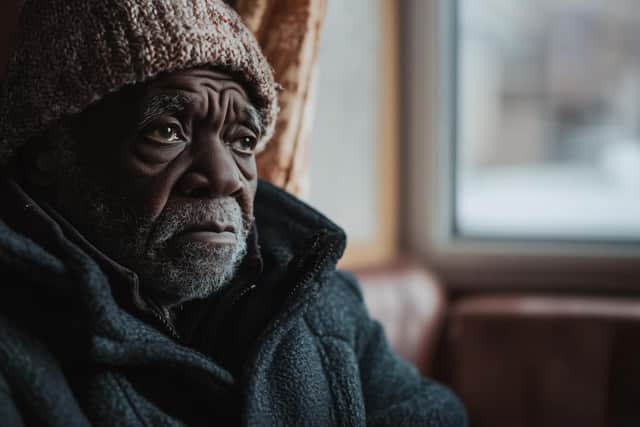

Why not set them to work on something useful for a change. Surely it's not beyond their wit to devise a fair system to help those old people who are going to be in dire need of warmth in the coming months?
D Mason, Penicuik, Midlothian
… and statistics
Mary Thomas in her letter “Good value” (26 September), among her many unsubstantiated claims, stated that Scotland has less homelessness than anywhere else, by which I’m assuming she meant the rest of the UK.
As with all statistics, as Ms Thomas fails to include any figures, this is open to interpretation. While we may have fewer numbers, as Scotland accounts for approximately 10 per cent of the UK population it would not be surprising if our homelessness figures were lower.
What she, however, fails to mention is that not only have 12 of the Scottish local authorities declared a housing emergency, but the Scottish Government has done so too. As of 31 March this year there were just shy of 32,000 homeless applications, the highest on record. There are more than 10,000 children living in temporary accommodation.
According to the Scottish Government’s own statistics, the number of households in temporary accommodation has risen by 9 per cent in a year.
Instead of constantly trying to make us look better than England, why does Ms Thomas not berate the Scottish Government for not doing enough to help citizens here?
Of course, having now given her the true picture, no doubt it will all be Westminster’s fault, won’t it?
Jane Lax, Aberlour, Moray
Bad scene
The Scottish Government’s disastrous decision to allow the Glendye windfarm on Aberdeenshire’s glorious, scenic, Cairn o’ Mount road is now leading to even more destruction of Scotland’s landscapes, cultural heritage and sacred places.
Despite valiant efforts, huge opposition and cogent arguments from local authorities, it was given the nod by a remote and uncaring Central Belt SNP government. We now have to suffer the ignominy of giant pylons being forced through by the developers, SSE, all the way to Stonehaven (the sham of “Consultation Events” are now being advertised).
This will totally destroy the iconic “Pass in the Grampians”, lovingly described in Nan Shepherd’s quartet of novels. Having known Nan, I can confirm she would have been absolutely horrified! During her final years at Annesley House in Torphins, Nan was consoled that she could still see her favourite “spiritual” mountain, distinctive Clachnaben, now about to be ruined by giant industrial turbines just below.
The Mearns landscapes of Scotland’s favourite novel, Lewis Grassic Gibbon’s Sunset Song will also be trashed forever.
The landscape of Montrose artist James Morrison’s glorious paintings will never look the same, their sweeping magnificence and vast horizons now being destroyed by bristling pylons and giant, rotating cash machines on every horizon. What on earth are we doing?
Isn’t it high time we actually started saving the planet?
George Herraghty, Lhanbryde, Elgin, Moray
Western weakness
What a relief to read Joyce McMillan's piece, “Sickening truth behind Keir Starmer's joke at Gaza heckler's expense” (27 September). She exposes the hypocrisy of western politicians: they sanctimoniously pledge eternal support (£12 billion from the UK alone since 2022) to Ukraine while mumbling about “the right to self defence” and past its sell-by date “two-state solution” in the case of Gaza.
They turn a blind eye to the appalling slaughter of children, journalists, aid workers and doctors which they have enabled due to their financial and operational support for the out-of-control Benjamin Netanyahu.
Apparently even the United States can't stop him, undoubtedly due to the impending election and the power and financial clout of AIPAC (the American Israel Public Affairs Committee). Belatedly, as Ms McMillan says, Germany has suspended arms exports, leaving the US, Italy and Britain as Netanyahu's main enablers.
Is it too much to hope that finally the UK government will behave with honour, empathy and principle, or must we accept that our global reputation will continue to be utterly two-faced as embodied in the appearance of Starmer speaking to a largely empty UN General Assembly hall and the ludicrous David Lammy lecturing Vladimir Putin about imperialism?
I have no illusions about the Russian leader but I am sure he will have laughed wryly at this bizarre characterisation coming from the representative of the country on whose Empire the sun once never set.
Marjorie Ellis Thompson, Edinburgh
Tram thoughts
One of the multitudes of reasons the Edinburgh trams run at a loss could be the excellence of the bus service in the city rendering trams an extra rather than essential to the transport system.
I live in the Borders and am able to use my bus pass on buses in Edinburgh but not, like residents, on trams. Consequently I never consider using trams. I can also use my pass on the airport bus, which is very fast and stops right outside the airport; the tram stop is further away, a bind with luggage.
Perhaps if the tramline was extended to the Infirmary at Little France more people would use trams?
Mary Douglas, Glendearg, Galashiels, Scottish Borders
Relative truth
In Katharine Hay’s interesting article on Carlowrie Castle (“Remarkable discovery of 433-year-old goat skin relic reveals Scottish castle history”, 25 September) mention is made of its former owner Isobel Hutchison, the famous Arctic explorer, botanist etc, who is erroneously referred to as niece of Thomas Hutchison, the individual responsible for the Castle's construction. He was, in fact, her grandfather.
Jack Davidson, Edinburgh
Trust us
This week the global news industry has been running a Choose Truth campaign, with more than 100 countries, hundreds of news organisations, media associations, and individuals highlighting the importance of fact-based journalism.
It built up to World News Day today, on which publishers and editors hope to encourage their audiences to continue supporting trusted newsbrands, like The Scotsman.
And next month the UK News media Association will be running its Journalism Matters week to showcase the best in campaigning reporting
In an increasingly fractured communications landscape and a breakneck pace of change which will only accelerate in the new era of artificial intelligence, the importance of, and need for, trusted, reliable information will only increase.
More people derive information from social media than ever before, but not for nothing is it known as a communications Wild West, as overseas-owned platforms’ refuse to subject themselves to reasonable regulation.
But rather than an arid, sparsely populated plain, it is a jungle in which dangers are hard to spot in the dense undergrowth of misinformation.
One result was the riots which followed the Southport murders, and another the speculation after the disappearance of Nicola Bulley at a Lancashire river.
We know many people access reliable news sources through social media, but all too often the platforms’ sudden, unannounced algorithm changes can cut off readers from trusted sources.
Social media platforms often claim to be facilitators of free expression, but on too many occasions they prove to be an inhibitor, with users often unreasonably blocked or banned altogether for reasons which are hard to fathom.
The only way through the thicket is with reliable news brands and we also know from independent research that consumers do come back to recognised news operations locally and nationally to verify information they may doubt.
Of course, in such an intense and ever-changing environment, mistakes do happen. But through fast, fair and free regulation, like the Independent Press Standards Organisation and the Advertising Standards Authority, speedy recognition and resolution of problems – far quicker than the courts – is an essential part of a media ecosystem on which the public can rely.
But if those trusted titles are no longer there, where will readers go? It is vital for the health of open, democratic societies that reliable brands with high visibility remain to help people through the social media jungle.
The news industry is nothing without its readers, listeners and viewers, and you can do your bit to make sure this title remains a trusted guide by continuing to read and subscribe.
John McLellan, Director, Newsbrands Scotland
Write to The Scotsman
We welcome your thoughts – NO letters submitted elsewhere, please. Write to [email protected] including name, address and phone number – we won't print full details. Keep letters under 300 words, with no attachments, and avoid 'Letters to the Editor/Readers’ Letters' or similar in your subject line – be specific. If referring to an article, include date, page number and heading.
Comments
Want to join the conversation? Please or to comment on this article.