
Why UK's recognition of Palestine is in Israel's long-term interest
Despite the cynical actions of extremists, we must work for a better future for both Israelis and Palestinians, says Jackie Baillie



On Sunday, along with France, Canada and Australia, the UK formally recognised the state of Palestine. It was a historic decision, and at the same time reflected a view many in this country would already take as a given – that the Palestinian people have an inalienable right to self-determination, and that the only path to security and lasting peace for Israelis and Palestinians alike is through a two-state solution.
But sometimes you need to say the quiet bit out loud. The fact is that the two-state solution which for decades formed the bedrock of any potential pathway to lasting peace is in profound peril.
The UK recognised the state of Israel 75 years ago, in the shattered aftermath of the Second World War, a new nation set up to secure a future for the Jewish people.
Israelis protesting against their government
Yet the efforts of past generations of Israeli statesmen like Shimon Peres and Yitzhak Rabin to find a way to live alongside their Palestinian neighbours are being obscured by the reckless and brutal actions of Benjamin Netanyahu.
The Israeli Prime Minister has overseen a programme of man-made famine, bombardment of civilians, settlement expansion and settler violence – all while trying to delay a long-running corruption case against him.
He has done all this despite the thousands of Israelis protesting on the streets calling for an end to the war in Gaza. Their voices are a reminder that the state of Israel and its current leader are not one and the same.
Of course, the first priority of those protesters is to save the lives of their fellow citizens, the Israeli hostages, seized in the barbaric attack of October 7 by the terrorist group Hamas. But recognising the state of Palestine is a step towards long-term Israeli security.
It is the opposite of Hamas’s hateful vision, because it makes clear that the Palestinian right to self-determination is entirely separate to the demands of the men with machine guns who have not faced an election since 2006.
And it is an acknowledgement that any lasting peace must be secured through the pathway of diplomacy with the partnership of the international community, including the 150 countries that recognise Palestine.
Living hell in Gaza
Recognising the state of Palestine means acknowledging that Palestinians should expect a proper government, with reforms to the Palestinian Authority and no role whatsoever for Hamas. Such a government, accountable to its people, would be on the side of those who value life, not death.
The UK Labour government has already proscribed and sanctioned Hamas, and will announce further sanctions in the coming weeks. Despite the cynical actions of extremists, we must work for a better future for both Israelis and Palestinians.
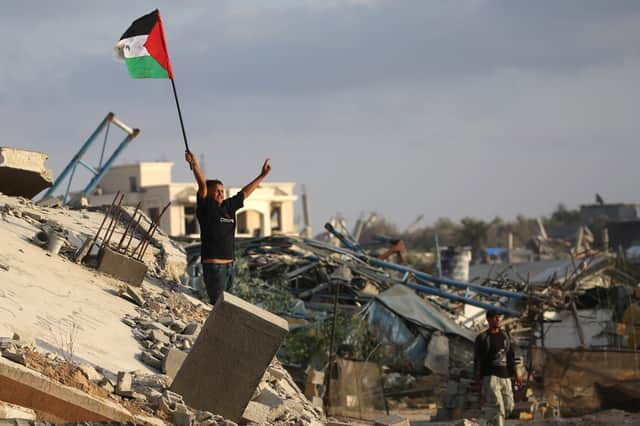
Every week, I receive emails from constituents distressed by the images they are seeing of children living in the hell that is now Gaza, while the surviving hostages are enduring conditions we can barely imagine.
Recognition must be a spur, not a substitute for urgent action. We need a ceasefire now, the release of all hostages, the restoration of aid and a lasting framework for peace.
Jackie Baillie is MSP for Dumbarton, Scottish Labour’s deputy leader and her party’s spokesperson for health
Comments
Want to join the conversation? Please or to comment on this article.