
Why Tories' net zero denial is not true Conservatism – Ian Johnston
The UK needs a centre-right path to net zero or voters might choose a reckless hard-left one instead



In the mid-1990s, while working as a news reporter for the Bridlington Free Press in Yorkshire, I found myself gradually becoming the paper’s de facto political correspondent. The news editor eventually offered an explanation: the local MP, John Townend, “refuses to talk to women” (I was the only man).
I don’t know if this was true but, given he sometimes expressed pretty appalling views – he was hard-right before it was popular – it seemed plausible enough. However, there’s another possible reason why he spoke only to me. I took my responsibilities as a journalist to report views I didn’t agree with in a balanced way very seriously, so much so that I didn’t vote in an attempt to remain as impartial as possible.
When I later became the science correspondent of The Scotsman and then The Independent, I tried to give a similar fair hearing to ‘sceptics’ or ‘deniers’ – neither term is entirely satisfactory – who argued against the consensus among scientists that global warming is real, caused by humans and poses a serious threat.
The final straw
For example, during my time as a Scotsman reporter, I organised a debate between Martin Durkin, who directed the 2007 documentary, The Great Global Warming Swindle, and a climate expert. I would also sometimes annoy scientists by putting sceptics’ points to them, which they would invariably easily counter.
However, the final straw for me came in 2016. The Global Warming Policy Foundation – the UK’s leading climate-sceptic think tank, founded by the late Conservative politician Nigel Lawson – had controversially managed to arrange for its annual lecture to be given at the Royal Society in London, a bastion of scientific rigour for centuries.
There was general uproar among scientists, but it was actually the speech by Matt Ridley, a journalist and former chair of the Northern Rock bank, rather than the scientists’ rebuttals, that finally persuaded me of the vacuousness of climate sceptics’ arguments. Here, after all, was an opportunity to set the world to rights in one of its leading temples of science.

‘Predictions of doom’
Helpfully, Ridley summed up the weakness of his case succinctly: “Why do I think the risk from global warming is being exaggerated? For four principal reasons. One, all environmental predictions of doom always are. Two, the models have been consistently wrong for more than 30 years. Three, the best evidence indicates that climate sensitivity is relatively low. Four, the climate science establishment has a vested interest in alarm.”
It seemed glaringly obvious to me that, despite any overstating of previous “predictions of doom”, this had no bearing on the climate debate. Just because people have been wrong in the past does not mean others are wrong about a different issue. Facts and figures cannot be so airily waved away. His claim that models had been “consistently wrong” is the sort of slippery statement that can be made, because no model ever exactly predicts what happens. However, the general message has been largely accurate.
Ridley’s third point that climate sensitivity is “relatively low” looks even worse now than it did then, as wildfires burn down people’s houses from Los Angeles to the West Midlands and beyond. But his fourth was perhaps the worst of all, suggesting thousands of climate scientists in scores of countries are engaged in the largest, most complicated conspiracy the world has ever seen (and all for the sake of research grants?!). It’s laughably thin stuff.
READ MORE: ‘Net stupid zero’ vs economic madness: How the climate change debate is losing touch with reality
Tories respond to Reform’s rise
One of the few things I remember from my school days was an exhortation by my fifth-year English teacher to have an inbuilt “bulls*** detector”. It stayed with me because it was the only time I ever heard a teacher swear. After years of giving sceptics the benefit of the doubt, Ridley’s pathetic arguments saw my dormant bulls*** detector finally go off. Sometimes, you have to make a judgment call about what is real and what is nonsense.
For a while, it seemed like the rest of the population was equally unimpressed and the sceptics had decisively lost the argument.
But then, a strange thing started to happen. Reform UK’s sudden surge in the polls prompted the Conservatives to start echoing its rhetoric not only about immigration but also climate change, an issue on which Tories such as John Gummer, Theresa May and Amber Rudd had a highly respectable record.
Like Lawson and many sceptics, party leader Kemi Badenoch says she accepts the basics of the science, but then argues against policies designed to deliver net-zero carbon emissions. There are plenty of debates to be had about how we reach net zero in a sensible and economically viable way, but it makes no sense to accept the existence of the problem, then argue against its solution. The world will only stop getting warmer when we stop adding greenhouse gases to the atmosphere, ie when we reach net zero.
READ MORE: Why our failure to heed Margaret Thatcher's 40-year-old climate warning is about to get real
A key pillar of Conservatism
When Badenoch came out in favour of repealing the Climate Change Act, former Conservative Prime Minister Theresa May warned this would be a “catastrophic mistake”, while Gummer, now Lord Deben, said: “This is not what Margaret Thatcher would have done.” And he should know, having served as her Environment Secretary.
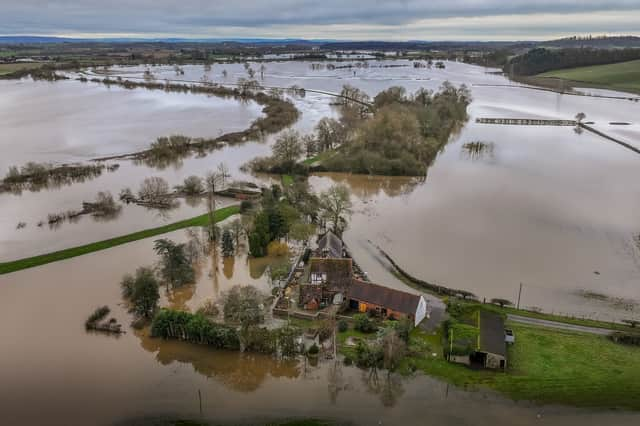
The maintenance of long-standing institutions and traditions is a key pillar of Conservatism. And there are few things more important to ‘conserve’ than the environment and climate that give us life. Abandoning this idea, even as farmers in the Tory-voting shires struggle with droughts and floods, may be disastrous for the Tories.
It could also be disastrous for the country. If there is no centre-right path to net zero, enough voters may decide to take a hard-left, anti-growth one as extreme weather events intensify. And, unfortunately, deliberately crashing the economy and hoping for the best is highly unlikely to turn out well.
Comments
Want to join the conversation? Please or to comment on this article.