
Why the culture that produced Jeffrey Epstein’s sickening birthday book is still alive today
The horrific values on display in the Jeffrey Epstein scandal are not confined to billionaires – they are everywhere
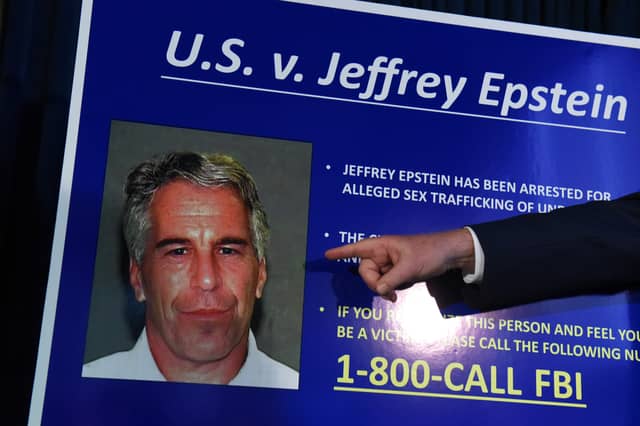


The Jeffrey Epstein fallout continues, and it’s far from over. I expect more abject apologies and even more heads to roll. What struck me this week was the birthday book. Yes, it was made 22 years ago, but 2003 feels close – unlike the 70s or 80s which feel like ancient history. The sketches, the crudeness, the casual contempt of young women jar with the world we like to think we live in now.
It isn’t only the misogyny that repulses us. It’s the power that went with it. Control over women, economic, social, reputational – and in Epstein’s case, political and institutional too. And the perpetrators’ belief that they were untouchable. Powerful men, and a woman, who ruined lives. In plain sight.
It would be easy to think this couldn’t happen in 2025. But misogyny and power still make for comfortable bedfellows and are all more toxic for it. We see it online where women are harassed and threatened, in workplaces where speaking up still carries a cost.

‘Don’t Be That Guy’
It isn’t confined to billionaires on private jets and islands. It shows up everywhere. Girls changing the way they walk home. Women weighing every word when approached in public. People leaving jobs quietly because staying feels unsafe. The message is the same: know your place.
It brought to mind Police Scotland’s “Don’t Be That Guy” campaign. Originally a Canadian initiative, it spread to New Zealand, then came here. It mattered because it spoke to men directly about ‘everyday’ attitudes – objectifying women, pressuring for sex, or ignoring consent – that contribute to rape culture, and shifted the focus towards challenging male behaviour rather than leaning on covert victim-blaming.
READ MORE: As Donald Trump seeks refuge from 'Epstein Files' furore, Scotland's politicians must take care
I spoke with some professional senior women in Scotland and they recounted so many instances of being ‘othered’: ignored, talked over, overlooked and excluded and so many other shocking instances where status and sexism were writ large in these women’s day-to-day working lives.
One woman recounted being told “shush” as she tried to join a conversation. They mused that they could do their own “don’t be that guy” TikTok. I haven’t taken it off my tactical options (although I don’t think I could take the opprobrium from my daughter about being a late adopter of that particular social media platform).
Same old story on repeat
Every November, we mark the 16 Days of Activism against gender-based violence. I support it, wholeheartedly. Awareness matters. But what happens on day 17? Posters come down, hashtags fade, life goes on. If the only visible work is a campaign for a fortnight, we’re kidding ourselves. The real work is daily and invisible. It’s in the decisions that shape lives, who rises, who is silenced, who is punished, who is believed.
This isn’t about history, or one man. It’s about structures that still bend to protect those at the top. We’ve seen inquiries, campaigns, strategies, speeches and yet the same old story repeats with new faces. Unless power and those who hold it are challenged, women will keep paying the price.
We need change that lasts beyond a news cycle. Accountability isn’t an event, it’s a culture: in politics, in business, in the institutions that shape daily life. Without it, we’re just waiting for the next set of names to be added to the list.
Karyn McCluskey is chief executive of Community Justice Scotland