
Why Remembrance Day should also be about survivors like N Ireland veterans facing prosecution – Murdo Fraser
The mostly elderly veterans of the Northern Ireland Troubles are deeply concerned about the prospect of vexatious prosecutions
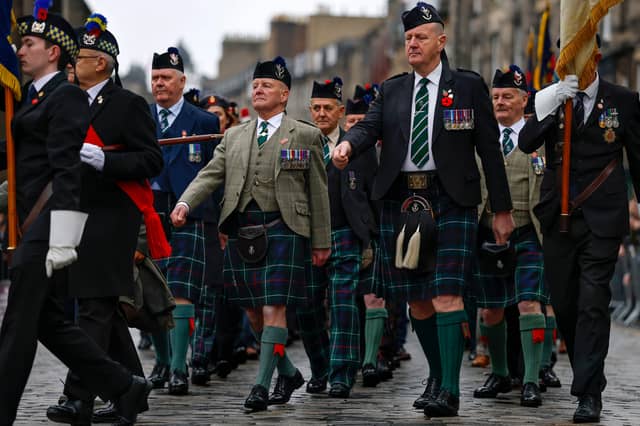


One of the privileges of being an MSP is the opportunity to participate in Remembrance events at this time of year. My weekend was spent attending services and wreath-laying ceremonies at communities across Perthshire, joining hundreds of others who gather round war memorials to silently remember those who gave their lives in past conflicts. It is encouraging to see such gatherings still so well supported by local residents, with all generations being represented.
When I was younger, these events would feature veterans of both the First and Second World Wars, ageing men standing proudly erect in uniform, medals on their chest, remembering friends they had lost. The last remaining Great War veteran left us many years ago, and there are just a handful of Second World War survivors now.
They have been replaced by veterans of more recent conflicts, in Northern Ireland, the Falklands, Iraq and Afghanistan, who carry their own scars and memories. And there are those who served in the military who may not have seen active service but nevertheless were prepared to risk all to protect the lives and freedoms of those at home.
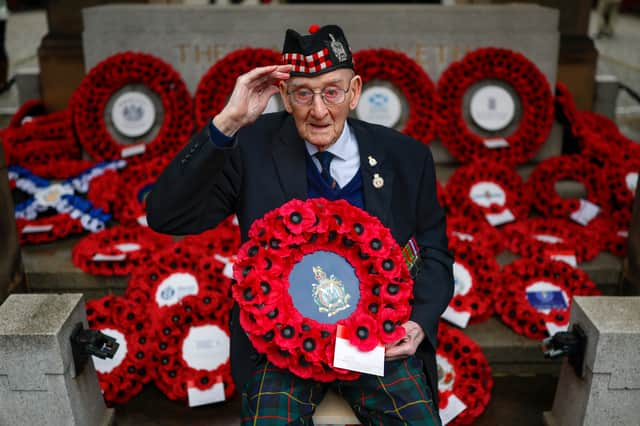
A gentle man, forced to kill
Remembrance is primarily about showing respect for those who did not return, for those who, in the words of the Kohima Epitaph, gave their today for our tomorrow. But it is also a recognition of those who did return, and brought back with them the scars of what they experienced, or the memories of friends they had lost.
Every family will have its own story to tell about a veteran who returned from the wars with a story that was perhaps too painful to tell. I encountered this myself some years ago at the funeral of a close family member where I learnt something private about him.
Jimmy, let us call him, had as a very young man fought with a Scottish regiment in France and Belgium after D-Day. We knew he had served in the war but knew nothing of his experiences; like so many of that generation he never once spoke of it.
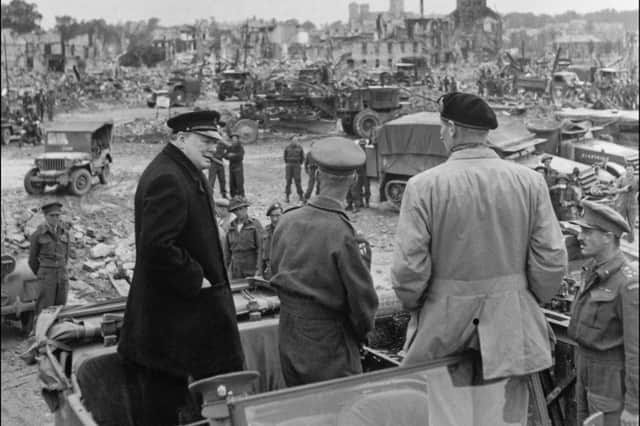
Jimmy was the meekest and mildest of men; a chartered accountant by profession, he served his church faithfully as treasurer for many years. We laid him to rest on an achingly beautiful summer’s day in a Highland cemetery, the sun burning through the backs of our dark suits.
It was only when walking away from the graveside that one of his friends told me Jimmy’s story, how he had killed a man on the battlefield. He had come face to face with a German soldier, no more than a boy. “I saw right into his eyes, and he looked straight at me,” Jimmy had said. “It was him or me. I fired my rifle and he died in front of me. I can still see his face today.”
The experience haunted Jimmy until the day he died, and it is little wonder he never spoke of it. It seemed almost unimaginable to me that this kindest and gentlest of men would have been a killer and had to endure many years of his long life with the memories of what he had done.
Living with the horrors of war
There will be thousands, perhaps hundreds of thousands, who had similar experiences, yet never told their stories. We had a generation, now passing from us, who went to war and experienced astonishing horrors, yet returned and had to go back to normal civilian life as if nothing had happened.
Today at least we have more substantive mental health support for veterans returning from combat than 80 years ago. But they are increasingly angry at a lack of support from governments.
The Armed Forces’ Covenant is a promise from the British state and devolved administrations that those who served in the Armed Forces and their families should be treated with fairness and respect in the communities, economy and society that they served by risking their lives.
It is backed up by a legal duty, in force since November 2024, which requires public bodies involved in healthcare, education and housing to have proper regard for the interests of members of the Armed Forces, their families, and veterans.
And yet there is increasing outrage amongst veterans that the terms of the Covenant are not being met, and that public bodies are paying scant regard to its wording. That was, at least, the view of some of the veterans I spoke to at the weekend, who feel their service has not been sufficiently recognised.
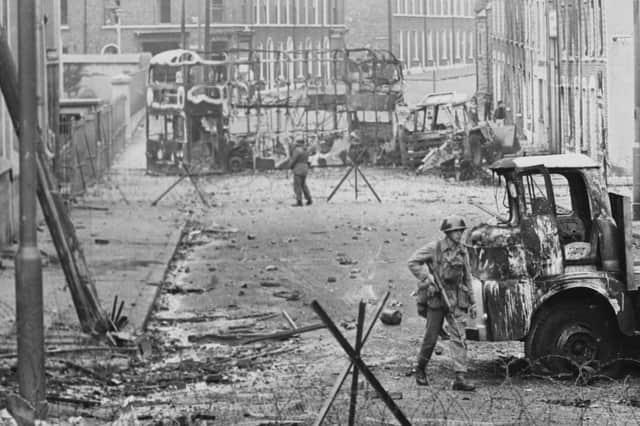
Northern Ireland veterans feel betrayed
What makes them even more angry at this present time is the treatment of their comrades who served in Northern Ireland, with the introduction of the Northern Ireland Troubles Bill in the House of Commons. This removes the conditional immunity from prosecution which applied to veterans under the previous Conservative Government’s Northern Ireland (Legacy and Reconciliation) Act 2023, meaning that veterans could now face criminal prosecution if “credible and compelling new evidence” emerges.
Veterans of the Troubles, now mostly elderly, are deeply concerned about the prospect of vexatious investigations, and being dragged into court to answer for the events of four or five decades ago. They feel betrayed by a government which should be on their side and recognise their service, but is now prepared to see them face prosecution.
If Remembrance is to mean anything substantial, it cannot just be about those who fell. It also needs to be about those who came back and tried to build new lives whilst carrying the scars of their experiences with them, and it is to them that we owe a particular duty of loyalty which must be recognised.
Murdo Fraser is a Scottish Conservative MSP for Mid-Scotland and Fife
Comments
Want to join the conversation? Please or to comment on this article.