
Why Donald Trump’s strategy to defeat his nemesis may be a sinister one
America’s cost-of-living crisis is shaping up to be a serious problem for Donald Trump as the battle for the Mid-term elections begins and concerns grow about the Republicans’ possible tactics



Capturing the mood of America about last week’s election results, Domenico Montanaro on National Public Radio (NPR) said “it’s still the cost of living, stupid”, a play on the famous comment about the importance of the economy by Bill Clinton aide James Carville.
The elections were essentially referendums on Donald Trump’s first year and, in particular, the ‘affordability’ crisis. Millions of Americans simply cannot afford to live in their own country and it is this that could be Trump’s nemesis in the Mid-term elections next year and beyond.
Whether this is a significant turning point in the fortunes of the Democratic party remains to be seen. It could prove to be a boost to the morale, confidence, and intent of a party that has struggled to regain a foothold in Trump’s America.
READ MORE: 9 reasons why Donald Trump won't win the Nobel Peace Prize (unless committee abandons its values)
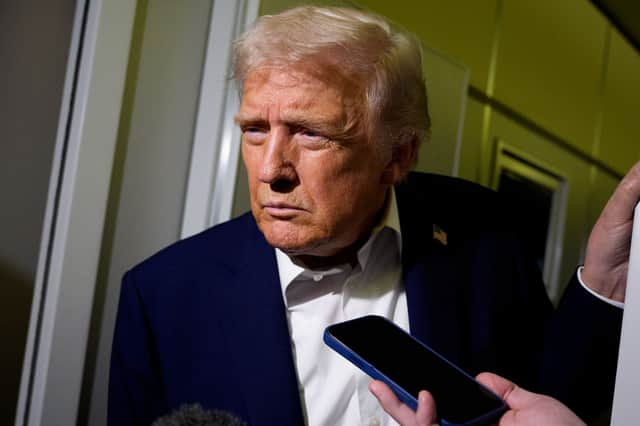
Maga movement unhappy
For the Democrats, a lack of leadership on Capitol Hill, a loss of political energy, a failure to develop new ideas and messages, and a dramatic loss of confidence in what their mission is have left electors exposed to the tyranny of the Oval Office, a Supreme Court that’s acting like a branch of the White House and a compliant Republican-controlled Congress, paralysed by Trump’s domination. Despite its proud record of service, the Republican party is now an empty shell.
However, there is evidence of a changing mood in America. The president’s popularity has been sinking in polls and he has been generating criticism from even his Maga followers.
The failure to release all of the Epstein files, his brutal enforcement of immigration policies, and the failure to halt cost-of-living increases – a key election promise – have taken their toll. The chaos around tariffs and sending troops onto the streets of major cities in response to exaggerated claims about crime have also stirred public anger.
Another issue has annoyed the Maga movement in particular. The president had promised to halt America’s involvement in “other people’s wars”. The opposite has happened.
In a statement of intent, the “Department of Defence” has become the “Department of War” suggesting an America on the offensive. There is even talk about America invading Venezuela.
Trump’s $300 million ballroom
The painful shutdown of the federal government was blamed on the Republican party and the president – an issue that did not sit well with the start of the work on Trump’s new $300 million (£230m) White House ballroom!
The Democratic party, despite the difficult road ahead, has been given a significant electoral boost in the first test for Trump since his return to the White House. The victories of Abigail Spanberger in Virginia and Mikie Sherrill in New Jersey were spectacular.
The race for mayor of New York saw the biggest turnout in 50 years with Democrat Zohran Mamdani’s win all the more remarkable given his “democratic socialist” politics. The lessons for his party are obvious.
Mamdani created a movement, made emotional connections with many disillusioned voters and non-voters, especially the young, and won back Latino voters, many of whom turned to Trump in last year’s presidential election.
Democrat wins in Deep South
The passing of Proposition 50 in California was another big story, as it allows the Democrats to redraw congressional maps and potentially add five more seats that they should win in the 2026 elections.
There was a bigger boost for the Democrats beyond the main electoral victories. There were special and local elections across America where they won big majorities in large and small races, even in Deep South states like Alabama, Georgia, Louisianna and Mississippi.
Trump’s response to the Republicans’ losses was dismissive, arguing they did badly because his name was not on every ballot in the country. This confirms the party’s ‘two-dimensional’ problem. When he is not on the ballot, Trump’s unpopularity is a significant negative factor for the Republicans, who have no real influence on or control over his ideas or policies.
‘Commie Mamdani’
How do the Democrats build on election success in a vast country of such political diversity and division? Fox News was quick to label New York’s new mayor as “Commie Mamdani”. Some argue that the Democrats will have an identity crisis over the next year before the Mid-terms.
Stars on the political left such as Bernie Sanders and Alexandria Ocasio Cortez question whether the Democrats need to have just one strategy or can instead adopt several. Others argue that the best approach is to mine the deep seam of unrest about “affordability” while Trump continues to own the economy and its problems.
The battle for the Mid-term elections starts now. The Democrats look likely to regain the House of Representatives, but taking control of the Senate will be a much bigger challenge. Of course the Supreme Court, with its right-leaning six-to-three majority, is unlikely to be of assistance to the Democrats and may remain the president’s greatest ally if he attempts to intervene in the Mid-terms in some way.
All the President’s Men
This is now of real concern. As the implications of the Democrats’ successes hit home, fears will grow about steps being taken to delay or influence the 2026 elections.
A contrived ‘national emergency’ may emerge. Or well-tried voter-suppression techniques, used in some Republican states, could be stepped up. Troops could be placed near polling stations, pressure put on election officials, federal voting machines seized or tampered with, and names purged from voter rolls. With a compliant Congress and a politically charged Supreme Court, anything is possible.
The political stakes are high. The president is the unique front man for America’s authoritarian revolution. Trump’s key backers – the billionaires, tech giants and media moguls – don’t like losing.
Last week’s elections give hope to the Democrats but they may also energise “all the President’s men” who believe democracy is an obstacle to their vision of a very different America that must be overcome.
Henry McLeish is a former First Minister of Scotland and a visiting professor at the University of South Florida
Comments
Want to join the conversation? Please or to comment on this article.