
Why a wealth tax would be a disaster for farmers – and the whole country
A wealth tax may sound like a good idea to some, but it would only deepen the black hole in our public finances and hasten the UK’s decline into economic recession
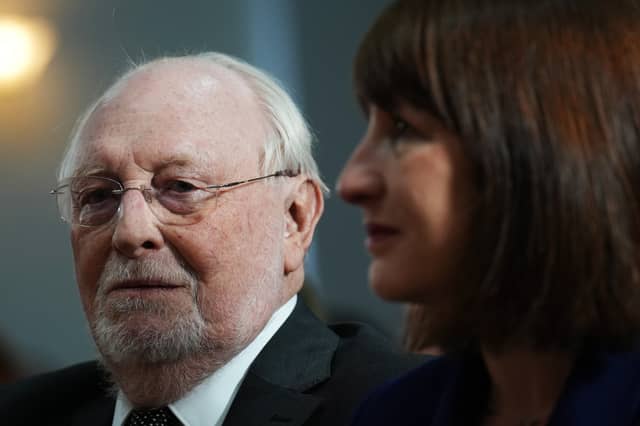

It all seems so easy. We have a looming black hole in the public finances, estimated to be in the region of £20 billion by the time of the autumn Budget, and a Chancellor committed to not raising taxes on ‘working people’. We have a Labour government which has just found that trying to reduce spending on benefits, even by a modest amount, is not something that its backbench MPs will support.
So how to bridge the gap? The solution is simple, it seems, and now being pushed by a number of prominent figures on the left, most notably the former Labour leader Lord Kinnock: make the rich pay! So a wealth tax, set as proposed by Kinnock at a modest 2 per cent annually on individuals with assets over £10 million, could raise £10bn annually, if not solving all the Chancellor’s problems, at least reducing them by half.
It would be a popular policy, too. Consistent polling over many years tells us that whilst individuals are not keen on paying more taxes themselves, there is nothing better loved than the idea of higher taxes on other people. And so we see a recent poll showing, unsurprisingly, that no less than 75 per cent of the population support a wealth tax on multi-millionaires.

Starmer toying with idea
What’s not to like? They can afford it, surely? And that way the government can just go on spending without having to take any tough decisions about either cutting budgets, raising income tax or VAT, or borrowing more.
Labour Cabinet ministers certainly seem to be toying with the idea. When challenged on the issue, even Keir Starmer refused to rule it out. But would a wealth tax really be a source of ‘free’ money for a government which can’t balance the books and is overseeing a shrinking economy that will lead to a dwindling tax base?
The evidence would suggest that a wealth tax is likely to be counter-productive. Other countries which have experimented with wealth taxes have found that they don’t deliver what their advocates promise. According to the Financial Times, in 1990, 12 OECD nations had recurrent net wealth taxes on individuals, but countries including Austria, Denmark, Germany, the Netherlands and France later repealed them.
Only four, including Norway and Switzerland, were left by 2020. Advisers are adept at creating avoidance schemes, and several countries found the levies contributed to capital flight or put off foreign investors.
Exodus of billionaires
Even before a wealth tax, we are seeing a flight of the wealthiest from our shores. According to a recent report by Henley & Partners, the UK is now top of the league table of the countries where millionaires are leaving, beating both Russia and China for the first time. We lost more billionaires than any country in the world over the past two years.
Whether tech entrepreneurs, or leading financiers, they are finding low-tax destinations such as Dubai much more attractive. The richest are already being driven away by Labour’s taxes, and the flow would become a flood were a wealth tax be introduced.
This matters to the public finances. The top 1 per cent of earners contribute nearly 30 per cent of the total income tax take. If even a small proportion leave – and evidence suggests that proportion is growing rapidly – that creates even greater problems for the Chancellor. And it’s not just a loss of income tax that matters – the lost spending power of this group will cause even greater economic damage.
A wealth tax causes huge headaches for those affected, if it is levied on assets which may not be easily realisable. As we have just seen with Labour’s hated ‘farm tax’, we have individuals and businesses which are asset-rich and cash-poor. How are they expected to find the money to pay an annual tax from assets which deliver a low annual return?

Farmers forced to sell off land
Farming is the classic example. With land values as they are, a large farm may well have a book asset value of £10 million, but deliver an income barely enough to support an active family with employed staff. Required to pay 2 per cent on the asset value, that means finding a staggering £200,000 annually, on top of existing taxes. That is likely to be only affordable by selling off land and thus diminishing the asset value and therefore the productivity of the enterprise.
It’s the same for a small to medium-sized business, which might well have a book value over £10 million, but which does not generate the revenues to pay the additional wealth tax levied. Only by selling assets will such a family enterprise be able to meet the Chancellor’s demands, and in so doing they will damage the viability of the business. It is the classic example of slaying the goose that lays the golden egg.
The only beneficiaries of a wealth tax will be the relocation companies and the property sales consultants of the Gulf states, as the richest flee. For those who decide to stay, there will be a myriad of avoidance schemes, as those impacted try to minimise liability. Even for them, there will be a drag effect in economic growth as investment in industry shrinks.
The lesson for the Chancellor and her colleagues is that there is no pot of gold at the end of this particular rainbow. A wealth tax – however superficially attractive and however popular it might appear to the public – will make us all poorer in the long run. An accelerating flight of millionaires will deepen the black hole in the national finances and hasten the decline into economic recession.
When this government was elected a year ago, we were promised a focus on growth, to expand the economy and enlarge the tax base. That is where Keir Starmer and his colleagues need to go, not chasing the headlines that a wealth tax would generate.
Murdo Fraser is a Scottish Conservative MSP for Mid-Scotland and Fife
Comments
Want to join the conversation? Please or to comment on this article.