
UK can't just look on as Israel continues the 'most documented genocide in history'
Politicians need to take a more moral and humane stance on Israel’s military campaign in Gaza
In juxtaposition to the images of packed supermarkets, town-centres lit up with Christmas decorations and festive nights that many of us have been sharing, Palestinians in Gaza and the West Bank continue to share the harrowing reality of Israel’s violence, now in its 14th month. Across Christmas and New Year, Gaza’s skies will continue to be alight with bombs, not fireworks.
This Christmas, Church leaders across the Holy Land called for a ceasefire, along with “the release of all prisoners and captives, the return of the homeless and displaced, the treatment of the sick and wounded, the relief of those who hunger and thirst and the restoration of unjustly seized or threatened properties”.
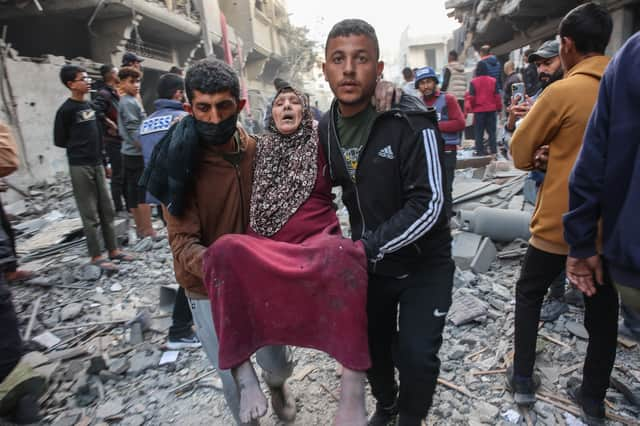
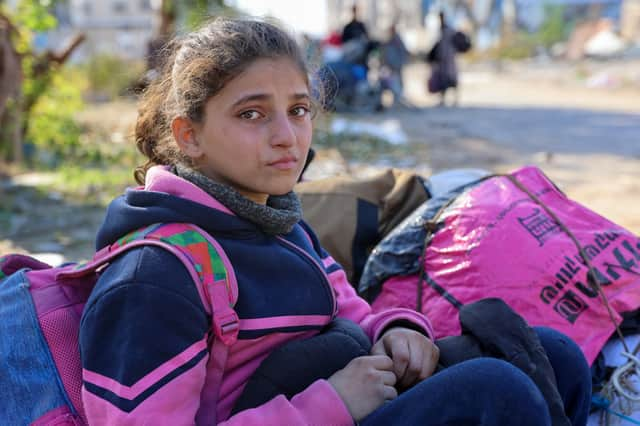
Since 2023, it is estimated that 45,000 Palestinians have been killed, though it is likely more. Save the Children has called Gaza the “deadliest place on Earth to be a child”, reporting that 96 per cent of children feel that their death is imminent. Along with children, pregnant women and new mothers are most at risk, with some having to self-induce early labour to avoid giving birth whilst fleeing. All the more reason for more women’s and equalities organisations in Scotland and beyond to raise their voices in support.

Netanyahu arrest warrant
Evidence of this kind is commonly available, a long list of human rights organisations have continuously urged global governments to end arms sales, pursue sanctions, and take heed of the International Court of Justice’s warrants for the arrest of Israeli Prime Minister Benjamin Netanyahu for war crimes.
Amnesty has called events in Gaza “genocide”, adding that it is “the most documented in history”. Yet so many leaders, including in the UK, remain unmoved. Instead, there are attempts to silence and isolate those nations who have basic courage to speak out against these atrocities. In Ireland, Israel has stated it will close its embassy over so called “anti-Israeli” policies. The embassy has already removed its flag outside its Dublin office.
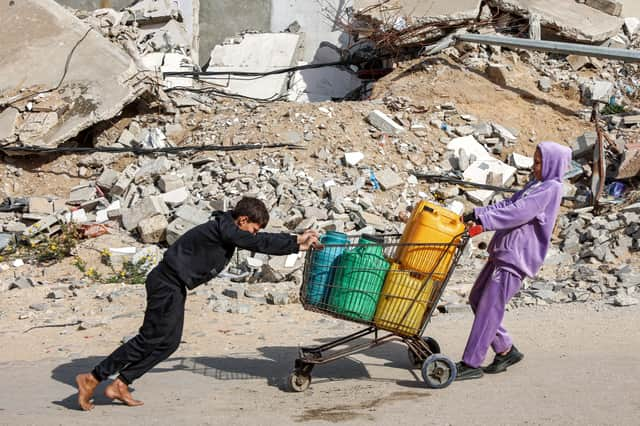
This lack of global, collective action has given permission for Israel’s government to proceed with impunity. Not just in how it operates in Gaza, where Doctors Without Borders says “the systematic denial of humanitarian assistance is destroying the conditions of life in Gaza” but also in the West Bank – which is not governed by Hamas – where state-backed and violent acts are increasing in a bid to expand illegal settlements and occupy more of the land. Just last week, Israeli settlers set a mosque on fire and the Palestinian Health Authority reported that a seven-year-old child was killed by a landmine.
Israel a global security risk
In Lebanon, United Nation Peacekeepers have said that Israel has breached the agreed ceasefire “at least 100 times”. It would appear that calls for a ceasefire, even when heard and imposed, can be ignored.
Furthermore, taking advantage of the uncertainty after the fall of the Assad regime in Syria, the Israeli military bombed Syrian military and research sites and expanding its seizure of Syrian land. The Israeli government has also approved plans to double the number of settlements in the Golan Heights, which it has illegally occupied since 1967. Under international law, this region is recognised as belonging to Syria.
Surely, in most other circumstances, this level of impunity by a nation would be treated as a global security risk?
What is the purpose of international law, of international accountability, when this can continue without any consequences? A perfect example of this is the US call for Israel to allow more aid trucks to enter Gaza.
In a letter by the US Secretary of State, a deadline was imposed, threatening a reduction of military aid if this was not met. According to the UN and aid agencies, there was no adequate increase in aid within this timeframe. The consequence? Absolutely nothing.
Fear of famine
An immediate increase in aid has been needed in Gaza for months and this is even more pressing now the weather has turned. December has seen temperatures in Gaza fall steeply. Whilst attempts have been made to build adequate emergency shelters, the low level of aid entering the region has meant that food has been prioritised over shelter materials to do everything possible to prevent famine.
Makeshift shelters are being flooded by seasonal rain, and shrapnel from bombing far away is flying through the flimsy fabric of these emergency shelters, injuring more innocent people. But there is nowhere else to go. Seventy per cent of buildings have been destroyed, and even refugee camps themselves are not protected from Israeli bombardment.
During this festive period, many grassroots organisations are organising vigils and raising funds for Palestine, many of them saying that Christmas and New Year cannot be celebrated the same way whilst we witness a genocide in real time. The Rev Munther Isaac, when giving his Christmas sermon in Bethlehem, said: “We have to fight against the growing apathy. We must not rest or grow weary. To do so, is to abandon not only the people of Gaza, but our very own humanity.”
In the UK, more and more of the public are paying attention, polling indicates that 60 per cent of Britons think Israel has “gone too far”. If not for the sake of innocent Palestinians, then perhaps for the sake of votes, our political leaders need hold Israel’s government to account.
In 2025, we can only hope that more of the world’s leaders find some courage and pay attention to what is happening through the lens of morality and humanity, rather than the lens of decades of failed foreign policy and support for harmful allies.
Talat Yaqoob is an equalities consultant and campaigner
Comments
Want to join the conversation? Please or to comment on this article.