
UK Budget: Rachel Reeves' £70 billion gamble means SNP must stop playing politics

The Chancellor’s ‘tax, borrow and spend’ Budget has raised the stakes considerably and the SNP can no longer credibly complain about ‘Westminster austerity’
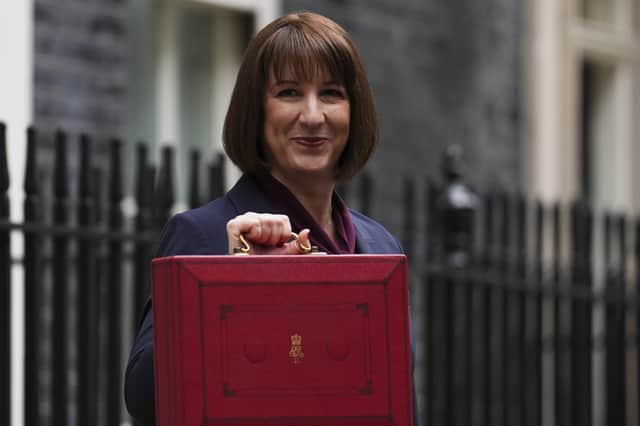
Make no mistake. Rachel Reeves’s Budget was a seismic event in British politics. This was not simply Labour’s traditional ‘tax and spend’ approach, but tax, borrow and spend – and on a historic scale.
Some £40 billion a year in extra taxes, the biggest rise in 30 years. An average of more than £32bn a year in extra borrowing. And spending increases of around £70bn annually over the next five years.
Overall, it means that taxation will reach 38.3 per cent of the UK’s gross domestic product by 2027-28, the highest level since 1948, when the country was reeling from the effects of the Second World War.
The implications of the Chancellor’s decisions will be vast. The main burden will fall on businesses with £25bn raised from increasing their National Insurance contributions. “I know that this is a difficult choice. I do not take this decision lightly," Reeves said.
This was one reason why an outraged Rishi Sunak attacked Labour for breaking its pre-election pledges. For the record, its manifesto said: “Labour will not increase taxes on working people, which is why we will not increase National Insurance, the basic, higher, or additional rates of Income Tax, or VAT.”

Weasel words
The party’s argument is that increasing employers’ National Insurance contributions was not covered by this pledge, an interpretation that is at best a stretch and, less sympathetically, plain wrong. Manifesto pledges should be simple to understand, not worded to allow weaselling out at a later date. It is made worse by the fact that “working people” will end up paying the price anyway as employers curtail pay rises and scrap recruitment plans.
However, arguments over pre-election promises – just like Labour’s efforts to blame the previous Conservative government – are a sideshow. The Tories spun out their ‘dodgy inheritance’ from Labour in 2010 for far too long; Reeves and Keir Starmer may have been entitled to a free pass for the blame game this time, but that’s all. They cannot be allowed to use it to explain away any of their own failings in government.
One unquestionably good consequence of the Budget is that the SNP will not be able to push the “Westminster austerity” line, or at least not with any credibility. The Scottish Government will receive an extra £1.5bn in day-to-day spending this year – making their Budget decisions considerably easier – with the Barnett Formula’s ‘consequentials’ resulting in an extra £3.4bn for Scotland next year, of which £2.8bn is day-to-day spending.
Passed the ‘Truss test’
In her speech, the Chancellor spoke of investing in Britain. Another way to look at it is as a great gamble with taxpayers’ money. If it is not wisely spent, the government could find itself in trouble. With that in mind, Labour may worry about handing over such a large sum to the SNP, whose ferry-building problems hardly inspire confidence.
However, judging by the markets’ fairly positive reaction, the UK is a decent bet. Lou Brien, a market strategist at DRW Trading in Chicago, said the Budget appeared to have passed the “Truss test”, with the markets seeing Labour's plan as "reasonable” at the very least.
Given the overall plan is designed to boost economic growth, the negative effects of the National Insurance increase on employers must be monitored carefully. However, the UK now has a plan for the next five years and it is up to everyone to try to make it work.
Of particular importance for Scotland is that both Labour and SNP ministers work together and abandon any thoughts of playing political games. The scale of Reeves’ ambition really does mean that failure is simply not an option.
Comments
Want to join the conversation? Please or to comment on this article.