
Suzanne's law: Murderers who refuse to reveal location of victim's body should not be freed
Jamie Greene urges the SNP to keep its promise to introduce his amendment to a new Bill that would require parole boards to consider whether murderers have revealed the location of their victim’s body
Few things in life could be so traumatic as losing a loved one at the hands of a murderer. Made worse if perpetrated by a partner or someone they trusted. The unimaginable pain felt by grieving loved ones never leaves.
Burying your loved one is part of the grieving process, a small solace of closure to those bereaved family members. It is something we should all be entitled to do. Sadly that is not always the case.
When the individual who so cruelly took a loved one away compounds the grief by refusing to reveal the location of their victim’s remains, we enter into a morally reprehensible scenario, one which I want to address. Currently the law dictates that someone who has completed the minimum part of a sentence for murder is eligible for release through parole.
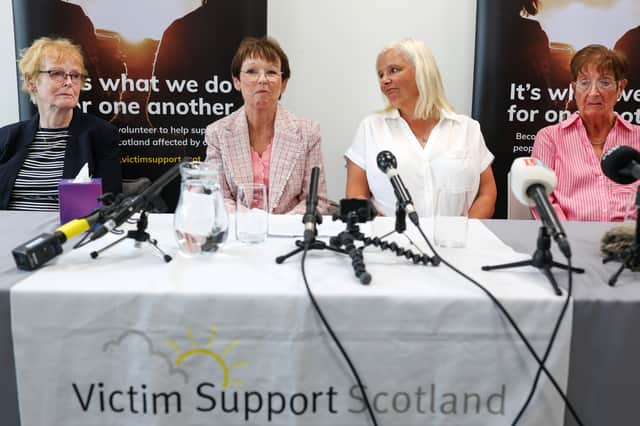

Justice system must be fair
In these circumstances, where a perpetrator chooses not to disclose the location of their victim’s remains, this throws into serious doubt whether or not they should be released from prison. Why should they get to enjoy freedom when those grieving families have to endure ongoing pain and distress?
This is about fairness, at the end of the day. The justice system itself should be about fairness. In my view, our justice system has for too long failed to deliver for victims of crime and their families. For too long the balance of the scales of justice have been weighted on the wrong side.
With numerous measures over the years to reduce sentences and keep offenders out of prisons, victims, their families, and the organisations that support them have come to believe that the justice system must now be reformed.
I believe that too and, back in 2022, I consulted on a Member’s Bill which proposed sweeping reforms to improve the rights of victims and give them a greater voice in the criminal justice system, particularly through the parole process. Part of my Bill included the introduction of what is commonly known as “Suzanne’s Law”.
Named after Suzanne Pilley, who was killed in 2010 and whose killer has never disclosed the location of her body, Suzanne’s law would require the parole board, when deciding whether to release a prisoner, to consider if the killer has not disclosed the location of their victim’s body.
Suzanne’s family have campaigned for these changes for many years, and it is to their credit that we are where we are today. It is also worth noting that Suzanne and her family are not the only victims of this crime, with high-profile Scottish cases like Margaret Fleming and Arlene Fraser also presenting justification for these proposals.
Replicating ‘Helen’s Law’
After years of careful negotiation with the Scottish Government, ministers conceded this argument and accepted an amendment I proposed to insert a form of Suzanne’s law into their own Victim’s Bill in March of this year.
My proposal alters the law in a meaningful way by dictating that the parole board must take the fact that a murderer has failed to reveal the location of their victim’s remains into consideration before deciding to release – something which may currently happen but is not a primary consideration. That has to change.
This replicates the essence of “Helen’s Law”, so named after a similar case, in English law which Westminster agreed to. There are those who believe that my proposals don’t go far enough, and that there should be an automatic ‘no body, no parole’ rule.
I am entirely sympathetic with their argument and I consulted on this very issue. The concern with that blanket approach was that it could, as some believe, conflict with existing human rights legislation and result in legal challenges. The last thing I want to do is drag grieving families through the courts further.
Difficult to justify release
There are some who argue that my proposals go too far, motivated by concerns around miscarriages of justice. I respectfully disagree with their assessment. Perpetrators have been convicted by a court of law and it is not the role of the parole board, nor politicians, to look beyond that conviction.
There are others who claim that my proposals won’t make a difference to current practice. I wholeheartedly reject this argument. If the SNP government fulfils its promise to deliver Suzanne’s Law at stage three of the Bill, then because the parole board must take a failure to disclose the location of a victim’s remains into account, this will arguably make it difficult to justify the release of an individual in such cases.
Whilst I welcome criticism and robust debate about these issues, this is no time for political point-scoring. We are talking about real people and real victims who are suffering unimaginable trauma.
Using words like “betrayal” only serves to cause more upset to those very people we are doing this for. I am indebted to Victim Support Scotland and both the families of Suzanne Pilley and Arlene Fraser for their patience and their incredible campaigning efforts.
I will also bring forward a wider package of measures that seek to improve our justice system, including giving victims the right to make impact statements to courts in all solemn cases, and establishing a Victims’ Charter to make clear the rights of victims throughout the criminal justice system.
I want to end on the words from Kate Wallace, the chief executive of Victim Support Scotland: “It is a simple change of one word, but the impact on the families who have lost a loved one in this way will be enormous."
I am privileged to change the law in this way, and I call on all politicians to help me achieve this.