
State of Scottish art: Supporting creativity cannot be viewed as a peripheral concern
There is a contradiction at the heart of many conversations about culture today


At this time of year, hundreds of art graduates across Scotland present their degree show work and emerge into the world. But they emerge into an environment where it is hard to build a creative career.
Across Scotland and beyond, the arts face increasing pressure. Cultural budgets remain stretched. Organisations are being asked to do more with less.
In February, Shadow Education Secretary Laura Trott described creative arts degrees as a key example of “dead-end courses”. Up to 75 per cent of student loans on these courses are not fully paid back, she said, using that as a justification to advocate further cuts to the funding of arts courses.
There is a contradiction at the heart of many conversations about culture today. Society depends on many of the things art produces. We want creative thinkers, innovative businesses, connected communities and confident young people. We want places with character, stories worth telling and a culture that reflects who we are. Yet many of the activities that create these outcomes are treated as optional rather than essential.
Perhaps it is time we asked a different question. Not whether the arts can or should justify their existence, but whether we have fully recognised their contribution.
For thousands of years, before governments, institutions or funding programmes existed, people made things. We carved, painted, wove, built, decorated, told stories and passed skills from one generation to the next. Art and craft are among humanity’s oldest forms of communication. They are how cultures remember, how knowledge is shared and how identities are formed.
Political language that dismisses some degrees as “dead-end” or “low-value” to justify cuts is dangerous. It mistakes price for value, assuming that a course matters only if its worth can be measured quickly through graduate earnings, while ignoring the wider contribution creative education makes to society.
Education is not purely a private transaction measured by salary. It is also a public investment in imagination, confidence, critical thinking, cultural participation and the shared skills a healthy society depends upon.
Scotland has never lacked creative talent. The challenge is ensuring that talent can be developed, supported and sustained long term. This is where organisations which work with and for artists have an important role to play.
Visual Arts Scotland is one of Scotland’s oldest visual arts organisations and the largest artist and maker membership platform in Scotland. Wasps Studios is Scotland’s largest provider of artist studio space. We are currently launching a two-year partnership which pools our resources to deliver engaging exhibitions across Scotland. This not only creates opportunities for artists and makers, but for communities to encounter contemporary art and craft closer to where they live.
Supporting the arts is not only about creating future artists. It is about creating future citizens: people who can think critically, solve problems creatively, understand different perspectives and contribute to the communities around them.
Recent research led by Professor Daisy Fancourt demonstrates that participation in creative activity contributes to health, wellbeing, social connection and resilience. The arts are a part of the social infrastructure that enables people to flourish.
If we want a Scotland that is innovative, connected, resilient and confident, then supporting creativity cannot be viewed as a peripheral concern. It is an investment in education, wellbeing, community and culture, an investment in future generations and, ultimately, in the legacy we leave behind.
If art helps us understand ourselves and helps us understand one another, is that really an optional luxury?
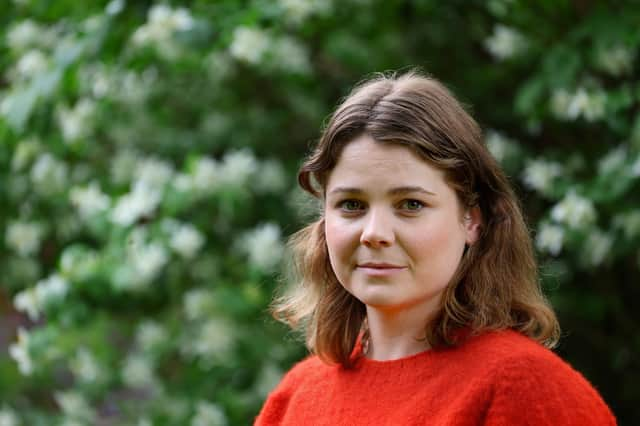
Tavienne Bridgwater is President of Visual Arts Scotland, Director of The Tim Stead Trust
Comments
Want to join the conversation? Please or to comment on this article.