
Our politicians lack the courage to start confronting the climate issue
The hour has come for the leader or leaders who can imagine, plan, and win support for our practical path through this crisis


Late on Wednesday afternoon, festival Edinburgh experienced a cloudburst that dumped 3 millimetres of rain on the city in ten minutes, and caused minor flash floods on streets across the city.
At the time, I was sitting in the Lyceum Studio on Grindlay Street along with thirty or so other Fringe goers, watching actor and writer Paul Ready’s solo play Little Animals; a humane and brilliant elegy for a late friend driven to despair, and perhaps to suicide, by humankind’s increasingly destructive assault on our liveable human habitat here on earth.
And it struck me - as the rain battered on the skylights of the Lyceum Studio - that the collision between this show, and this rainstorm, was exactly the kind of coincidence that now divides opinion, across the western world. Some will militantly insist that there have always been occasional fierce thunder-showers (true), and that our climate is not really changing much if at all, as a result of human activity (almost certainly false).
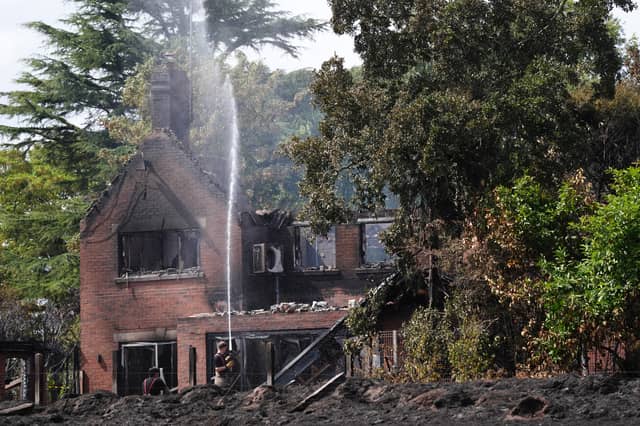
Others, though, look at the growing frequency and severity of extreme weather events, from 40 degree heatwaves and extreme drought in Europe to raging wildfires; and conclude that the global warming long predicted by scientists is happening, and is disrupting the subtle temperature balance within which the richness of life on earth evolved.
Even if we agree with the second group, though - as most claim to do - the question of what to do about climate change remains intractable. The problem is so big, so frightening, and so intimately linked to the systems we depend on for our daily needs and livelihoods, that most of us prefer not to think about it too often; it’s not a very popular subject, even on the infinitely varied Edinburgh Fringe.
So it is perhaps not surprising that most of our politicians - faced with these conflicting public attitudes, and with the sheer lobbying power of big oil and gas-based energy companies - simply seem unable to respond to the climate crisis on anything like the required scale or level. Much fun has been poked at Andy Burnham, for example, for responding to the recent cataclysmic images of wildfires on our screens with the macho gesture of - er - temporarily banning the sale of disposable barbecues.
And meanwhile, both the UK and Scottish governments are incessantly cajoled, mocked, lobbied, bounced and browbeaten towards supporting the development of the new Rosebank and Jackdaw oil and gas fields in the north Atlantic and North Sea; not because the arguments for opening up these fields are particularly strong, but simply because the companies who own them have the resources to dominate public debate.
The more our climate crisis deepens, in other words, the more it becomes obvious that the crucial missing factor, in the human approach to it, is truly courageous and effective political leadership. Indeed given the laughable ineffectiveness of our attempts so far to redesign our societies to meet the climate challenge, it is hard to describe the current generation of politicians, certainly across the west, as anything other than a bunch of cowards; too timid, both individually and collectively, to stand up to the huge vested interests that are still blocking decisive action, and to start working out a real common strategy for a sustainable future.
And this failure is not only dangerous in itself, but deeply damaging to democratic politics. At the moment, huge numbers of citizens in the west are living with constant anxiety about the self-evident unsustainability of our current systems, and the fact that as a species, we no longer seem to have, or to be able to imagine, much of a future. The huge mental health consequences of this absence of security and hope are etched in the lives of millions; and it seems to me at least arguable that this fundamental failure underlies much of the disgust with politicians, and alienation from politics and public life, expressed by voters across the political spectrum.
For if our current generation of politician lack the courage to start confronting the climate issue and those responsible for it, their long history of managerial politics aimed at maintaining business as usual has also apparently left them incapable of imagining the different, and in some ways more desirable, future that a well-planned shift to a more sustainable society and economy could have brought us.
Renewable energy, for example, could have been planned and developed on a local basis, returning much more power to local communities; politicians could, likewise, have begun work 40 years ago on developing new measures of what constitutes the good life for human beings, who by and large love to live in harmony with nature, surrounded by trees, gardens, and by rich and varied animal life. Deprivation of these things makes us ill; and an economic system that can only expand by destroying them is no more in our interests than one that undermines our food security by destabilising the climate.
There are dozens of sources of human fulfilment, likewise, that do not depend on ever higher levels of material consumption, starting with the creative arts. And all of these possibilities for a sustainable future world should have been embraced as positives by politicians of the left and centre-left, and worked into a vision for the future that could have united and inspired a whole society, including many businesses.
When it comes to humanity’s climate crisis, though, it seems clear that although the hour has come, the leader or leaders who can imagine, plan, and win support for our practical path through this crisis have not yet emerged. And that in their absence, we ordinary citizens must either step up ourselves, or sink further into the despair that eventually defeated Paul Ready’s friend; who so loved the beautiful world most of us alive today inherited, that he simply could not bear to see it burn.
Comments
Want to join the conversation? Please or to comment on this article.