
Labour's outrageous attacks on Nigel Farage's Reform show just how delusional they have become
Labour politicians need to speak to ordinary voters more and talk to each other less
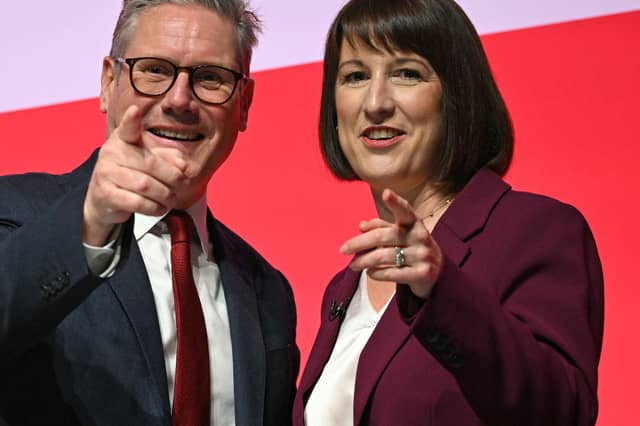


Apparently the Labour party conference was a great success. Keir Stamer’s speech knocked Nigel Farage out the park. Rachel Reeves’ economic homily put the markets and past Tory Chancellors firmly in their place.
We are being told to believe this positive narrative because some Labour MPs think it is so. If that is indeed their sincere take on how the conference should have sounded from the outside – rather than wishful thinking or an attempt to big themselves up – then I suggest they are in for a rude awakening.
Firstly I’m not alone in believing the personal demonisation by Starmer, Reeves & Co of Farage in particular and his supporters in general will only serve to transport many more voters into the Reform camp. The reason is simple, the issues that they have put on the political map and offer solutions to are what ordinary voters are genuinely concerned about and sympathetic towards.

Not racists or fascists
Being concerned about change in our country happening too fast and being beyond our control – or about what is seen as unfair and unjustified access to welfare benefits by those who have never contributed, when others who have can face access being denied or delayed – is neither racist nor fascistic.
Calling potential voters unpleasant names or making them feel uncomfortable in their own views is not a winning strategy. Stooping to suggest Farage flirted with the Hitler Youth was so preposterous that it could only be a conscious desire to descend into the gutter by Deputy Prime Minister David Lammy. Apologies in such circumstances are cheap.
Labour politicians should start listen to voters to learn what concerns them and how Labour can make living in Britain better – or risk making it worse. Their MSPs and MPs need to reboot their brains by repeating to themselves in the mirror “November Budget” – recognising the five months following that seminal event will help determine the next five years at Holyrood and the eventual path to the general election.
The possible solutions to our country’s economic problems that Reeves has to choose from – essentially cuts or tax rises – are unlikely to endear Labour’s potential voters to Anas Sarwar and his Scottish Labour colleagues, not least because the majority of the problems were caused by the Chancellor in the first place.
No matter how hard Reeves tries, there are no convenient excuses. The Covid pandemic has passed, the shocks to energy prices from Putin’s invasion of Ukraine have been dealt with, and the Brexit vote is now more than nine years ago. Unlike the ‘Project Fear’ predictions, there was no mass unemployment and trade did not collapse – indeed EU imports are actually higher.
No, the real damage was done by those overgenerous pay awards Labour provided without any productivity deals as soon as they took power (costing some £11 billion a year). It was by increasing borrowing by £32bn and taxes by £40b that the economy was sent into turmoil.
Labour created additional costs the government has to cover for local councils, quangos and other agencies it funds (by raising employers’ National Insurance contributions) and raised taxes to record amounts. Both policies slowed the wealth-creating private sector economy to a halt.
Readers don’t need to believe my shorthand for these reasons being the real cause of our economic torpor – they can read the Office for National Statistics and Office for Budget Responsibility figures that tell the same story and surveys of manufacturers that are a good indication of where the economy will be in six months’ time.
The real giveaway about the dawning reality is how, over the last month, there has been a concerted effort by many to talk up the need for Reeves to break Labour’s election pledge not to increase VAT, employees’ national insurance contributions and, particularly income tax.
Over that short period, there have been papers and speeches from the likes of the Resolution Foundation, the Institute for Government and the Institute for Fiscal Studies all calling for income tax to rise. That’s a big promise to break.
Dogs in the street know
Then there has been the reluctant acceptance from the Institute of Directors and the Confederation of British Industry of an increase in income tax being necessary if spending cuts cannot be found. Such pusillanimity amounts to appeasement. They know, I know, dogs in the street know, that after Labour could not get its own backbenchers to vote for benefit cuts of the scale Reeves originally planned, the alternative savings required won’t happen.
Taxes. Must. Rise. Under. Labour.
That’s why Labour allies are attempting to soften us up in advance for income tax increases – and such increases will be especially unpopular in Scotland because the SNP is already punishing many taxpayers in Scotland with higher rates and more egregious thresholds.
Ironically the SNP – although having raised income taxes first – will have no qualms about attacking Labour’s higher taxes it will benefit from and feast on.
Labour fooling themselves
The strategic problem for Labour is that, although raising income tax rates will likely lead to higher revenues that will satisfy the bond markets, it will also bring behavioural changes that will slow down the economy further, causing revenues to be lower than anticipated and resulting in additional borrowing and higher taxes as the general election approaches.
And Labour’s troubles will not end with the Budget, or rather the public’s reaction to it. There will be other causes that will bubble up from the Holyrood swamp, letting off noxious climate change gases that also risk regime change.
So yes, Labour MSPs can go into the Holyrood elections believing they are going to defeat the SNP and trounce Farage’s Reform – but they are only fooling themselves. They will be fighting an imaginary election nobody else is taking part in.
Comments
Want to join the conversation? Please or to comment on this article.