
John Swinney left exposed over Scottish Government funding for tournament at Donald Trump's golf course
The optics of public funding for tourney at US president Donald Trump’s new course in Scotland puts the SNP in a difficult position.

An audience with Donald Trump is expensive to those who can afford it, and very expensive to those who can’t.
One wonders what the ultimate political cost will be to First Minister John Swinney, who presumably found the conversation of his host harder to digest than the langoustine and Speyside-reared beef that was served up at Trump International Scotland on Monday evening.
Over the years, Mr Swinney has been no fan of Mr Trump. He endorsed Kamala Harris last year, and as recently as this March, questioned whether the US president’s state visit should go ahead later this year. But realpolitik has dictated an about turn.
The SNP leader has repeatedly insisted he has a “job to do” as First Minister and an obligation to protect and promote Scotland’s interests by meeting Mr Trump.
Mr Swinney has been criticised, unfairly to my mind, for adopting this stance. Given the economic pain meted out by the Trump administration’s chaotic trade policies, it is right that he at least attempts to salve the wounds. The problem, however, is that he and his government have gone too far.
Ahead of his meeting with Mr Trump, Mr Swinney announced £180,000 of public funding was being allocated to the Nexo Championship, a golf tournament taking place at the 79 year-old’s Aberdeenshire course next month. The press release was carefully worded, noting the money was being allocated via VisitScotland, a non-departmental public body, to “support delivery” of the event, and bolster tourism.
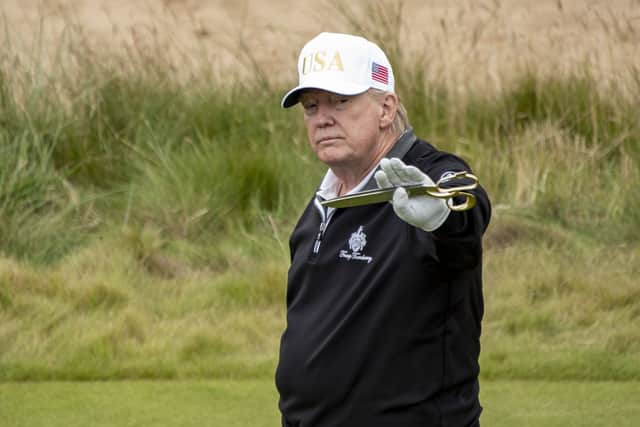

Such linguistic gymnastics fail to obscure questions that Mr Swinney’s administration has yet to answer. Chief among them is whether the request for funding was made by Eric Trump during his meeting with Mr Swinney in March, and if any of the £180,000 will go directly to Trump International Golf Club Scotland Limited?
If so, it would not be the first time that doubts have aired over the wisdom of allocating taxpayers’ money to Mr Trump’s Scottish companies. During the coronavirus pandemic, Mr Trump’s resorts claimed more than £3 million via the job retention scheme, while Turnberry made scores of redundancies over the same period.
Even so, an emergency scheme utilised by hundreds of thousands of firms around the UK cannot be compared to Mr Swinney’s decision. His announcement, and just as importantly, the timing of it - days before he attended the Aberdeenshire resort for dinner alongside Mr Trump - plays into the hands of those who believe Scotland’s devolved administration is appeasing the US president, or at least attempting to, amid ongoing tensions around tariffs and trade.
At a time when Scotland’s public services are faced with making deep budget cuts, the merits of providing even a modest six-figure are difficult to justify, and not just because of the president’s deeply divisive politics. The tournament in question has a relatively low status, having only been staged once before, under a previous name, way back in 2020, when no spectators were allowed due to pandemic restrictions.
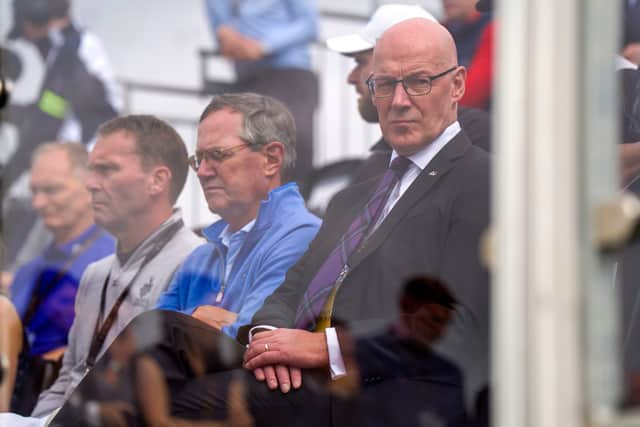
And in any case, why is it necessary to open the public purse at all when you consider the resources of the event’s organisers and its backers? The most recent accounts for the European Tour, the organisers of the championship, show it posted a group turnover of more than £448 million with a cash balance of £72m. Could it not delve into its coffers to foot the bill at Mr Trump’s property, or call on some of its corporate partners, such as Rolex, Emirates, or BMW, to help out? Or what about Nexo, the Switzerland-headquartered cryptocurrency platform that has ponied up to serve as the tournament’s headline sponsor?
As luck would have it, Nexo is known to some in the Trump clan. Two years ago, the company paid a fine of around £33m to settle US regulatory charges, but like many others it has been buoyed by the Trump administration’s pro crypto stance, and revealed earlier this year it would be returning to the US market. The announcement was made at an event in Bulgaria entitled ‘Trump Business Vision 2025’, where the star speaker was none other than Donald Trump Jr.
In Mr Trump’s world, none of this is unusual. In the decade that has passed since he first set his sights on the White House, he has consistently pushed the boundary between public duty and private gain, ensuring his network of properties in the US and the wider world benefit from his tenure in the highest public office.
That was in full evidence during his press conference with Prime Minister Sir Keir Starmer when, asked about the US Federal Reserve, Mr Trump responded by praising his “opulent and beautiful” resort at Turnberry. It is the kind of publicity that money can’t buy and shame can’t prevent.
It all seems a far cry from seven years ago when Mr Trump prepared to begin his first term in the Oval office. Back then, Mr Trump’s team sought to head off fears raised surrounding his sprawling business interests, insisting he would be “isolated” from them, with all the assets transferred to a revocable trust managed by his sons and other Trump Organisation executives.
At the time, that arrangement felt like a feeble and ineffective concession to the myriad ethical concerns surrounding Mr Trump. Now, it serves as a quaint reminder of when the Trump White House made the effort to pretend that it cared about such matters.
Indeed, a filing published by Companies House last month showed that once again, Mr Trump was named as a “person with significant control” over his Aberdeenshire resort alongside Donald Jr. As such, the Scottish Government funding could be viewed as flouting the US constitution’s emoluments clause, which restricts federal officials from receiving gifts or benefits from foreign governments.
Amid the unrelenting and chaotic news cycle spun by Mr Trump, such crucial issues are all too often drowned out, insulating him from any sustained scrutiny. But in the run up to next year’s Holyrood elections, Mr Swinney may not be so lucky.
Comments
Want to join the conversation? Please or to comment on this article.