
How Scotland's Stone of Destiny has finally found its place as a modern-day cultural icon – Martyn McLaughlin
The high drama of the fabled Stone of Scone’s return north of the Border 30 years ago delivered something of real value

Thirty years ago this week, a team of conservation experts from the then Historic Scotland travelled overnight by train to London, where they were met by armed Metropolitan Police officers for a secretive, high-security operation.
Once the doors to Westminster Abbey closed to visitors for the day, they made their way inside, bringing with them an array of specialised equipment, including a custom-built scaffold, a pulley, and a bespoke hand barrow built to the designs of medieval stonemasons.
For months, the operation had been rehearsed in Scotland, but in the early hours of a crisp autumn morning, it got underway in earnest, as the Stone of Destiny was painstakingly prised out from under the Coronation Chair, and readied for its long journey home.
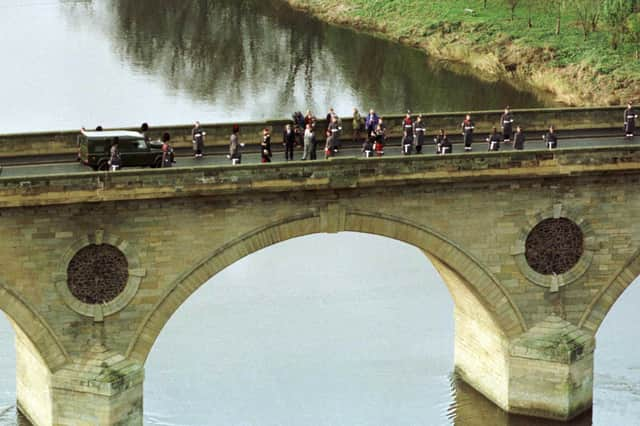

Bomb scare during journey North
The pageantry and high emotion continued as the ancient symbol of Scottish sovereignty – stolen by Edward I in 1296 – inched closer to home. A bomb scare sparked momentary fright as it crossed the Tweed, but eventually it made its way to Edinburgh, where thousands of people lined the Royal Mile to see its arrival.
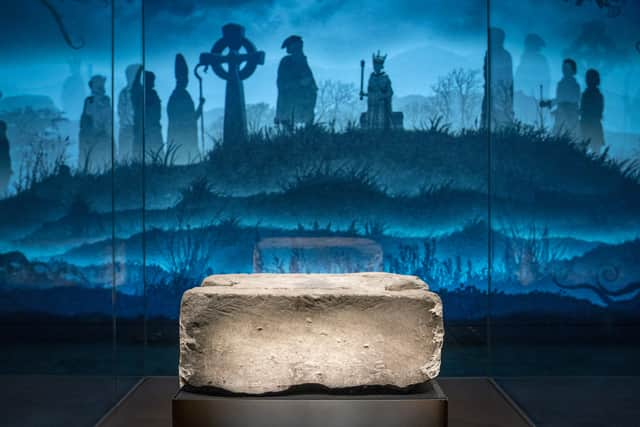
Some two-and-a-half years have passed since the relic began the latest chapter of its storied history, serving as the centrepiece of the new Perth Museum. In doing so, it has helped to breathe new life into the historic City Hall venue, while allowing a new generation of Scots to set eyes on a crucial sliver of the nation’s history.
Indeed, the boon to tourism in the former Scottish capital has been one of the greatest legacies of its return. In its opening year, an ambitious target of 167,000 visitors was set by the museum; as it panned out, more than a quarter of a million people passed through its doors.
94 per cent satisfaction
The most recent accounts for Culture Perth and Kinross show that even after the thrill of the new subsided, the institution continues to confound expectations, with an impressive 185,493 visitors in 2025/26, and a resoundingly positive visitor satisfaction rating of 94 per cent.
Unsurprisingly, the Stone of Destiny itself is a key driver. Across the same 12-month period, there were 50,691 tickets issued for the experience which takes place across two immersive audio-visual rooms. Were it not for an idiotic attack on the exhibit which damaged its casing and led to a lengthy closure, curators believe the figure would have stood closer to 70,000.
Such numbers may pale in comparison to big tourism hitters in Scotland, such as Edinburgh Castle, but any attempt to emulate such attractions would necessitate a degree of commercial razzmatazz that sits ill at ease with the Stone of Destiny exhibit.
Worth millions
In any case, there is plainly no need to up the ante. Coupled with the encouraging visitor numbers, the museum is having a positive impact on the city economy.
A socio-economic impact study of the museum undertaken last year estimated that, between its opening in March 2024 and September 2025, it generated around £9.85 million in net socio-economic benefits to Perth.
After centuries of enmity, and all the admittedly fun cloak-and-dagger stuff, it is cheering to see how the Stone of Destiny is now a valuable part of Scotland’s cultural fabric, as it continues to capture the public’s imagination.
Comments
Want to join the conversation? Please or to comment on this article.