
How Scotland can achieve a democratic revolution on a par with votes for women – Ewan Aitken
A lack of connection with the democratic process has prompted many people to stop voting. Genuinely local politics can change that
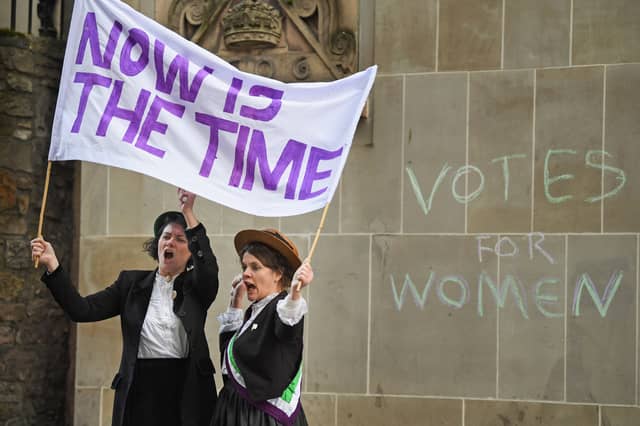

On May 6, 1999, when I first stood for election, it rained on and off all day. During one downpour, I greeted an older woman called Flora outside the polling station saying, “thank you for coming out to vote on a day like this”.
She looked at me with both pity and disappointment: “I wouldn’t be anywhere else, son. I didnae come out for you. I came out for my mother. She fought for the right to vote, and I owe it to her never to miss an election whatever the weather.”
Such a personal connection between voters and the democratic process is a rare thing these days. Instead, there is a sense of disconnection, of scunnered-ness, a feeling of ‘why bother, my voice doesn’t matter anymore’.

Largest councils in Europe
In 1919, in the first local elections after Flora’s mum and many others won the vote for women, there were 1,142 local councils in Scotland across three layers: county, burgh/town and parish. It was complex and fragmented, but it meant many more people could be elected and combine democratic office with a day job or other role, bringing decisions and decisionmakers closer to voters.
Today that number has dropped to 32 and Scotland currently has the largest councils in Europe with an average population of 170,000 whilst the average in Europe is 10,000. Norway, with a similar population to Scotland, has 357 councils and 15 regional authorities.
READ MORE: Call for Swinney to embrace 'Manchester model for Scotland' without radical council overhaul
There is real and robust evidence that smaller, more local councils are more effective, build a stronger relationship of accountability between voters and decision-makers, and enable a wider range of people from more a diverse range of backgrounds to get elected. That, in turn, makes the public better informed about why decisions are or are not taken.
On the other hand, there is no evidence that fewer, bigger councils and denuded local bodies achieve any of these things.
Plans for change
With the Scottish government’s new proposals, we have an opportunity to not just radically change our local government structures, but to build a new positive relationship between voters and decision-makers. This means devolving statutory, decision-making powers and responsibilities to the 120 to 160 local “community authorities”, as the proposals call them, making them the primary place of decision-making.
Decisions should only move to regional structures when local is too local. This would mean things like major transport infrastructure, economic development, community justice, engagement with health and other public services etc.
Everything else, including council tax raising powers, should sit with the community authorities, with money going from them to the regional authorities when required, not the other way round. Regional authorities should be places where the community authorities collaborate on strategic projects, rather than another governance hierarchy.
READ MORE: Even SNP councillors in John Swinney’s backyard are rejecting his half-baked council reforms
Centralising power does not work. Empowering local communities does. We have a huge opportunity here to be bold and achieve the kind of seismic change in our democracy that Flora’s mum and her many fellow campaigners did.
Or we could just continue to make the same ‘big is beautiful, centralising is cheaper’ mistake which has got us into the mess we are now in. The choice is ours, if our government chooses to listen to the evidence not the accountants.
Ewan Aitken is a former charity chief executive and Labour politician
Comments
Want to join the conversation? Please or to comment on this article.