
How BBC 'impartiality' risks complicity in misinformation
Brexiteer propaganda, Donald Trump’s false statements about the Ukraine War and Israel’s implausible defence of its actions in Gaza have all made journalistic ‘impartiality’ a barrier to uncovering the truth



When Tim Davie was appointed director general of the BBC, in the summer of 2020, he issued a statement outlining the challenges the corporation was facing, and emphasised his commitment to “content of the highest quality and impartiality”, saying this was absolutely central to its mission.
It was a welcome statement, of course; but for those who had been paying attention to the evolving debate around 21st-century journalism, Davie’s choice of language was slightly ominous, not least in his decision to place the idea of “impartiality” front and centre. It is an idea much cherished by the BBC and mainstream media in general, of course.
Even today, you will hear producers and editors still recycling the old mantra that if news programmes are being criticised by both sides, then they must be doing something right; and that view probably made sense, during a long postwar period when the main job of “impartial” political journalism in the UK was to hold the ring between two competing political parties with broadly similar attitudes to the political system within which they operated.
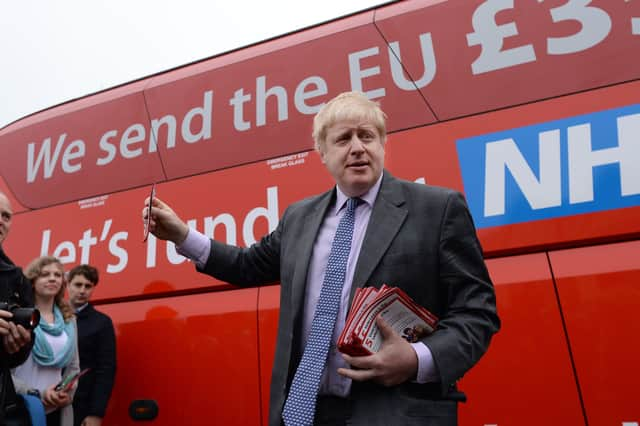
Seismic Brexit debate
All of that began to change, though, with the arrival of the internet, and the sudden rush into mainstream politics of attitudes to journalism and news previously only found in what was known as the gutter press. There have always been scurrilous newspapers, of course, doing the bidding of their wealthy owners at the expense of decency and truth; trashing trade unions, or running distraction from the realities of power by whipping up hatred against vulnerable minorities.
Their views, though, tended to be held at bay by a political and media establishment which – particularly after the trauma of the Second World War – generally adopted more liberal and enlightened positions.
All that, though, began to change with the seismic UK Brexit debate of 2015-2016, in which one side was broadly offering fact-based arguments about why EU membership was good for us, while the other mounted an unabashed social media campaign of wild disinformation, suggesting that the EU was responsible for evils ranging from the plight of polar bears to the alleged imminent extinction of the pint of beer.
It is an understatement to say that the principle of “impartiality” between these two camps served the BBC poorly, over the Brexit referendum period; and that campaign – orchestrated with the help of increasingly powerful right-wing networks across the Western world – only marked the beginning of the new media age we were entering, as Donald Trump swept into the White House in November 2016 on a tide of lies and fantasies, and then repeated that victory, more emphatically, in 2024.
‘Without evidence’
Today, as a result, we have to endure torrents of abject nonsense and outright lies pouring forth from the White House in the guise of official statements and presidential speeches, on subjects ranging from climate change and the safety of vaccines to the quality of life on the streets of London.
In the past week alone, the Trump government has peddled scaremongering lies about the crime situation in America’s capital city of Washington; about freedom of speech in Germany and other European countries; and – most urgently – about Ukraine, where Trump’s garbled version of events, sometimes blaming President Zelensky and his government for a conflict clearly triggered by Russian aggression, could literally threaten the freedom and security of millions, across Ukraine and Europe.
Many serious media organisations, of course, have become slightly uneasy about this, and have begun to report some of President Trump’s remarks with phrases like “without evidence” attached; yet these fact-free tirades are still respectfully reported, often without any such caveats.
And at the centre of all these journalistic issues, of course, lies the current horrific slaughter in Gaza, where – despite this week’s deliberate targeting by the Israeli Defence Force of the respected Al Jazeera reporting team in Gaza, and a death toll of journalists unprecedented in history – the BBC and other Western broadcasters still feel obliged to “balance” their reports from Palestinian journalists on the ground (no Western journalists are allowed into Gaza) by featuring long and, to many, ever more insulting and implausible statements from the Israeli government, trying to justify their actions.
Basic democratic principles
It is time, in other words, for senior media executives like Tim Davie to begin to question whether the idea of “impartiality” is any longer a useful or even reputable guide to how to cover such events. That serious journalists should seek to tell the truth goes without saying, however difficult and inconclusive that search may often be.
The idea embodied in the word “impartiality”, though – that truth must lie somewhere halfway between these proud and deliberate purveyors of lies, and those who are still trying to base their politics on some connection with facts and evidence – is surely now a dead letter, and one that risks making once-respected media organisations complicit in reckless and dangerous campaigns of disinformation. Of course, disinformation can and does come from all sides in politics, as – on occasions – does intolerance, and disrespect for some of the basic democratic principles by which we are supposed to live.
In these times, though – with Trump in the White House entertaining Benhjamin Netanyahu as an honoured guest, flying to Alaska to carve up Ukraine with his ‘friend’ Vladimir Putin, and sending his Vice-President on a princely UK holiday tour that involves insulting and lecturing his hosts daily from a position of profound ignorance – I think there can be no doubt about the prime source of the current tsunami of lies and lawlessness threatening our public life.
Nor can there be any doubt about the challenge that political shift poses to serious media organisations, in a news landscape now changed forever by some of the most malign, brutal and dishonest actors we have seen, in the last 80 years of global politics.
Comments
Want to join the conversation? Please or to comment on this article.