
How aggressive adults risk turning generation of kids off Scottish youth football – Martyn McLaughlin



Should parents and officials be banned from shouting anything from the sidelines?
As someone who grew up in an era when housing estates and greenspaces were peppered with the infamous ‘No Ball Games’ sign – a blanket deterrent which may help explain the nation’s dire footballing record in international competitions and my own failure to sign terms with Barcelona as a no-nonsense centre-back – the abundance of youth football leagues and teams across Scotland is something to be cherished.
Often, they provide much-needed social cohesion in areas that have been hollowed out by years of neighbourhood service cuts and declining community facilities. In places where hope and pride are in short supply, the power of sport to unite and inspire should not be underestimated.
But in a game driven by passion, emotions can run high, and provide the exact opposite of a safe, inclusive environment. An alarming case in point is the Central Scotland Football Association (CSFA), a regional organisation that allows children as young as five to have fun and thrive. Or at least, it would, were it not for the adults.

Threats, abuse and violence
In a damning snapshot of how youth football is being tainted by abusive behaviour, the association has laid bare a litany of violence, threats, and discriminatory language that has led to some matches being abandoned.
Since the start of the new season, the flashpoints have allegedly included a team official being headbutted by another official during a football festival for five and six year-olds, while several games were called off during the opening week because of officials intent on fighting with one another.
Parents, too, have been embroiled in the disorder, with one alleged to have aggressively approached a league official after being asked to move away from an area reserved for players and coaches. Other allegations include discriminatory language being used during matches, adults directing abusive comments at young players, and team officials threatening children.
Anyone who spends their weekends watching from the sidelines will know the scourge of pushy and competitive parents and coaches is not new, but the scale of the problems detailed by the CSFA marks a nadir.
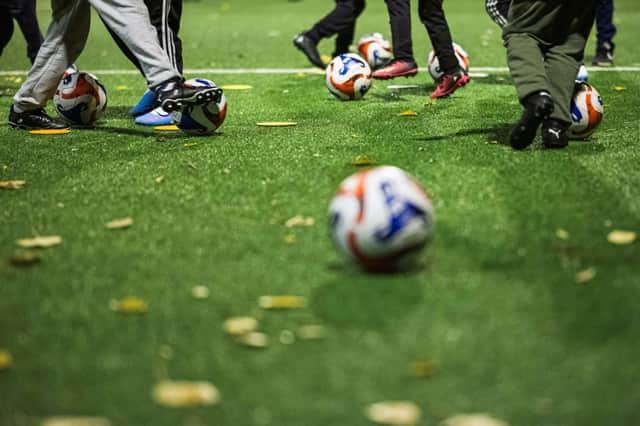
‘Let them play’
Some may attribute this decline to a general post-pandemic breakdown in respect and tolerance, while others have already called for those with oversight of youth football to tighten the rules around misconduct and misbehaviour.
But that very goal has been the focus of numerous campaigns down the years. As far back as 2009, the Scottish Football Association and Positive Coaching Scotland launched its ‘Let Them Play’ initiative. Designed to usher in a cultural change, it distributed rule books to parents and coaches on how to behave.
The scheme was pushed again last year in the hope of “setting the tone from home to the sidelines to the centre circle”, according to Paul McNeill, the SFA’s head of football development. Evidently, such good intentions have only got us so far.
Ultimately, the most powerful tool to stamp out abuse is for those adults involved in youth football to remind one another that they are role models for the children taking part. If that requires naming and shaming, so be it, and if it continues to fall short, one way of expediting change might be to ban parents and officials from shouting anything at all during games. Why should an ugly minority ruin a game that should be a force for good?
Comments
Want to join the conversation? Please or to comment on this article.