
Nicola Sturgeon leaves the stage with a blackly comic lack of self-awareness


Former first minister’s tale is one of an awkward young woman who transformed herself into the most popular politician in Scotland before her ego destroyed her reputation
Hers is a story of the corrupting effect of power where hubris is swiftly followed by nemesis.
It’s the tale of an awkward young woman who transformed herself to become – for many years – the most popular politician in Scotland before, her ego out of control, destroying the reputation she so carefully cultivated.
And it affirms the truth of the adage that all political careers end in failure.
Twenty seven years after entering the Scottish Parliament as one of the first MSPs of the devolution era, Nicola Sturgeon is no longer a practising politician.
The former First Minister has departed the debating chamber – a space she once dominated with skilful brutality – for the final time. A significant era in Scottish political history has drawn to a close.
The moment was marked with a wide-ranging interview with the BBC.
Inevitably, the matter of her failed attempt to drive through legislation that would have permitted anybody, from the age of 16, to self-identify into the legally recognised sex of their choosing came up.
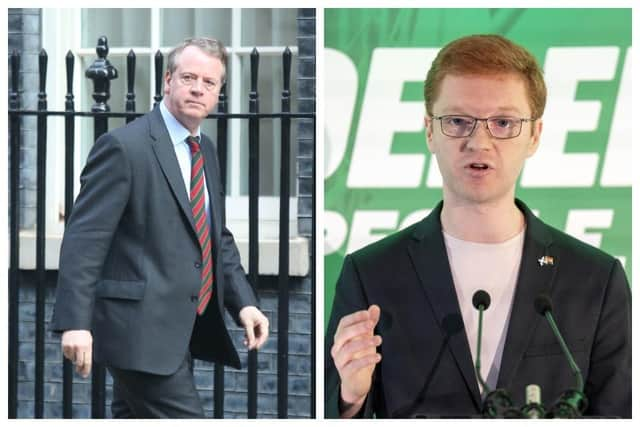
The Scottish Parliament voted – in the face of overwhelming public opposition – in favour of these radical gender reforms in December 2022. One month later, the then Conservative Secretary of State for Scotland Alister Jack used powers given to him under Section 35 of the Scotland Act to block the new self-ID law on the grounds that it was incompatible with the UK-wide Equality Act.
One month later, Sturgeon announced her resignation as First Minister and SNP leader. She went on, in 2024, to tell an audience at the Charleston literary festival in Sussex that, when it came to the row over transgender rights, she felt others were approaching the matter in terms of how they thought about her rather than the issue before them.
This, she added, felt true to her on a number of other issues and so she concluded that if she removed herself from the equation, perhaps the politics, discourse and debate in Scotland would be “a bit more healthy”.
Despite previously recognising her position on the clash between women’s rights and the demands of trans activists contributed to the end of her time in office, Sturgeon told BBC Scotland’s political editor Glenn Campbell, last week, that she had not spent too much political capital on the issue. The idea she had become obsessed with it was nonsense peddled by political opponents.
And then she answered a question in a way somebody utterly, all-consumingly obsessed with the issue might.
Asked whether trans-identifying Isla Bryson – Adam Graham at the time of the rapes of which he was convicted – was a man, Sturgeon refused to confirm a position. To do so would be to contribute to the “demonisation of trans people”.
In the weeks before she announced her resignation, Sturgeon repeatedly refused to give a straight answer on the question of whether Bryson was a man or a woman. She humiliated herself, parroting the line that the individual in question was a rapist, as if this were a third sex rather than the description of a man convicted of rape.
Sturgeon’s adherence to this wildly incoherent position three years after it contributed to her political demise shows real commitment.
A week before the BBC interview, the former First Minister delivered a final parliamentary speech during which she offered advice to those who will fill the chamber after May’s election.
It was a remarkable interlude.
Over her years in Holyrood, she had seen politics and political discourse change almost beyond recognition, and not always for the better. She knew some responsibility for that was hers.
This titanic understatement was followed by advice to her younger self which she hoped others might follow.
Make friends in other parties, she said. Opponents, she advised people she had, until recently, treated like the scum of the Earth, need not be enemies.
Not everything, Sturgeon added, had to be a scandal or an outrage.
This was quite something from a politician for whom every second of her career has been about creating outrage.
Sturgeon was the most divisive First Minister since the establishment of the Scottish Parliament in 1999. During her eight-and-a-half-year period in power, she characterised her Unionist opponents as malign and deceitful, she defamed feminists who opposed her self-ID policy as racists, and she turned a blind eye to abuse suffered by colleagues who dared to dissent from party lines.
Sturgeon’s denunciations – regular and frequent – of political opponents could have thundered from the pulpit of a fire-and-brimstone preacher. One could agree with her or one could be damned to hell.
Some months after I read Sturgeon’s memoir, “Frankly”, one particular passage sticks with me.
On speculation over her private life, Sturgeon wrote that she’d never considered sexuality, her own included, to be binary.
This intrigued me not because of the matter being discussed but because of the way she framed it. That declaration that sexuality – “my own included” – is not binary spoke of an unease with herself. Rather than simply declare “this is me”, she sought the cover of the crowd.
This is something cowards do. It’s something bullies do, too.
Thirty years ago, Nicola Sturgeon was an awkward and sometimes spiky young SNP spokeswoman, talent-spotted by Alex Salmond. A decade later, she was his slick deputy as they led the SNP towards its first Holyrood election victory. And, a decade after that, Nicola Sturgeon, as First Minister, was one of the most successful politicians in the UK.
Then she made the fatal mistake of beginning to believe in her own brilliance. Her ego ran wild. Sturgeon sneered at the views of the people who’d once queued up for selfies.
The former First Minister has experienced the hypnotic highs of hubris and shuddering lows of nemesis.
The blackly comic lack of self-awareness in her final remarks – in Holyrood and on the BBC – suggests it could be some time before Nicola Sturgeon enjoys catharsis.
Comments
Want to join the conversation? Please or to comment on this article.