
Berwick Bank: Why Scotland's economy will suffer if 'world's biggest' windfarm slaughters seabirds
Windfarm developers need to start taking conservationists’ concerns about the death toll among seabirds more seriously

For every great leap forward taken by humanity, there is usually a victim. And, more often than not, those victims have been wild animals.
The total biomass of wild land mammals, for example, has declined by an estimated 85 per cent since modern humans came on the scene. Today, it’s thought just four per cent of the world’s mammals by weight are wild, with humans making up 34 per cent and livestock 62 per cent.
The advent of renewable energy has been one of our latest great leaps forward. Whatever Donald Trump may say, it represents a golden opportunity for Scotland to create new jobs as the oil and gas industry declines and do our bit in the fight against climate change. So we welcome the Scottish Government’s decision to approve the Berwick Bank offshore windfarm off East Lothian.
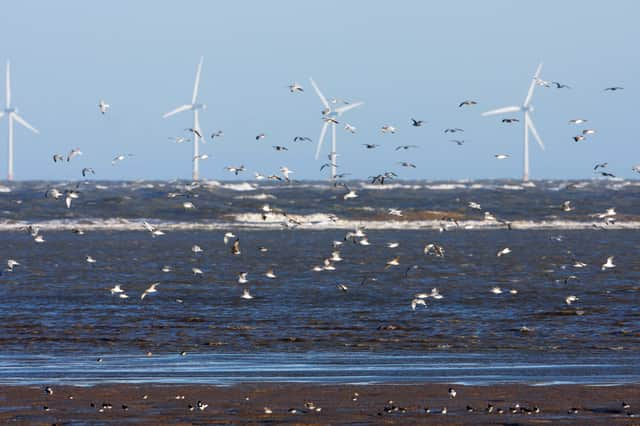

Seabird species pushed to extinction?
Believed to be the world’s biggest, with 307 giant turbines, it will be able to produce up to 4.1 gigawatts of electricity, enough to power every home in Scotland twice over. However, there is no escaping the fact that it will also result in the deaths of seabirds.
The National Trust for Scotland said the decision was "deeply disappointing", fearing "significant harm" would be caused to seabird colonies at the nearby St Abb's Head nature reserve. The approval is conditional on a plan to reduce the number of casualties, and the Trust added: “If this is not adequate... then the development should not proceed.”
RSPB Scotland's director Anne McCall went even further, saying it was “a terrible decision on a really bad development”. She claimed Berwick Bank would be “catastrophic” for globally important seabird populations and could even “catapult some of Scotland's most-loved seabird species towards extinction”.
Clearly, this cannot and must not happen. A persistent criticism of windfarms has been the number of bird fatalities and it’s time for the industry to take this issue much more seriously.
Scotland is a wild and beautiful place. If windfarms become associated with the mass slaughter of its wildlife, the resulting backlash from the public could threaten future developments – and that golden opportunity we need so badly to take.
Comments
Want to join the conversation? Please or to comment on this article.