
Additional Support Needs in Scotland and a perfect storm for schools - Cameron Wyllie
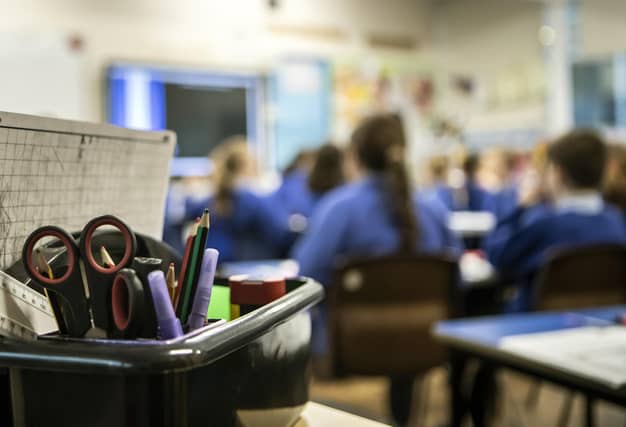

As the proportion of children with an ASN grows year on year. Where does this end?
An extraordinary statistic was released recently by the Scottish Government – 40.5 per cent of schoolchildren in Scotland now have a recognised Additional Support Need (ASN). These children are entitled, by law, to extra help in their educational setting, which is, for almost all of them, a mainstream school. Like so many things to do with education in Scotland, it will be very difficult for the average member of the public to take this on board.
Many people of my generation – and some a lot younger than that – will say ‘How can this possibly be the case? When I was at school nobody was dyslexic, or autistic or had ADHD. Why has this happened?’ Well, of course, back then, some young people did have these conditions, and most often their education was badly affected by the absence of diagnosis: they were written off as stupid or lazy or badly behaved. Some of them went, for bad or for good, to ‘special schools’. That said, many of them went on to prosper. I’m not alone in thinking that some of our most recent Prime Ministers would be diagnosed with an ASN if they were at school now.
Some of these needs are fairly obvious causes for additional help – if English isn’t your first language for instance, or if you require speech therapy, or if you’re a looked-after child. But the largest group (over 63,000 kids) have ‘social, emotional or behavioural difficulties’. Whatever the diagnosis, nobody can be in any doubt that we need to do our best by all of Scotland’s children. The problem is that that, in current circumstances is completely impossible, and in order to achieve it we require a total revaluation of our educational system, which is – in so many ways – heading towards an abyss. The average classroom teacher, remember, is there to teach classes of children – in many schools 28 or 30 in number. Within that class, they are expected to provide differentiated help for every child, but in particular for children diagnosed with an ASN. They must maintain order in the classroom while dealing with a child who is abusive or violent towards other children or themselves. They must be calm and warm and perceptive. And – maybe our ‘educational establishment’ is beginning to forget this – they have to teach and enable their charges to make academic progress.
Now, no matter how justified these diagnoses are for these 40 per cent of Scottish schoolchildren (and you can be sure that figure will only go up) we have to consider the effect diagnosis has. In ‘The Royle Family’ Caroline Aherne’s character observes of her own child ‘The school said he had ADHD, but it turned out he just couldn’t be bothered concentrating.’ Actually, both of these things can be true – a child with ADHD can concentrate to some extent, and it becomes the teacher’s (very difficult) task to determine how far inattention is down to a condition beyond the child’s control, and how much the child may be inclined to use the diagnosis as an excuse for not doing his Maths. And then there are parents. There is no doubt that diagnosis often removes a great deal of worry from parents’ shoulders, but I think that – had I ever been a parent – I would have tried very hard to persuade my child that an ASN diagnosis mustn’t be used as a licence for rudeness or laziness or bad behaviour, while expecting the school to do what it could (within its resourcing limitations) to help them.
Of course, teachers want to help, but most of them aren’t trained in the management of children with really grave difficulties, who are in ordinary schools because of the Scottish Government’s insistence on the ‘presumption of mainstreaming’. Some of the work is meant to be done by classroom assistants, some of whom are saints, but they too need more training (and more pay) and there aren’t enough anyway. It’s interesting to note on social media how many ASN parents are turning against this aspect of ‘inclusion’ and towards the fact that, in order to be educated to the best of their ability, far more ASN children need to be in special schools or special units within schools, where dedicated, properly trained professionals can help them, and thus assist with classroom management back in mainstream schools.
In all this, the young people I feel sorriest for are two groups – really able children, often bored and sometimes a bit frightened by classroom disruption and the consequent interruption of their progress, and children who aren’t academically able at all. We used, of course, to talk about ‘intelligence’ as a concept in education, but that’s become a bit of a dirty, elitist word. Many children who struggle with their schoolwork are thus described as ‘globally challenged’; one might think that kids who find academic work really hard might benefit from some individual tutoring too, but very often they don’t have an ASN, and thus the legal right to that help. Teachers want to help them.
But then, teachers want to help everybody. Money is thrown away by local authorities challenging parental claims that their ASN child isn’t receiving appropriate help. Acts of violence are committed by young people who are returned to the same school the next day. Nobody wants to be a Head. Hundreds of teachers are leaving the profession. Attendance at school is at an all time low. And the proportion of children with an ASN grows year on year. Where does this end?
Comments
Want to join the conversation? Please or to comment on this article.