

A new book by pre-eminent industrial historian John Hume has brought together dozens of photographs documenting Glasgow’s changing landscape and fading industry in the 1960s and 70s.
The collection of coloured images were taken by Mr Hume, now in his 80s, as he explored the city in the early years of his academic career and his interest in the history of science and technology was blossoming.
The 1960s and 70s was a significant period of change for Glasgow. The city’s status as an industrial powerhouse was in rapid decline, with factories and shipyards closing as firms struggled in the face of international competition.
The city was also experiencing a huge urban transformation. Buildings were destroyed and entire communities displaced to make way for the M8 motorway, considered by many a wrecking ball which fundamentally altered the social fabric of the city.
Mass demolition was also taking place with thousands of Glaswegians cleared from tenement slums into new high-rise developments.
Mr Hume’s photographs in the book capture this period of immense loss and transformation - from half-demolished and decrepit buildings to the final years of steam-hauled trains on Glasgow’s railways.
The book is ordered in three sections: general scenes of the city, changes to transport and scenes from Glasgow’s industries.
Readers will no doubt enjoy looking at the old pictures of Glasgow’s famous landmarks - including the former entrance to Queen Street Station and George Square - as well as reminiscing over streets, buildings and workplaces lost to history.
The major industrial sites documented in the collection include the former Elliot Street Marine Engine Works of David Rowan and Co, the former Bishop Garden Powerloom Weaving Factory, the former Anderston Cotton Work on Cheapside Street, and the Govan Graving Docks.
Another striking pair of pictures depicts a diesel locomotive built in Kilmarnock by Andrew Barclay Sons and Co. being delivered to the King George V Dock on the River Clyde for shipment to East Africa in 1971.
In the foreword to the book, Mr Hume recalls how his fascination with Glasgow’s industrial history began in his childhood.
Born in 1939, he grew up in a tenement flat in Clarkston Road, from which he could see trams, motor buses and steam trains, as well as horse-hauled bread vans and coal lorries.
On the train journey to visit his grandmother, he used to pass several industrial buildings including Beardmore’s Parkhead Forge, Parkhead Engine Shed and a glass bottle works.
Later on, on his way to school, from the top decks of the bus he recalls seeing the steam locomotives built for India being tested, and saw and heard the Govan Iron Works every day.
Mr Hume graduated from the former Royal College of Science and Technology in 1961 and later became a lecturer teaching the history of science and technology.
Since then, Mr Hume has written a number of books on industrial history, including on Clyde shipbuilding, the West of Scotland as the “workshop” of the British Empire, and the making of Scotch whisky.
Later in his life he undertook a number of key roles preserving Scotland’s heritage, as Scotland's Chief Inspector of Historic Buildings and then chairman of the now defunct Royal Commission on the Ancient and Historical Monuments of Scotland.
Glasgow in the 1960s and 1970s in photographs by John R. Hume was published in mid-October by Stenlake Publishing, and is available to buy on their website.
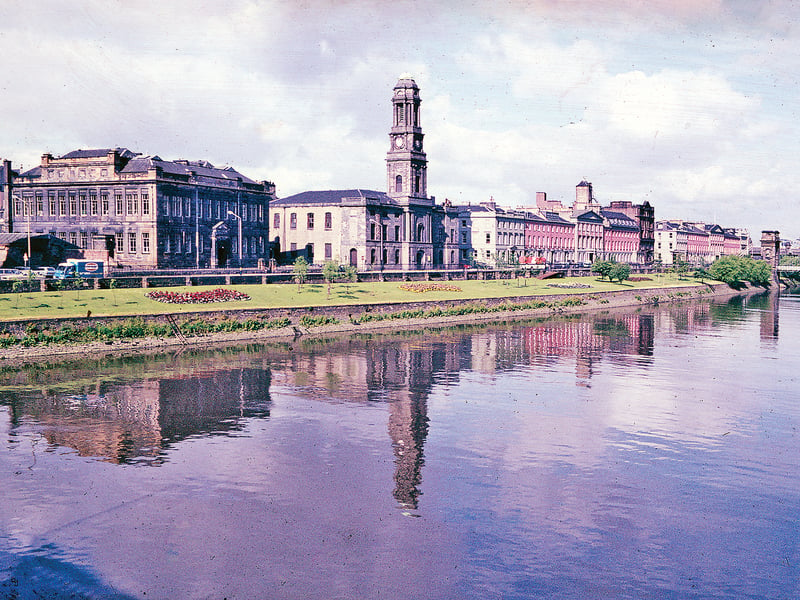
1. Carlton Place, 1970
From left to right are the former Gorbals Primary School, the former Gorbals Parish Church, the east terrace and the west terrace | John Hume
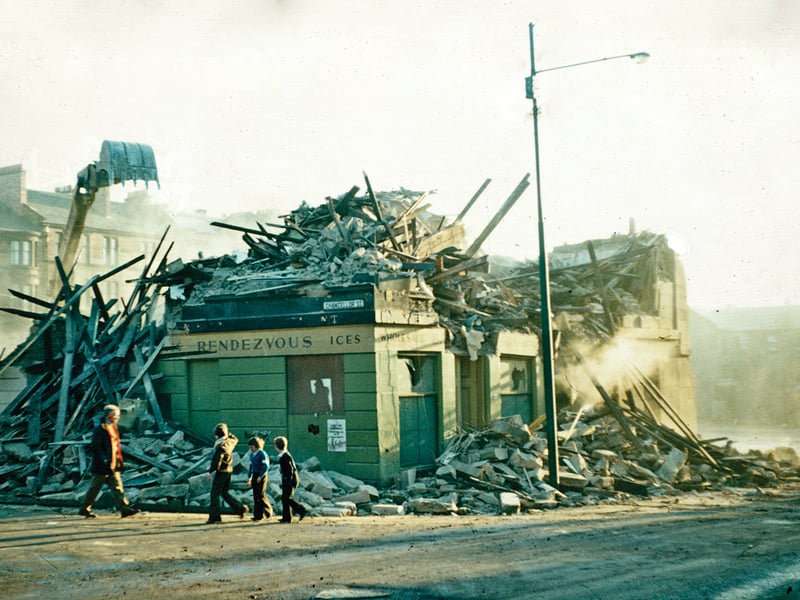
2. Hyndland Street, 1970
Block of working-class tenements in Hyndland Street, Partick, being demolished. The flats were likely built in the late 1840s to house workers in the Meadowside Shipbuilding Yard of Tod and Macgregor, which had been laid out in 1847. The corner shop was typical of such developments. | John Hume
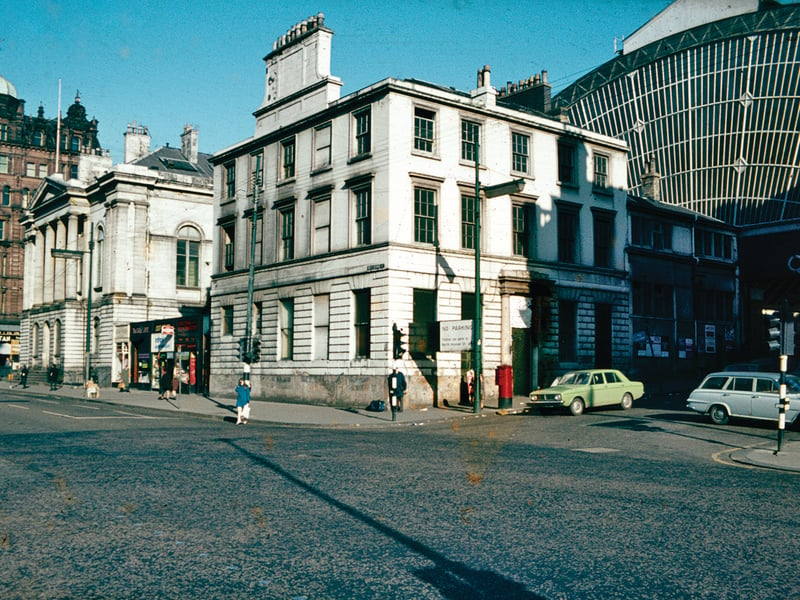
3. Queen Street Station, 1970
Queen Street Station, the Queen Street and West George Street in 1970. These were what the public saw of the main entrance to the station until the 1970s. The block on the corner was built as an hotel. | John Hume
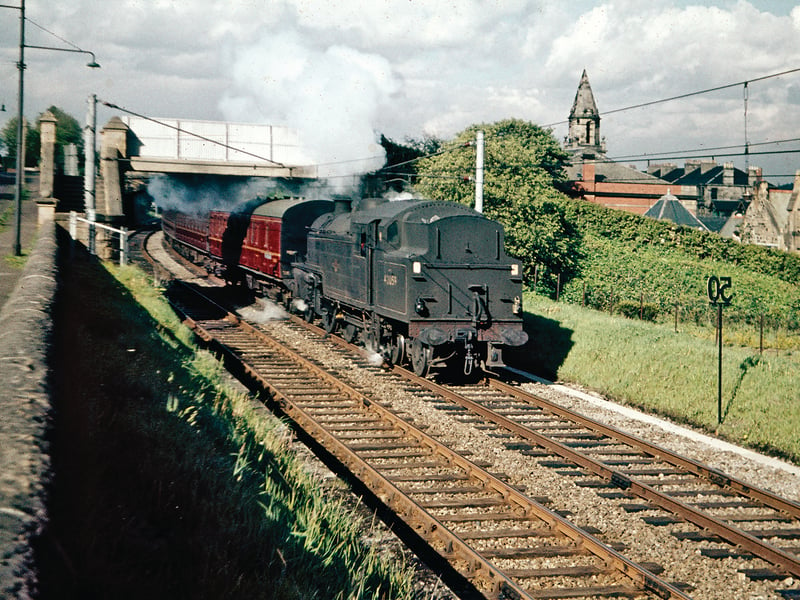
4. Cathcart, 1962.
This photograph of a train for Neilston train passing by Monreith Road in Cathcart was taken just before steam-hauled services were replaced by electric trains on the South Side suburban routes. In the background is the Couper Institute, built with a legacy from a local papermaker | John Hume