
Obituary: Allan Massie, acclaimed novelist, renowned critic and Scotsman legend
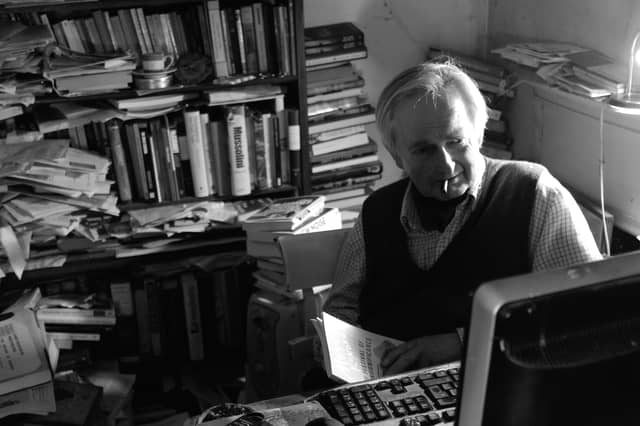

Allan Massie, novelist, historian and journalist Born 16 October, 1938, Singapore. Died 3 February, 2026, Doune, Stirlingshire
When, in June 2004, the first Borders Book Festival was held in Melrose, Allan Massie was the first author on the stage. It was, says festival director Alistair Moffat, a programming no-brainer: “If you have a great Scottish novelist on your doorstep, of course you’re going to invite him.”
A wise, courteous and unassuming man, Massie would doubtless have taken issue with “great”. At a push, he might have settled for “good”, though Gore Vidal hailed him as the “master of the long-ago historical novel” of the kind (Caligula) that he was talking about that night in Melrose and at least two judges of the Booker prize are on record as saying that he should have been awarded Britain’s top literary prize.
Read more: Tributes to Allan Massie
At his best, his books met all three criteria Nabokov demanded of a novelist - that they should be story-tellers, teachers and enchanters. But as well as his 25 novels, Massie leaves behind so much more: biographies (Eric Linklater, Colette), anthologies (his collected Spectator columns), critical studies (Muriel Spark), histories (the Caesars, Glasgow, Britain) and subjects as varied as Byron’s travels and Edinburgh’s murders.
Then there’s the journalism. In the years of booming budgets, no freelance was more productive. Although he had the closest links with the Scotsman, he also wrote for many other newspapers, his badly typed columns humming into the fax machines of commissioning editors on a huge range of topics. He held out for a long time against computers, seemingly needing Google far less than other mortals.
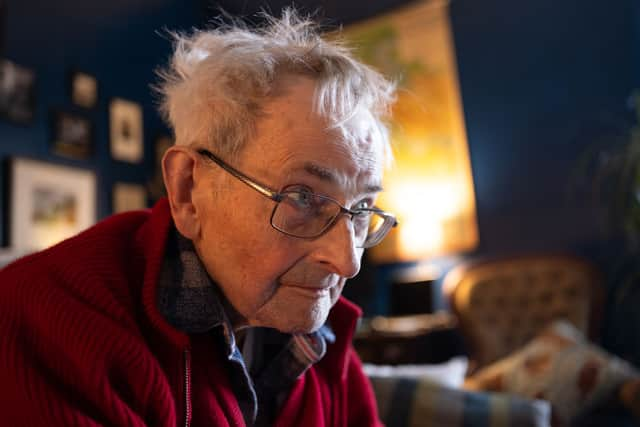
In his 50 years on the Scotsman’s books pages, Massie reviewed an estimated 3,500 books. He was a fair critic, reluctant to come down too hard on writers except where he felt it was warranted. He will also be missed by readers of our sports pages, where his columns on rugby and cricket ran for over three decades and were highly rated for their expertise. Scotland team manager Gregor Townsend was a particular fan and has praised his “astute analysis” and “excellent rugby brain”. Selkirk’s ground at Philliphaugh was just a stone’s throw from Massie’s house and cheering them on from the touchline, Afghan beret on his head and a Gitane in his mouth (he used to order them in batches of 20 packets a time) were among his happiest hours.
Read more: Allan Massie’s last interview
Allan Massie was born in 1938 in Singapore, across the causeway from Jahore, Malaya, where his father Sandy worked on a rubber plantation. The family returned to Aberdeenshire - where their relatives were nearly all farmers - six months later but Sandy went back in 1940 to fight the Japanese and spent four years as a PoW in horrendous conditions. He and his wife divorced after the war and Allan - along with his brother and sister - was brought up by their mother in Kintore and Inverurie.
After winning a scholarship to Glenalmond College, he won another to Trinity College, Cambridge, where he read history, graduating in 1960. He then taught at Drumtochty Castle School in Kincardineshire, which was run by Robert and Elizabeth Langlands, the parents of his future wife Alison and his future sister-in-law Elspeth Barker, who were both educated there. After the school (which Barker wrote about in her wonderful novel O Caledonia!) closed in 1971, he moved to Rome, where he taught English as a second language. He married Alison (who predeceased him in 2022) in 1973. Their children Alex, Claudia and Louis, all work in the media, as a journalist, TV producer and chief editor at Agence France Press TV respectively.
Their father wrote his first article - about Italian politics - for The Scotsman in 1975, and became a regular fiction reviewer the following year when he and Alison returned to live in Edinburgh, though they moved to Selkirk in 1982. He also began to write novels, starting with Change and Decay in All Around I See in 1978 (“a delicious eccentric novel” - the Guardian) which drew on memories of living in London, drinking heavily and eking out his redundancy money from Drumtochty. Alcohol had in fact figured prominently in his life from his second year at Cambridge, when he started drinking to help overcome his natural shyness. From the mid-Nineties onwards, he remained completely teetotal.
Although his next novel, The Last Peacock (1980) won a literary award, it was somewhat overshadowed by his later novels. The following year, with The Death of Men, a thriller based on the 1978 kidnapping and murder by terrorists of Italian statesman Aldo Moro, he moved towards the fictional territory most closely associated what he himself considered his best work - the mid-European trilogy of A Question of Loyalties (1989), The Sins of the Father (1991) and Shadows of Empire (1997). Others are drawn to his Roman empire series, or the moral complexities of his Bordeaux Quartet, which concluded in 2015 with End Games in Bordeaux.

By the 1980s, his second career as a man of letters was in full swing. As a writer in residence at Edinburgh University early in the decade, he worked with an unusually talented group of students including Ian Rankin, whom he introduced to Evan Cameron, his editor at Bodley Head, who then published the first Rebus novel, Knots and Crosses. “I was in my infancy as a published writer” Rankin said, “but Allan was there at the delivery! We kept in touch forever after. I’ll always be grateful to him.”
Massie's reputation continued to build in the 1990s, when his French publisher, Bernard de Falois, helped build a sizable French readership for his work. The French actually got round to honouring his work even before the Brits, his award of the Knighthood of the Order of Arts and Letters preceding his 2013 CBE by six years.
If his father had not returned to Malaya in 1940, Massie once said, he would probably have become a farmer in Aberdeenshire. In that case, he himself would most likely have gone to school and university in Aberdeen and “If I’d done that I would probably have been a lawyer in Aberdeen and become very rich in the 1970s and 1980s.” And maybe he would have done too. But Scotland would be so much the poorer.
Comments
Want to join the conversation? Please or to comment on this article.