
Edinburgh tourist tax: Change of plan on George Street as £90m package of spending from Visitor Levy is approved
The plan to fund the long-awaited revamp of George Street from Edinburgh’s tourist tax has been put on hold amid last-minute negotiations at a special meeting of the full council to allocate Visitor Levy cash.
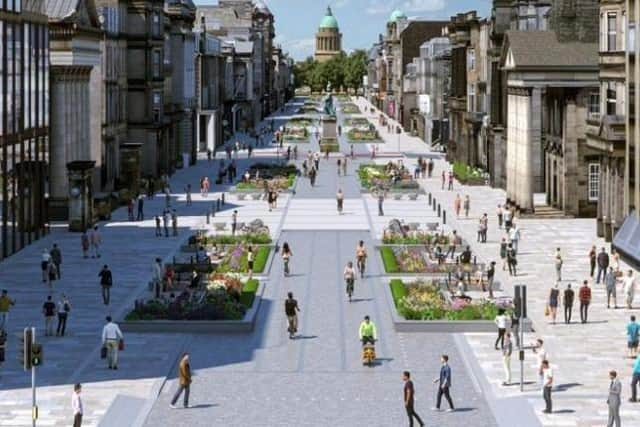
The city’s minority Labour administration had backed a proposal from officials to use some of the revenue from the new tax to borrow the £31.75 million needed for the scheme to turn George Street into a cycle and pedestrian zone, with vehicles banned for most of the day.
But the SNP group on the council argued for a wider city-centre approach which included Princes Street. And, after talks during the day, the administration accepted the SNP’s amendment. Officials have now been asked to report back with options for Princes Street.

Councillors on all sides hailed the historic nature of Thursday’s meeting, with Edinburgh the first city in the UK to introduce a tourist tax, and the huge boost which the extra money could give the Capital.
Labour council leader Jane Meagher said the Visitor Levy had been many years in the making. “At all stages we have listend to and taken account of the views of residents, the tourism industry and a wide range of other stakeholders.
“The levy represents an unprecedented level of extra funding into the city that will benefit not only those who visit Edinburgh but also those of us who live and work here, the residents, the businesses and workers who form the lifeblood of the city and help make it the desirable place to visit that it is.”
The £90 million package of funding now agreed includes modern upgraded litter bins; more public toilets; increased graffiti removal; improved street cleaning; and more money for setted streets renewal.
Funding will be used to bring back community events to the Ross bandstand in Princes Street Gardens and potentially revive the Festival Cavalc.
There’s £5m to restore Leith Theatre; £3m towards transforming the iconic Old Royal High School into a National Centre for Music; £2m for Cramond foreshore; £2.5m for Portobello Promenade; and £3m for improvements in Hunter Square, with the potential to combine it with investment in the Tron Kirk.
And the council will help to fund a new City Centre Policing Unit, despite criticism that it should not have to “bail out” Police Scotland.
As well as the change of plan on George Street, the administration also accepted the SNP’s call to consider increasing the Visitor Levy allocation from housing from £5m a year to £20m a year in the next three-year phase.
And a string of projects listed by the SNP which missed out on funding this time will be considered for 2027/28, including The Causey in the Southside, the historic kilns at Portobello and public transport to the Lost Shore resort and Edinburgh International Climbing Centre.
SNP finance spokesman Stuart Dobbin told the meeting: “Housing is Edinburgh’s most urgent challenge. Tourism is vital to our economy, but it places significant pressure on housing supply and affordability. Increasing the Visitor Levy allocation for housing and tourism mitigation from £5m to £20m annually would be transformative. Over 30 years, this would generate nearly £1 billion for social and affordable housing.
“The vision with which the George Street project began was very forward-looking, innovative and exciting. Over time, we feel that the vision has been compromised and the cost has escalated hugely. For this reason we feel that the project should be paused and reprioritised in order to allow officers to take a broader, city-centre approach encompassing Princes Street as the Capital’s primary civic and commercial thoroughfare.”
But Green councillor Kayleigh Kinross O’Neill spoke out against the SNP’s George Street amendment. She said: “While our group has many concerns about the increasing cost and compromises that have been made, we believe it would be folly to scrap the project at this stage.
“And while George Street has been through multiple design and consultation processes and is very nearly ready to go, the same cannot be said for Princes Street. There is still a considerable amount of work to finalise the Waverley Valley strategy and in particular the question of a safe and segregated cycle provision along Princes Street has not yet been resolved. It’s simply not credible to start spending capital on a project that is not shovel ready.”
Tory group leader Iain Whyte claimed the George Street scheme was “exceptionally expensive” and said it went along with money for an “unnecessary” Princes Street masterplan. He said: “We would take some of that money and repair the pavements on Princes Street - something the public will want and something that really must be done.”

Earlier, a deputation from the Old Town Community Council had urged councilors to recognise the problems faced by residents who bore the brunt of Edinburgh’s tourism industry.
Daniel Todd told the council: “The Old Town experiences footfall comparable to a major stadium event—every day, for up to twenty hours at a time, across much of the year. We recognise that the Old Town underpins a tourism economy worth £2.3 billion annually. But when demand is continuous and highly concentrated, infrastructure designed for a medieval city is placed under exceptional strain.
“The purpose of the Visitor Levy, in our view, should be to close the gap between statutory responsibilities and the lived reality of tourism in the city’s historic core. Our streets carry over 110 million bus journeys a year and an unusually high visitor turnover, with average stays of just 2.3 days. This short-stay, high-impact model places constant pressure on cleansing, surfaces, and public amenities.
“We therefoToddddre ask that the Visitor Levy supports a maintenance-first approach, including routine deep-cleaning of historic closes, consistent year-round graffiti removal, and the reopening and proper staffing of public toilets.
“In addition, repeated coach access is contributing to structural fatigue in streets and underground services. We therefore propose a Heritage Infrastructure Fund to address long-term damage caused by heavy transit.”
And Mr Todd called for the Old Town Community Council to be given a seat on the Edinburgh Visitor Levy Advisory Forum which must be consulted on all funding proposals before a decision is made.
Asked by City Centre Tory councillor Joanna Mowat about busking, another member of the deputation Patrick Kay said they would like the council to coax buskers to “turn the volume off”. “Amplification is the issue, not the music itself.”
Mr Kady said the Lawnmarket had been renovated in the past year and was looking “really good”. But he said: “The downside is it has become a performance space for buskers who have mega amplification from 10am right through till 10pm, seven days a week.”
He said it was an issue for residents, particularly those working from home who were dependent on phone calls. And he said: “It’s a problem for the High Court down the street because the High Court is having problems listening to witnesses. It’s affecting their work.”
Lib Dem councillor Neil Ross asked the deputation if the proposal to use money from the Visitor Levy to fund city ambassadors and extra police officers would be helfpul in dealing with issues arising from busking.
Paul Penman said: “That’s a very good idea. But will the ambassadors have any statutory powers to enforce this? Our understanding is that only the police, when they choose to get involved, have the authority to seize equipment, for example, or ask buskers to desist.
“I just wonder, is it a good use of money to employ perhaps young students to say ‘Listen man, I realise you’re here to enjoy yourself, but you’re upsetting the residents’? Is that going to help?”
Mr Kady said the community council supported the two initiatives because they recognised the problems there were. “As Paul says, they may not be the best solutions, but it’s better to have some solutions that we can work on and develop.”
The Visitor Levy, which comes into effect on July 24, will see visitors paying a 5 per cent tourist tax on overnight stays, capped at five nights. It will apply to almost all paid-for overnight accommodation, including hotels, guest houses, B&Bs, short-term lets and campsites.
Comments
Want to join the conversation? Please or to comment on this article.