
Warning of 'youth violence epidemic' as child knife seizure stats revealed

Children as young as 10 discovered carrying knives
Police apprehended a child carrying a knife every four days in Scotland last year, leading to warnings of an emerging “youth violence epidemic.”
Official Police Scotland statistics show there were 91 instances of under-18s being found in possession of a bladed or pointed weapon in 2024 by officers using stop and search powers.
Teenagers now account for almost a third of positive knife searches across all age groups, sparking calls for the introduction of more “meaningful” punishments.
It comes amid several high profile cases across Scotland involving youths and deadly weapons. Two teenagers have died in the last three months, while other incidents involving knife-related disorder have been reported across the country.


The issue has been prominent in Scottish political debate in recent weeks, prompting First Minister John Swinney to issue a reassurance about his government’s commitment to tackling youth disorder.
An analysis of the stop and search statistics by 1919, the crime and justice publication, highlighted several instances where youth children were discovered carrying weapons.
In July 2024, for example, a 10-year-old boy was caught with a knife in the east of Edinburgh, while several 12-year-olds were found carrying blades in the capital, Ayrshire, Glasgow and Lanarkshire throughout the year. More than a dozen children aged 13, two of them girls, were also subjected to a positive blade search.
Scottish Labour’s justice spokeswoman Pauline McNeill called for more early intervention schemes.

She said: “These shocking figures are yet another sign that there is a youth violence epidemic emerging in Scotland.
“The SNP has created a perfect storm by cutting youth work services, letting police officer numbers fall, and mismanaging child and adolescent mental health services and education.
“Each one of these 91 cases is very serious for our communities and potentially for those actually carrying the weapon. The only way to tackle this effectively is to have early intervention schemes that get to the root cause, and without this we will fail our communities.
“The SNP must take urgent action in all of these areas to tackle knife crime and actually do something that will halt this epidemic.”
The Scottish Conservatives claimed that “soft-touch” sentencing policies which lessen the punishment for under 25s are “emboldening” young people to carry weapons.
The party’s community safety spokesperson Sharon Dowey said: “These alarming figures lay bare just how drastically knife crime has spiralled out of control.
“The absurd under-25s sentencing guidelines mean that violent young offenders are emboldened to carry dangerous weapons. There must be meaningful punishments for those who use a knife and expanded stop-and-search powers for police to act as a deterrent.
“The SNP’s soft-touch attitude towards justice represents an abject dereliction of duty by John Swinney’s government. It’s high time nationalist ministers woke up to the gravity of this situation and urgently gave our police the resources they need to keep our communities safe.”
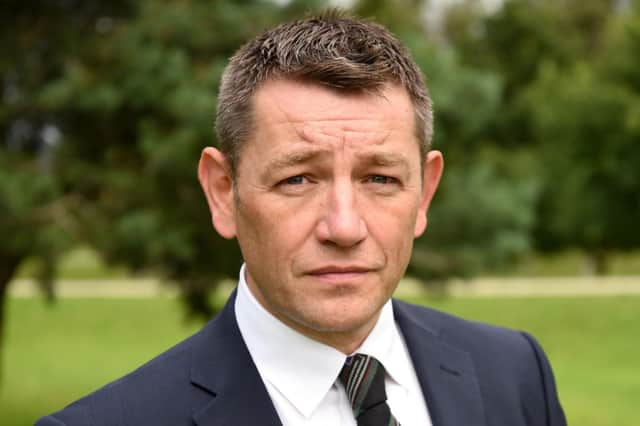
David Threadgold, chair of the Scottish Police Federation, which funds the company behind 1919 magazine, called for more effective preventative strategies.
“Each one of the truly shocking statistics is a justifiable and evidenced-based reaction by the police to an increasingly concerning societal trend we now see emerging among younger members of our communities in Scotland," he said.
“Each of these statistics is a real situation which created significant risk for my colleagues, as well as potentially life changing consequences for the perpetrator, and sadly – as we have seen so tragically across Scotland recently – the victims of knife crime, their families and friends.
“The solution to this problem cannot rest alone with the police; much greater and more effective preventative strategies have to be in place across Scotland.”
Mr Threadgold warned against “soundbites” from politicians and said long as Scotland’s national police force cut officer numbers, continue with a programme of closing police stations, and are forced to develop responses such as the proportionate response to crime in an attempt to deal with “unsustainable demand for our services,” there were questions of whether Police Scotland could “truly become strongly integrated in our communities to allow the development of the type of relationships that would allow us to play our part in keeping our communities safe.”
Police Scotland’s chief constable Jo Farrell told a meeting of the Scottish Police Authority last month that she was concerned about some of the trends around violent crime committed by young people, and often committed against other young people, stating “a notable proportion of that is happening in and around schools”.
She referenced wider stop and search statistics compiled by her force, which found that out of 900 weapons recovered over the past year, around 200 were seized from those aged 17 or under. The force, she said, had to continually work with partners to understand and tackle the complex issues around youth violence, and she urged people not to carry weapons.
Mr Swinney has said he shares the "devastation about the loss of young lives" and recently told MSPs of a three-step approach to the issue - early intervention through education programmes, school and community engagement, and effective punishment when offences take place.
Responding to the stop and search statistics, a Scottish Government spokesperson said: “Stop and search powers should be used where lawful, necessary and proportionate. Their use in individual cases is an operational matter for Police Scotland.
“Police do use stop and search, and it is one tool to tackle violence alongside a range of other measures such as prevention and education.”