
Exclusive:Calls for psychological screening in wake of rapist police officer revelations
Senior policing figure says AI could have a role in flagging ‘behavioural patterns’


One of Scotland’s most prominent policing figures said it is time for a “serious conversation” about the use of psychological assessments as part of Police Scotland’s recruitment and vetting processes in the wake of the revelations surrounding PC Alan Greer.
The long-serving police officer, who took his own life in May, attacked at least nine women over the course of 14 years while employed by Scotland’s national force. His first known victim was a woman he raped in her home in 2012 after she had called the police to report being the victim of a crime.
After the woman reported the attack by Greer late last year, Police Scotland launched one of its biggest ever anti-corruption inquiries. It has so far identified a further eight victims, five of whom were sex workers, whom Greer attacked while off duty.
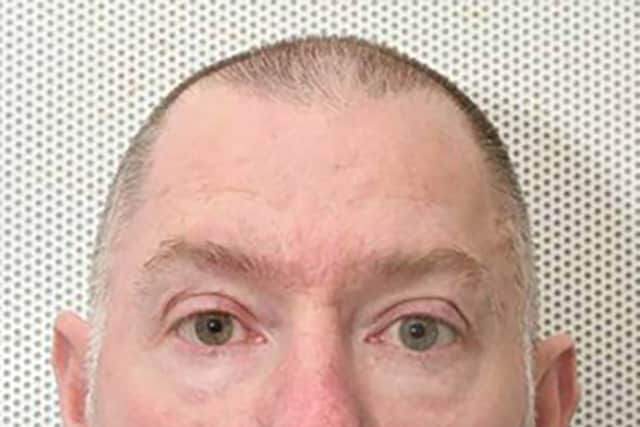
An investigation by BBC Disclosure found that Greer used hundreds of sex workers throughout his career in the police, and it is anticipated that further victims of his violence will be identified.
Greer was arrested on 24 April before being released without charge pending further investigation. He was found dead on 6 May.
Assistant Chief Constable Lynn Ratcliff, gold commander for the investigation, said what the inquiry had uncovered was “truly shocking.”
She said: “This officer has clearly abused his power and has revisited someone that he's encountered in the course of his duties. But this victim was brave enough to come and speak to us, and that really was the trigger point for us starting our investigation. That's allowed us to proactively identify eight further victims.”
David Kennedy, general secretary of the Scottish Police Federation (SPF), which represents rank and file police officers across Scotland, said there was a profound sense of shock throughout the service following the revelations about Greer.
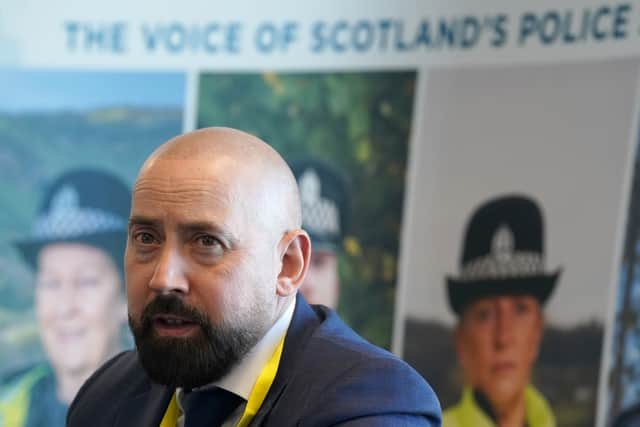
He raised the prospect of new technologies, such as artificial intelligence, being used as part of recruitment procedures.
“Officers who worked alongside [Greer] had absolutely no indication of what he was capable of,” Mr Kennedy said. “The person they knew at work was completely different from the individual we now know existed in private.
“This appears to involve someone with deeply concerning psychological traits. One of the biggest challenges for policing is recognising that the public persona an individual presents can be vastly different from who they really are behind closed doors.
“There were no warning signs. No concerns were raised by colleagues, and no one came forward with information that suggested this kind of behaviour. In fact, by all accounts, he was well regarded by those he worked with.”
Mr Kennedy said it was a “positive step” that Police Scotland had strengthened its vetting procedures but stressed that “vetting on its own cannot uncover everything,” adding: “Cases like this demonstrate that we need to think more broadly about how we assess suitability for policing.

“We should be having a serious conversation about whether psychological assessment should form part of the recruitment and vetting process. That would undoubtedly involve significant cost, which is one of the reasons it has never been fully explored, but we have to ask whether we can afford not to.
“As technology develops, artificial intelligence may also have a role in identifying behavioural patterns or highlighting areas that warrant further assessment. While ‘profiling’ is not a term people are always comfortable with, the objective is simple: ensuring that those entrusted with policing our communities are who they claim to be.
“Over the years, some of the more in-depth elements of recruitment have reduced. Home visits, for example, were once used to provide greater insight into a candidate’s background, and character references often involved speaking directly with referees rather than relying solely on written responses. Those processes offered a deeper understanding than today’s largely administrative checks.”
Mr Kennedy added: “We have vetting regulations, but they are only one part of the picture. We need to consider whether a more comprehensive approach is required.
“There is also an important lesson around victim confidence. It is deeply concerning that victims, including sex workers, may not have felt able to come forward sooner. We must understand why that was the case and ensure that everyone has the confidence to report offending, regardless of who the alleged perpetrator is.
“This has been an incredibly upsetting and distressing case for policing. The fact that a serving police officer has been capable of these alleged actions has had a profound impact on colleagues across the service. No officer wants to believe that someone wearing the same uniform could behave in this way. It is completely contrary to the values, integrity and public service that policing represents.”
When he died in May, Greer was 47, with a wife and child. He joined the former Strathclyde Police in 2009 before the nationwide mergers to create a single force. Having initially worked as a uniformed response officer, he later moved to a role in officer safety training.
After the woman reported the sex attack that happened in 2012, the case was handed to the force’s anti-corruption unit (ACU), which was able to identify the call she’d made in 2012 and the officers who had attended her home.
They found that, in the weeks following the attack, Greer had repeatedly monitored the woman’s crime file on the police computer for updates.
Anti-corruption detectives obtained his personal mobile phone number, which was then put through police intelligence databases, revealing a single piece of intelligence dating back to 2018, linked to that number, but with no name attached.
The intelligence was from a Glasgow sex worker and indicated that the owner of that phone number was a customer who had been violent. Detectives were then able to identify searches Greer had made on the police computer system for traces of a complaint from a sex worker’s phone number.
Police Scotland’s Chief Superintendent Helen Harrison said: “There is a robust vetting regime in place within Police Scotland, which has recently been further strengthened from legislative change introduced through the Police (Ethics, Conduct and Scrutiny) (Scotland) Act 2025. These changes include the introduction of 10 year renewals and the requirement to maintain vetting or they can be dismissed.
"This legislation ensures a thorough and effective process to assess an individual’s conduct, honesty, integrity and overall suitability to work as a police officer.
“By proactively identifying and addressing risk, vetting contributes to protecting members of the public, as well as our workforce, from improper conduct by people working for Police Scotland.”
A spokesperson for the Police Investigations and Review Commissioner said: “We are investigating the circumstances leading up to the death of a police officer, a man who was aged 47, in Wishaw, Lanarkshire on 6 May 2026. We will report our findings to the Crown Office and Procurator Fiscal Service in due course.”
Information and support for anyone affected by rape or sexual abuse issues is available from Rape Crisis Scotland on 0808 801 0302.