
Alarm over dwindling number of Scots who feel safe in local neighbourhood
Stark contrast in feelings of safety across local authority areas

The proportion of Scots who feel safe while walking alone in their local area after dark has fallen to its lowest level in 15 years, sparking renewed criticism of the Scottish Government’s record on crime.
Newly published data via the Scottish Household Survey shows that just 78 per cent of people said they felt fairly or very safe while on foot on their own in their neighbourhood at night last year, down from 81 per cent in 2023.
It represents the sharpest drop in the amount of people who feel safe since the SNP came to power at Holyrood, and the lowest level on record since 2010.
The long-running annual survey’s neighbourhood and communities report also highlights growing safety concerns amongst women, with just 68 per cent saying they felt fairly or very safe walking alone at night in their local area, down from 73 per cent the previous year.


Scottish Labour said the statistics offered further proof of the SNP’s “soft touch” approach to crime, and said crime rates had risen while the number of police officers declined.
The yearly snapshot of the characteristics, attitudes and behaviour of households and individuals up and down the country also pinpointed safety fears among other groups.
The proportion of disabled people who felt safe stood at just 62 per cent in 2024, down two percentage points on the previous 12 months. There is also a clear link between feelings of security and poverty, with only 65 per cent of adults in the most deprived 20 per cent areas of the country feeling safe while walking alone, compared to 88 per cent of those living in the least deprived 20 per cent of areas.
Some 80 per cent of adults who rated their neighbourhood as ‘very’ or ‘fairly good' said they felt safe walking alone at night, compared with just 27 per cent of adults who rated their neighbourhood as ‘very poor’.

Across all demographics, Shetland was regarded as the safest council area in Scotland, with 96 per cent of adults stating that they felt fairly or very safe. By contrast, just over six in ten (62 per cent) adults in West Dunbartonshire said the same about their neighbourhood.
It comes just weeks after the umbrella body for Scottish local authorities warned of "escalating concerns around community cohesion” amid a rise in protests where false claims and “hateful rhetoric” are being spread.
COSLA’s president, Shona Morrison, said that coupled with an associated increase in misleading and incorrect information being circulated online, there were increased divisions in communities which were “deeply worrying.”
Scottish Government statistics published last month showed thousands more crimes were recorded in the 12 months to June 2025 compared to the previous year, with a five per cent increase in sexual crimes and the number of antisocial offences. Rape and attempted rape increased by 15 per cent.
The number of full-time equivalent Police Scotland officers stood at 16,426 as of 30 June, the latest period for which data is available. That is 126 down on the previous quarter, but an increase of 220 compared to the same period 12 months previously.
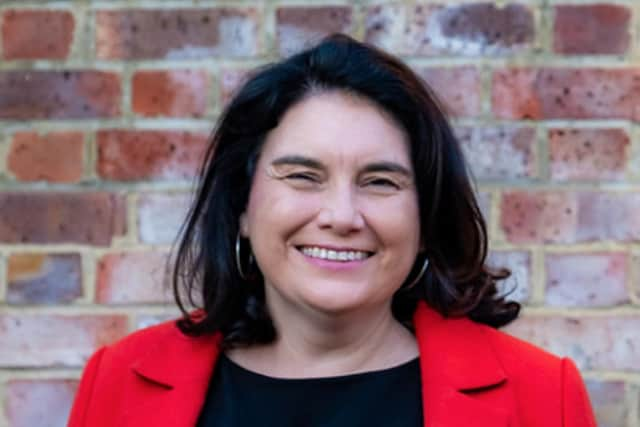
Scottish Labour’s community safety spokeswoman, Katy Clark MSP, said: “These damning figures lay bare the consequences of the SNP’s failure on crime. With crime rising while police officer numbers fall, it’s no wonder more and more people are feeling unsafe in their communities.
“The rise in violence against women and girls is clearly taking its toll on women in Scotland, and the poorest communities are once again paying the harshest price for the SNP’s failure.”
She added: “John Swinney has failed to prioritise community safety - but a Scottish Labour government will support our justice system, tackle the root causes of crime and make our communities safer again.”
The latest iteration of the household survey also shows that that while there were national level improvements in neighbourhood connections in the wake of the Covid-19 pandemic, with people’s trust in their neighbourhood and perception of kindness rising, such trends have not been sustained, with many such measures now similar to their pre-pandemic levels.
The proportion of people who feel that they have someone their could turn to in their local area for advice or support has also dropped, down from 80 per cent in 2023 to 75 per cent last year.
The Scottish Police Federation, which represents rank and file officers, warned it was "inevitable" that budgetary constraints would impact public confidence.
David Kennedy, the federation's general secretary, said: "These figures reflect what we have been reporting for some time: frontline policing is under sustained pressure and communities are feeling the impact. Officers are doing everything they can to keep people safe, but the combination of rising demand, complex investigations and a prolonged squeeze on police budgets inevitably affects visibility and public confidence.
"We urge all political parties to focus on providing the long-term investment into policing. We simply dont have enough police officers to keep Scotland’s communities and the officers who serve them safe."
A Scottish Government spokeswoman said: “Scotland continues to be a safe place to live with recorded crime falling by more than half since 1991. This is backed up by the recently published recorded crime in Scotland 2024/25, which shows recorded crime falling by more than half since 1991 and the flagship Scottish Crime and Justice Survey, which also showed people feel safer in their communities.
“We are implementing Equally Safe, Scotland's strategy for preventing and eradicating violence against women and girls, working with partners to prevent violence, build support services and strengthen justice responses. We have announced £2.4 million additional funding to the Delivering Equally Safe Fund, bringing investment to £21.6m for 2025/26.”
Comments
Want to join the conversation? Please or to comment on this article.