
"The best radio is when the listeners are part of it"


As BBC Radio 2 in the Park comes to Stirling this weekend, Mhairi Wilson talks to some of the headliners about what music radio means to them.
Every Sunday evening in the early 1980s, when I should no doubt have been doing homework or getting ready for school the next day, I sat on the floor next to my portable radio-cassette recorder, C60 loaded and one finger poised over the pause button, recording the Top 40.
Music was, in many ways, a scarce commodity back then. You got hold of it where you could. Kids brought albums and cassettes into school to swap. Libraries loaned them alongside books. Radio opened up the rest of my musical world.
But it also brought other people’s lives into mine. Listeners’ stories, requests and dedications became part of the programmes. I’d sit there as a child completely engrossed in somebody’s divorce, bereavement or doomed romance, as Simon Bates delivered every twist and turn on ‘Our Tune’ with magnificent solemnity. Long before social media gave us a peek into the lives of strangers, radio was already doing just that.
More than 40 years later, radio is still with me - when I wake, cook, work, walk, run and drive. In a world where everything keeps changing, it’s my constant.
This weekend, Radio 2’s flagship event, Radio 2 in the Park, will arrive in Stirling, bringing generations of pop together in one field - the grown-up version, perhaps, of the Radio 1 roadshow. For decades, Radio 2 was my station. Then, in the mid-2010s, I got hooked on 6 Music and have largely stayed there, but recently I’ve found myself gravitating back toward Radio 2.
Pretty much every song that we can think of is available to stream somehow. Spotify will feed us what it thinks we’ll like, and an entire world of entertainment sits in our pockets. Yet 50.6 million UK adults - 87% of the population - still listen to radio every week, according to RAJAR’s Q1 2026 figures.
Ofcom’s 2026 research into audio listening found that live music radio remains the most-used type of audio in the UK, while the Government, launching its latest review of radio earlier this year, described its ability to offer “companionship and social connection to millions of people”.
That matters when almost a quarter of British adults recently told the ONS they felt lonely often, always or some of the time, rising to 27% among 16 to 29-year-olds.
Increasingly, TikTok and Instagram are full of living-alone diaries, solo dates and peaceful morning routines for one. Of course, enjoying our own company should be one of life’s simple pleasures, but there is something slightly dystopian about millions of us sitting alone watching videos of other people being alone and calling it connection.
Radio works differently. You might be physically alone, but there’s a voice with you; other people are listening and, increasingly, we can talk back.
Radio has always had requests, dedications and phone-ins, but messages and voice notes have made that relationship much more present. Listeners tell presenters where they are, where they’re going and what they’re making for tea. The conversation flows the other way too - presenters have become our digital ‘friend’.
In the old days, radio felt like we were being broadcast to. Nowadays, it feels like a giant, unifying conversation we’re part of.
Nobody managed to create that sense of community quite the way Liza Tarbuck did on her Saturday evening Radio 2 show. Her listeners became ‘the murmuration’, a slightly bonkers extended family sharing the ordinary details of their lives.
When Tarbuck left earlier this year after 14 years, she wrote: “Together we made two hours of radio feel like a private members club, that’s the stuff of dreams, thousands of people enjoying each others’ company like great friends.”
Her departure left me slightly bereft. I’d never met Liza, nor the people whose minutiae of life had been a weekly part of my world for two hours every Saturday evening. I didn’t just miss Liza; I missed them - whoever they were.
Mark Goodier, a voice which soundtracked my teenage years, understands the importance of audience participation.
“The best radio is when the listeners are part of it - when they help write the show with the things they contribute.”
And it’s not as simple as streaming vs airwaves. Goodier highlights how streaming and social media have changed the way we discover music.
“There’s no doubt that there is more opportunity for discovery with music streaming services.”
And that discovery can work backwards through the generations too.
“I also believe that the streamers and social media discovery is powerful for discovery of music of all eras. I regularly have my kids sending me a link and asking if I know a song I grew up loving in the 70s.”
But it’s the human presence that gives radio its magic. Someone, somewhere, is choosing what you hear next.
Ricky Ross sees that from both sides, as frontman of Deacon Blue and presenter of BBC Radio Scotland’s Another Country. While radio has played a huge part in his own band’s career, he acknowledges that it is no longer necessarily how younger generations discover music.
“There are two separate truths about radio in my experience. In Deacon Blue’s case there is no doubt we are still hugely supported by radio play and built our career around similar support by national and local radio.
“However, it is also true that radio for my (grown-up) children’s generation is not what brings them to the music they love. This is even more true for the generation after them.”
But what radio can still offer is something algorithms will always struggle to replicate.
“I think we lose most of what we thought we liked. The great joy of curated radio is putting things in which make a listener like me want to stop the car and find the name of the artist. People often talk about John Peel, and one of the great things that happened there was that once you thought you’d almost had enough of the noise, he’d suddenly play a track by the Chieftains or U Roy, and there was always a great chance of Before The Deluge by Jackson Browne.”
Ross deliberately does the same on his own show.
“Our own version of that is being able to play an artist in their 90s like Willie Nelson next to a new African American artist like Mon Rovia. The surprise element is everything, and it’s only on a show which is made by humans who love music that this is possible.”
“Streaming services have confirmation bias baked into the structure. Try setting up a stream on any one of the servers and begin with a particular genre and you will soon discover the algorithm will only feature similar artists and similar music. It’s still down to radio to break out of that structure. I’m glad, along with my great producer Richard Murdoch, I get a chance to do just that once a week.”
And this, for me, is where the excitement of radio lies. A song I love comes on when I’m driving, and I immediately have a ‘moment’. I could have listened to the same song on Spotify at any point that day, yet somehow, it’s better because I didn’t choose it. Someone else did, and thousands of other people are hearing it at exactly the same time.
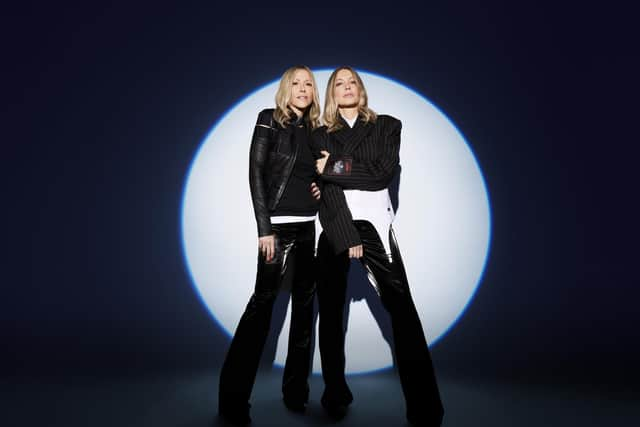
Nicole and Natalie Appleton grew up with radio giving them that same sense of discovery.
“Radio was how you found music, really. You couldn’t just go and listen to absolutely anything whenever you fancied, so when a song you loved came on, that was a moment,” says Natalie.
For Nicole, music was also a constant as they moved around.
“Because we moved around when we were growing up, music was always something familiar. It connected us to a place, but it also travelled with us.”
Sometimes the surprise isn’t about a new discovery; it’s about radio unearthing something old and taking us to a part of our own life we weren’t expecting to visit. A few opening notes can take us straight back to a screenshot of our own lives - the school disco, the first summer of freedom, a broken heart, someone we haven’t thought about for years or someone who isn’t here anymore.
For artists, those songs can spend decades attaching themselves to people’s memories.
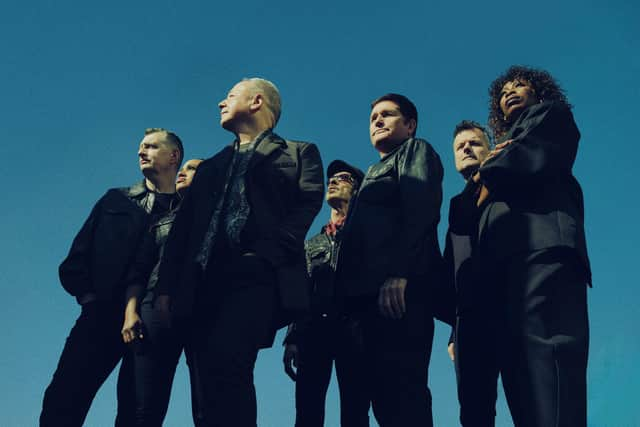
Jim Kerr remembers what radio meant to Simple Minds at the beginning.
“Kid Jensen was the first to play our music on BBC Radio. Through the years Gary Davies also showed much enthusiasm for Simple Minds. I will never forget the thrill of hearing ourselves on nationwide radio. However, it was the John Peel Show that regularly offered us the opportunity to record special four song sessions that we would use to ‘demo’ newer song ideas that we were working on at the time. ‘Promised You A Miracle’ being one.”
More than four decades later, Kerr sees what those songs have become.
“It’s a joy to have songs that in some ways have become the soundtrack to people’s lives. Resultantly, it brings a huge pressure to deliver them with 100% heart and soul each time we perform them. It’s a challenge we relish.”
In 1984, when MTV and music video appeared to threaten radio’s place at the centre of popular culture, Queen released Radio Ga Ga. Forty-two years later, the competition is Spotify, TikTok, YouTube, podcasts and whatever comes next.
Video didn’t kill the radio star back then - we’re still listening.
Queen wondered whether radio had “yet to have” its finest hour, but maybe its finest hour is actually a very ordinary one. The hour spent being the ‘parent taxi’, as Radio 2 DJ Jo Whiley refers to those of us ferrying children to and from clubs every weekday night - the one spent making breakfast on autopilot, sitting in traffic or half-listening while cooking dinner. The hours when nothing particularly remarkable is happening, but a familiar voice, a brilliant song or somebody else’s story is there in the background.
Millions of us may be listening separately, but we’re also listening together, as an invisible collective made up of all those ordinary lives, moments and hours.
BBC Radio 2 in the Park takes place in Stirling. Tickets for today and tomorrow begin at £84. For the full line-up and to book, visit www.bbc.co.uk/radio2inthepark