
The gloriously cosy Scottish knitwear brand that's celebrating 40 years


It’s the right time of year to revisit this brand
Back when Madonna’s Papa Don’t Preach was at the top of the charts, a small Scottish knitwear brand was founded by Rosemary Eribé.
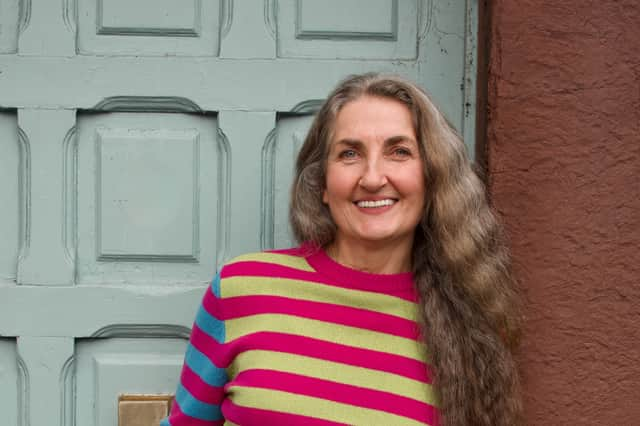
Fast forward 40 years and her eponymous Melrose-based label, who are known for their colourful Fair Isle knits, continues to thrive. This Scottish success story is now sold in over 600 stores across 27 countries. We asked the designer to tell us more about Eribé.
How does it feel to be hitting the brand’s 40th anniversary?
It feels quite incredible (and slightly astounding). We began in such a tiny way, so reaching this milestone and looking at the community that has grown around Eribé is very special.
How has the brand evolved?
I began as a one-woman band, with my own knitting machine: designing, knitting, selling and doing everything myself. I soon realised I couldn’t continue doing all of it, so I began working with outworkers and then with small factories here in the Scottish Borders that could turn my designs into larger orders.
At the beginning, we had no customers, so I would take overnight buses to London, walk the streets around places such as Covent Garden and quite literally knock on doors. Later, I recognised that international customers often had a much greater appreciation of Scottish design and textiles than the British market did at the time.
America taught me a great deal about strategic partnerships, and Japan became an enormously important and successful market. When the Japanese market later became more challenging, we also began producing knitwear for other designers. Today, we have grown into a team of around 67 people. That has created a real community and, for me, fulfilled much of the original dream and vision for the company.
Anything you wish you had known before launching?
I wish I had understood the importance of connections and relationships. When I began, I knew nobody and very little about the industry. I was in survival mode. I didn’t appreciate then how important it is to nurture relationships and allow them to grow over time. I was young and completely focused on making the next thing happen.
In the age of Shein, do customers still care about quality?
I think we are coming full circle. People increasingly want the reassurance of something that is noticeably well made, with genuine heritage and a story. There may still be room for the occasional whimsical fast-fashion purchase, but people also want dependable pieces - a wonderful pair of trousers, a dress, a skirt or a piece of knitwear that they can return to year after year. As life becomes busier, there is something very reassuring about clothing that makes you feel good, works hard and lasts.
Now that Eribé is stocked so widely, are you ever surprised by what sells well in particular countries?
You might think of Scandinavian style as being predominantly blue, white and neutral, for example, but our customers there are often drawn to our brightest colours. It is similar in Germany, particularly in northern Germany, where tastes can appear quite traditional and conservative. Yet people come up to me and say, “I need colour. I need your colour.” That is lovely because Fairisle isn’t German or Scandinavian; customers are choosing something that feels uniquely Scottish. Japan has always had a deep appreciation of Scottish and British textiles and Japanese customers really understand Fairisle, whereas in many countries people may love the pattern without necessarily knowing its history or name.

Which countries or retailers sell the most?
Historically, Japan was our most important market and it remains very special to us. Germany has since become extremely important too. We are also meeting more international visitors here in Scotland. As many parts of the world become hotter, people come to Scotland to cool down and are often surprised by just how cool it can be. They want to take home a little piece of the country, and a colourful Fairisle garment feels like something both authentic and useful. Even in warmer countries, our knitwear is worn during the winter, while travelling or indoors where the air conditioning can be surprisingly chilly.
Bestselling design of all time?
Our now iconic Alpine collection, with its distinctive Fairisle yoke. We produce it in an enormous variety of colours, and as we have expanded the colour palette, its popularity has continued to grow. The design originally evolved from a hand-knitted garment. It is made in fine merino wool rather than traditional Shetland wool, so it feels much lighter, and its many colours and complex construction make it very difficult to reproduce well. Most importantly, it makes people look and feel beautiful. When you find the colourway that suits you, it can make your skin glow and give you a wonderfully artistic, individual look.
Any knitwear experiments that didn’t work?
Yes! I once collaborated with an old college friend who had studied printed textiles. We created hand-painted cashmere, with the intention that every garment would be completely unique. A large customer became interested, and I actually demonstrated the hand-painting live on air on TV. The difficulty was that they expected every garment to look exactly the same. I came home and had to recreate the design with mass consistency - which rather defeated the purpose. It was great fun and I loved the creative process, but in that sense it wasn’t our most successful experiment.
Tell us about the special collection marking the anniversary.
We have been exploring the Eribé archive. At one point in our history, we worked with around 280 hand-knitters, so there are many beautiful original pieces and ideas for us to revisit. One of the first fruits is the relaunch of our Vaila Lace collection, brought back for the first time in four decades. Inspired by vintage Shetland hand-knitted fine lace shawls, these romantic, nostalgic lace garments follow in the footsteps of Eribé’s iconic yoke patterns. We are bringing more of that hand-knitted inspiration back to life in new ways, alongside a few other surprises currently in development. There will be some very special anniversary pieces appearing over the coming year.
Any memorable celebrity endorsements?
The late Queen Elizabeth II was photographed walking her corgis in our knitwear and owned several pieces, while Princess Anne has also selected one of our designs. Keira Knightley and Ewan McGregor have worn Eribé, and more recently one of our Brodie designs appeared in Netflix series The Gentlemen, worn with high-waisted trousers. It looked fantastic. We also love working with The Hebridean Baker, who came to host a cookery event in our building and wears our knits throughout his cookery books. From Mary Berry, Monty Don, Lorraine Kelly, Banjo Beale and so many more we are very lucky with our celebrity wearers.
Any advice for getting rid of moths?
Moths like dark, warm and undisturbed places, so give your knitwear fresh air and sunlight. I hang mine outside on the washing line occasionally to air it properly. Lavender and sandalwood can also be helpful, and freezing an affected garment in a sealed bag is another useful technique. You don’t need to wash wool constantly, but always clean your knitwear before storing it away for the summer, as moths are particularly attracted to garments carrying traces of food, or skin oils.
Comments
Want to join the conversation? Please or to comment on this article.