
Remembering a moment of Scottish surfing serendipity 50 years on



Pat Kieran played a key role in the development of surfing on Scotland’s north coast, building boards, running the North Shore Surf Club and helping spread the word about the now-legendary wave at Thurso East. If it hadn’t been for a very happy accident five decades ago, however, he might have ended up living in Dorset. Interview by Roger Cox
It’s like that Robert Frost poem, isn’t it?”, says veteran north coast surfer Pat Kieran, 72. “There are all these different paths you can take, but one’s ‘made all the difference.’” It’s now almost exactly 50 years since Kieran, originally from Liverpool, took the path less travelled and found himself in the Scottish surf Mecca of Thurso. The way he tells it though, it was more by accident than design that he wound up living next-door to what’s now Scotland’s most famous wave – and playing a key role in bringing it to the attention of the wider surfing world.
In the hot, dry summer of 1976, Kieran was an electrical engineering student at Liverpool Polytechnic, born and raised in the city. As part of the course he had to complete a lengthy work placement, so he applied to the UK Atomic Energy Authority (UKAEA). At this point in his surfing career, Kieran had already ridden waves in Ireland, Wales and the south-west of England, but never in Scotland, although he was dimly aware that there were good surf spots here thanks to pictures he’d seen in early UK surf magazines.
“I went to Risley near Manchester for an interview,” he remembers, “which is where the UKAEA headquarters were at the time. They gave me three choices: one choice was Winfrith in Dorset, another choice was Risley itself, and the other one was Dounreay. I thought, ‘Well, Dounreay’s an awful long way to go for six months, I don’t know about that’. So my first choice was Winfrith, because it would get me down to the South-West, where I knew there were waves; second I put Risley, because I thought, well, I can commute there from home; and the third one was Dounreay. In the end I got my third choice, and that was that.”
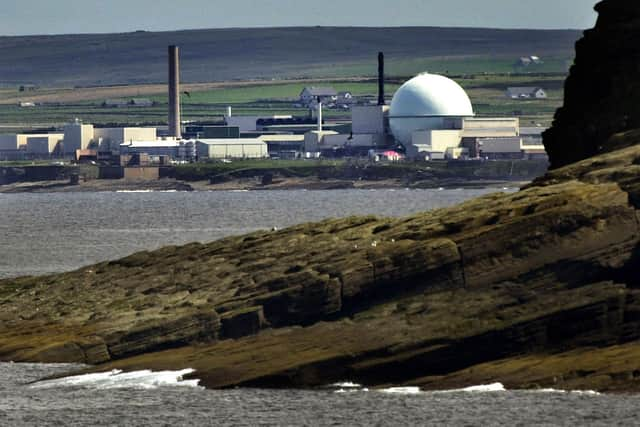
When Kieran arrived at Dounreay he was put to work in the design office; however, it was the surfing potential of the north coast that really made an impression. “The weather was fantastic,” he says, “and I was a lot less fussy about waves then than I would be now, so I seem to remember going surfing almost every day.”
At this stage, although Welshman Paul Gill had already surfed the now-famous reefbreak at Thurso East, the nascent Thurso surf scene was still centred on the gentle beachbreak waves of Dunnet Bay, just to the east.
“You could probably count the surfers up there then on the fingers of one hand,” says Kieran. “Grant Coghill, who’s a similar age to me, was the first surfer I got in touch with. There was kind of a surf club – the few boards that there were were kept in the sand yacht club huts at Dunnet Bay and we used to go up and surf out there.”
“That summer we did a lot of surfing and I loved it so much I thought ‘Yeah, I’ve gotta get back here’. So I went back to Liverpool, finished my degree, graduated in the middle of 1977, and started to work my way back north.
“First I got a job in Inverkeithing in Fife with Marconi – I lasted six months at that because it was pretty boring, and then I got offered a job at Osprey Electronics in Wick. So I lived in Thurso and worked in Wick – I did that for about 18 months – and then I got a job at Rolls- Royce next to Dounreay, at the submarine engine test base.”

It wasn’t long after finding his way back to Thurso in 1978 that Kieran first surfed the now-famous reefbreak at Thurso East. These days, thanks to the accuracy of surf forecasts and a series of high-profile surf contests held there in the 2000s, the reeling righthanders breaking in front of Thurso Castle almost always draw a crowd when they get good. In the late 1970s, however, hardly anyone had ever surfed there.
“I went down with a couple of lads from Castletown,” Kieran says of his first time at the break, “Alan McLeod and Jimmy Florence. We looked at this wave and there was no-one surfing it... it’s really, really hard to believe, it still blows my mind every time I think about it, but we looked at it and we were like ‘Oh, I wonder what that’s like to surf?’ so we paddled out.
“It was so different from the beachbreaks that we were used to that we looked at it for ages before anybody took off on a wave, and I remember eventually taking off and thinking ‘Oh wow, this is something else!’ And, of course, it really is something else.”

Kieran soon managed to rent Farmhouse Cottage from local landowner Lord Thurso, which sits within a stone’s throw of the waves at Thurso East, and for a while in the late 70s, Kieran says “I’d always have different surfers popping in – they’d just live live like rats on my floor, surf Thurso East and go away again. It was an exciting time.”
No doubt part of the reason Kieran had so many visitors was a letter he wrote to the Northwest Surf Club magazine back in England in December 1978.
"HELP!,” it read. “1 or 2 SURFERS WANTED TO SURF PERFECT RIVERMOUTH BREAK. 6-12 ft. GLASSY PEELING USUALLY OFFSHORE AT THIS TIME OF YEAR. LOCATION: NORTHERN SCOTLAND. ACCOMMODATION: DOSSING SPACE IN COTTAGE OVERLOOKING BREAK. EXPERIENCE OF SIMILAR SITUATION ESSENTIAL AS WAVE IS VERY FAST AND VERY HEAVY. REMUNERATION: BRAIN LOOSENING HOLLOW RIGHTS AND A PERMANENT ACHING TO SURF HERE AGAIN.” How could anyone refuse an offer like that?
Want the latest Scottish headlines sent directly to your phone? Sign up to our new WhatsApp channel here
Comments
Want to join the conversation? Please or to comment on this article.