
Martyn James: How to make the most of your money on holiday
Martyn James knows how to avoid wasting your hard-earned holiday money on fees and charges
It’s August and the holiday season is in full swing. I’ve noticed that the number one enquiry from disgruntled travellers so far this year isn’t about flight carnage or terrible accommodation for once. It’s fees and charges when spending abroad that seem to be causing the most consternation.
The cost-of-living crisis has made us all take a closer look at what we are spending our cash on. And that means we’re scrutinising our holiday spending much more closely this year. Astoundingly, research suggests that a family of four could be losing out on £250 to £300 in fees, charges and currency conversion when spending on plastic alone when abroad. That’s another day or two you could have tacked on to your trip – or a huge last-day blowout!
So here are my top tips to help you spend smart when you’re away.

Get the most out of the plastic
If you have a debit card from a high street bank you could end up spending a fortune in fees. These include flat percentage fees for every transaction paid in a different currency, conversion fees, ATM fees and more. The good news is some of the online banks have good exchange rates for spending abroad or won’t charge you a fee per transaction. You can also get specific travel credit cards, but beware: the interest rates can be bonkers if you don’t pay off the card within a month.
However, the best option is a ‘travel debit card’. These businesses aren’t banks. They ‘draw down’ money from your bank accounts when you pay through the travel debit card and give you the best exchange rates available without fees. Because the money doesn’t ‘live’ on the card, you don’t have to worry about the travel debit card company going bust. Plus you can ‘charge back’ cash if there’s a dispute over goods and services that you’ve paid for.
Common mistakes
As a general rule, try not to withdraw cash from an ATM at your destination, the charges alone can be more than a tenner when combined. Never withdraw cash on your credit card – it sends a message to the card provider that you are in financial difficulties and therefore a greater risk for future lending.
Always pay in the local currency when you are handed the payment thingy (merchant terminal). That’s because you’ll pay a conversion fee for converting pounds in to the local currency (and a fee) then more fees when the transaction makes its way back to your bank.
Never, ever buy your currency at the airport. The rates are pretty much always the worst around – both when you buy and when you sell any leftover currency back at the end of your holiday. The last few times I’ve travelled, I’ve seen rates for sterling that are ‘less than parity’ with the euro, meaning you would have got less for a pound than for each euro. Airport rates aren’t that bad at the moment, but not much better.
Buying currency
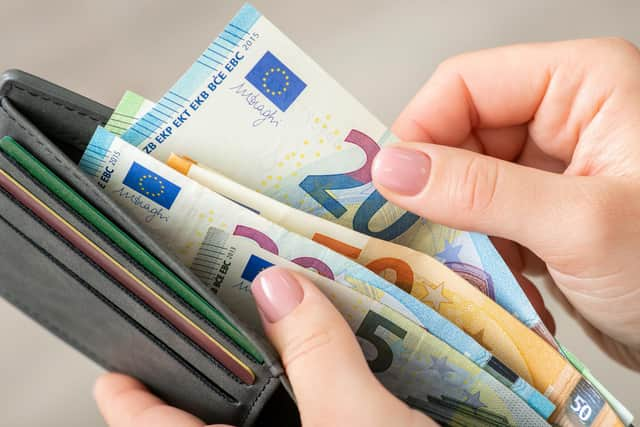
These days you don’t need to take your entire holiday budget in the form of foreign currency. You’ll find that most European destinations accept debit and credit cards almost everywhere, which means you could potentially split your holiday budget in to 20 per centcash and 80 per cent on your debit or credit cards. However, other countries like a bit of currency, so do a bit of research and maybe go for a 60/40 split.
Before you travel, familiarise yourself with the exchange rates for the currency you want, so you know you aren’t getting ripped off. The good news is there are loads of online ‘Bureau de Change’ these days with great rates. MoneySavingExpert has a useful comparison tool that helps find the best rates near you.
Bear in mind that traditional bank and high street options don’t have particularly great rates, so don’t stick with what you know: shop around. You can have currency delivered too. Don’t worry, they won’t leave it outside your door like an Amazon package!
Martyn James is a leading consumer rights campaigner, TV and radio presenter and journalist. Read more from him here.
Comments
Want to join the conversation? Please or to comment on this article.