
Inflation: here's why your weekly shop is getting pricier
Martyn James asks if supermarkets and food producers are using inflation to increase prices unfairly
I spent a big chunk of my week recently talking on TV and radio about the unexpectedly high rise in the rate of inflation, which hit 3.8 per cent in July.
Inflation has a direct impact on the value of money and the cost of things that we spend it on. But because it’s complicated, lots of people tell me they feel a bit lost when the new figures are announced and don’t know what they mean in real terms.
Ultimately, inflation is just a way to measure what things cost. What really matters is what you can or can’t afford. But are businesses using inflation to increase prices unfairly?

What is inflation and why does it matter?
Inflation is a way to measure how much the cost of goods and services have changed over time, usually compared to the same period a year ago.
If prices have gone up but the amount of money you earn has not, or hasn’t increased as much, then you have less money to spend than you did last year.
If you have money in a savings account, interest should be paid in line with the Bank of England’s base rate, so the overall amount you have increases. But if you keep your money in a shoe box under the bed, it’s not increasing in line with inflation so it buys you less, because there’s less of it.
One of the biggest misconceptions is about decreasing inflation. If inflation drops, prices haven’t gone down: they are just increasing at a slower rate.
Why is food so expensive?
According to the BBC, food prices have increased by around 37 per cent in total over the last five years.
The reasons for this are complicated. They include droughts and extreme weather in the UK and around the world, supply and demand issues and global conflicts.
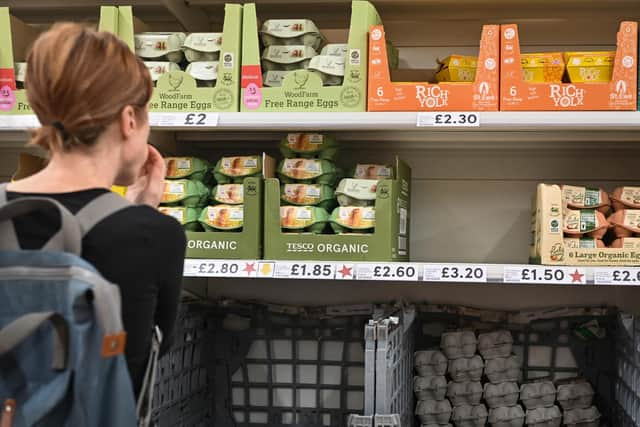
Specific products can be affected by unexpected issues. The rise in the cost of eggs and chickens is linked to bird flu and population culls.
Politics can play a part too, with the increase in NI contributions for employers affecting recruitment and production in the UK.
And it goes without saying that the impact of the Trump tariffs continues to cause worldwide shocks.
Are shops and manufacturers increasing prices on the sly too?
When businesses start to lose money because of rising production costs, they come up with a wide range of methods to fool us in to thinking we are getting more for less.
‘Shrinkflation’ is where the size of a product is reduced but the cost stays the same or even goes up.
You may have noticed that your favourite chocolate bar has significantly reduced in size over the years. This isn’t because you’ve grown up and your hands are bigger than when you were a kid! In most cases you are correct: the product has got smaller.
According to Which? two-thirds of us have noticed products reducing in size. You can also spot shrinkflation when multi-packs no longer have the same number of items included.
But it’s not just quantity. What about quality? Welcome to ‘skimpflation’ (I don’t make these terms up) where brands and supermarkets dilute the quality or percentage of ingredients in products so you get less of the good stuff for the same price.
For example, in some of the olive oil spreads, the proportion of actual olive oil in the product has been halved, now making up just ten per cent of the product. Skimpflation is particularly sneaky because you have to know what you are looking for in the tiny type on the back of the packet that tells you what’s in each item. There are websites that track shrinkflation though, so you don’t have to.
Finally, there’s good old fashioned price hikes. While there’s no evidence that supermarkets are profiteering on food and other household items, I have seen some huge price hikes by manufacturers. If you think you’re being ripped off then ditch the brand and go for the supermarket’s own-label goods.
Martyn James is a leading consumer rights campaigner, TV and radio broadcaster and journalist. Visit martynjamesexpert.co.uk.
Comments
Want to join the conversation? Please or to comment on this article.