
Winston Churchill's public diners: Why these post-war eateries could make a comeback
Created in the post-war era, public diners were well known and used. Could they make a comeback?
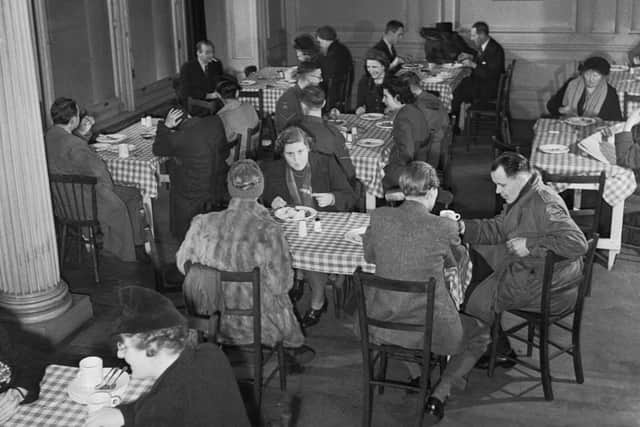
They were a national institution, created in the wake of the Second World War by Winston Churchill to ensure ordinary people could enjoy a balanced meal, while simultaneously boosting morale.
Now, the state-subsidised public diner could be set to make a comeback after a Scottish charity has called for its return to tackle food poverty and loneliness.
Created by the government of then-prime minister Mr Churchill in 1940, the British Restaurant chain, which aimed to offer the British public affordable, healthy meals, boasted around 2,000 outlets in its heyday: more than McDonalds does now.
Food policy charity Nourish Scotland believes the resurrection of public diners could point people away from crisis and charitable food aid, such as food banks, as well as becoming a key part of the community and help to target societal issues such as loneliness.
Deputy director Anna Chworow said people did not have universal access to good quality, affordable food.
She said: “For other aspects of our wellbeing – transport, healthcare, leisure, even wifi – we have built the public infrastructure to ensure that everyone has quality, universal access. We are missing that in relation to food. Public diners are designed to sit alongside public libraries, parks and leisure centres as part of infrastructure that supports our wellbeing.
“Diets are the leading cause of preventable ill health. That's because we face many barriers to accessing good food: from the food environment saturated with ultra processed options, to lack of time to cook at home. Public diners remove those barriers. They are everyday eating places where you can trust the food and trust that you can afford it. They are a tested intervention that could go a long way to deliver on Scotland's Good Food Nation ambition.”
The British Restaurant was initially known within the UK Government as “communal feeding centres”, however the chain was rebranded after Mr Churchill who wrote to the Minister of Food, Lord Woolton warning that the term was “suggestive of Communism”.
He said: “I hope the term “Communal Feeding Centres” is not going to be adopted. It is an odious expression suggestive of Communism and the workhouse. I suggest you call them “British Restaurants”. Everybody associates the word restaurant with a good meal.”
The restaurants outlasted the war, however, once rationing was lifted in the mid 1950s, the number of outlets began to decline and the remaining outlets morphed into what became known as “civic restaurants”. The last branch closed for good in Cambridge in the 1960s.

Nourish Scotland argues that public diners have the potential to contribute to many of the Scottish Government’s policy objectives including 20-minute neighbourhoods, ending the need for food banks, local food growing strategy, community empowerment, the Good Food Nation ambition, and healthy diets.
The government’s Good Food Nation is a vision for Scotland where everyone has access to safe, nutritious, and affordable food. It also aims to support local producers and take measures to reduce dietary disease and the environmental impact of the food chain. The Scottish Government passed the Good Food Nation Act in 2022 to make this vision a reality.
The concept of a public diner was explored as part of the Food for Thought exhibition in Edinburgh, which ran at the Scottish Storytelling Centre in April this year. Nourish Scotland had a collage artwork on show at the exhibition, showcasing the charity’s vision for public diners.
A report by the charity looks to other countries who are successfully running something similar, such as the hawker markets in Asia, specifically Singapore. These markets were essential in the post war years, when unemployment was high driving the need for affordable food and work. When investment in infrastructure came, hawker markets were developed and fall under public ownership with state support.
The National Environment Agency of the Government of Singapore says the centres are a “unique aspect of Singaporean culture”, adding that they “bringing together well-loved local food under one roof” and “continue to be places where people from all walks of life can enjoy affordable food in a clean and hygienic environment”.
To find out more about the campaign for public diners and read the Nourish Scotland report, visit the Nourish Scotland website.
Comments
Want to join the conversation? Please or to comment on this article.