
St Andrews Day recipes from Scottish chefs - including Hebridean Baker’s ‘perfect winter evening’ meal
November 30 is St Andrew’s Day and a perfect excuse to have a special dinner or drinks, writes Rosalind Erskine.
St Andrew has been celebrated in Scotland for over a thousand years, with records showing that feasts honouring him date as far back as the year 1000 AD.
In 1320 AD, when Scotland gained its own independence through the signing of The Declaration of Arbroath, St Andrew officially became Scotland’s patron saint. The Fife town is named after him as it is believed his remains are buried there.
These days, there’s a campaign to get us celebrating our patron saint more prominently - with a view to getting the same popularity as Ireland’s St Patrick. With this in mind, if you are looking to cook a slap up meal or shake up a cocktail in honour of St Andrew, some Scottish chefs and bartenders have shared their recipes for the 30 November.
Hebridean Baker’s Cock-a-Leekie Soup
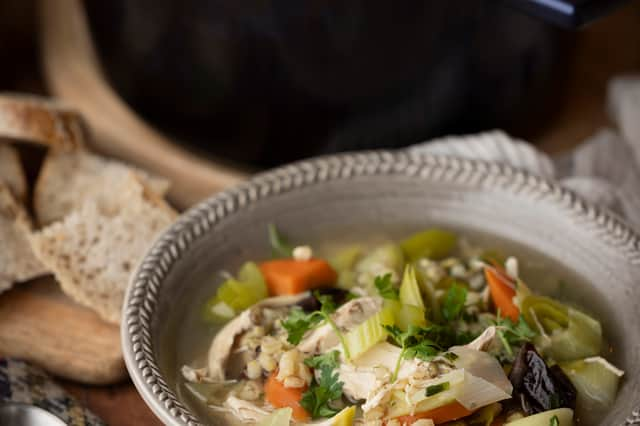

Serves 6
Coinneach MacLeod, aka the Hebridean Baker said: “Cock-a-Leekie is one of Scotland’s oldest and most loved soups. The name is a simple one - cock for the bird, and leekie for the leeks that give the soup its sweetness and along with the prunes makes a delicious simple broth. I’ve made a more hearty version, adding pearl barley, carrots and celery. The result is a soup that’s both nourishing and proudly Scottish.” This recipe is from Hebridean Baker, A Scottish Christmas.
Ingredients
- 1 small whole chicken (about 1.3kg)
- 1 chicken stock cube
- 3 bay leaves
- 200g pearl barley, rinsed
- 2 tsp fine salt
- 500g leeks, trimmed and sliced into rounds
- 300g carrots, sliced
- 3 celery sticks, cut into 1–2cm pieces
- 100g prunes, quartered
- 15g flat-leaf parsley, leaves chopped
Method
Start by poaching the chicken. Remove any string or packaging and place the bird into a large pan or casserole dish. Add the stock cube and bay leaves, then pour over enough cold water to just cover the chicken - about 2.5 litres.
Bring the pan to the boil, then cover and lower the heat. Let it simmer very gently for around an hour, until the chicken is cooked through and the stock well flavoured.
Remove the pan from the heat and, if you have the time, leave the chicken to cool in the liquid for at least an hour. This makes for a deeper, better-tasting broth. Lift the chicken out onto a plate and set aside.
Discard the bay leaves, then return the stock to the hob and bring it back to the boil. Add the pearl barley along with the salt and simmer for 15 minutes.
Add the leeks, carrots and celery to the pan and continue to simmer for another 15 minutes, until the barley is tender and the vegetables are just cooked.
While the soup simmers, remove the skin and bones from the chicken and tear the meat into chunky pieces.
Add the chicken and prunes to the soup, check the seasoning and heat gently for a final 5
minutes, until everything is piping hot. Stir through most of the chopped parsley.
Ladle into warm bowls, scatter over the remaining parsley and serve.
Hebridean Baker’s Chicken Braemar with Whisky Sauce
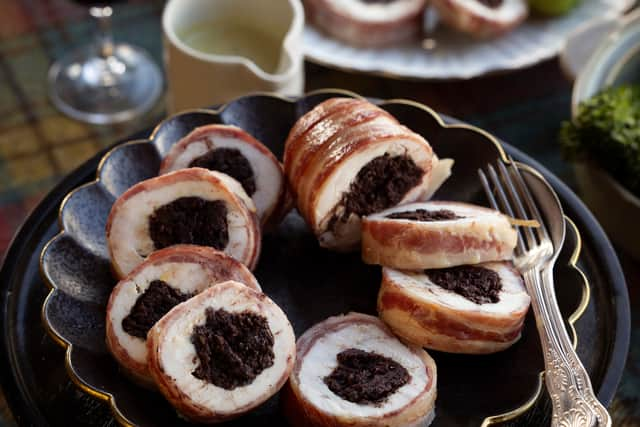
Serves 6
Coinneach MacLeod said: “This is my Braemar take on the much-loved Balmoral chicken. Instead of haggis, Stornoway black pudding does the work here, and pairs beautifully with chicken and bacon. Wrapped, baked and finished with a simple whisky cream sauce, it’s perfect for winter evenings when you want something that feels a bit special, but most of the prep can be done in advance.” This recipe is from Hebridean Baker, A Scottish Christmas.
Ingredients
- 4 skinless chicken breasts
- 300g Stornoway black pudding
- 20 rashers streaky bacon
- Whisky sauce
- Knob of butter
- 3–4 tbsp whisky
- 1 tsp Dijon mustard
- 50ml vegetable stock
- 100ml double cream
- Sea salt and black pepper
Method
Lay a chicken breast between two pieces of baking parchment. Using a rolling pin, gently flatten the chicken until it’s an even thickness of about 3cm. Take your time - slow, steady pressure gives a far neater result. Repeat with the remaining breasts.
Lay five rashers of streaky bacon side by side on one piece of baking parchment. Place a flattened chicken breast on top, positioned across the bacon. Shape about 75g of the black pudding into a neat log and sit it along the centre of the chicken.
Using the parchment to help you, roll the chicken up around the filling, keeping it tight, and let the bacon wrap neatly around the outside. Repeat with the remaining chicken breasts, cover them all tightly in clingfilm then transfer them to the fridge and chill for at least an hour, or up to 24 hours if you’re getting ahead.
Heat the oven to 160°C fan. Unwrap the chicken parcels carefully, keeping the bacon in place, and sit them seam-side down. Wrap each one tightly in foil, place on a baking tray and cook in the oven for 20 minutes.
Remove the tray from the oven and let the chicken rest briefly in the foil. Turn the oven up to 180°C fan. Carefully remove the foil, then return the chicken to the oven, uncovered, for 15 minutes, until the bacon is crisp and golden.
Take the chicken out of the oven and leave it to rest for 5 minutes.
To make the whisky sauce, melt the butter in a small saucepan over a medium heat. Add the whisky and let it bubble gently for a minute or two, just to cook off the alcohol.
Stir in the Dijon mustard and vegetable stock and bring back to a gentle simmer. Season with salt and black pepper, then pour in the cream and let it simmer until thickened to a spoonable sauce.
Slice the chicken and spoon over the whisky sauce.
Cranachan
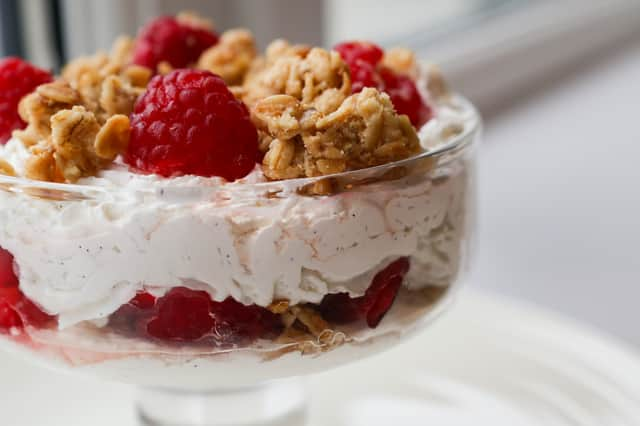
Serves: 6
This recipe is from Gretna Green head chef Sam Miller who said: “A light and colourful twist on one of Scotland's most loved desserts, this cranachan combines fresh raspberries, Scottish whisky, cream and crunchy granola for a deliciously modern take on a Scottish classic.
“Beautifully presented in individual glasses, it's a popular choice on the dessert menus at Gretna Green's Smiths Hotel and Gretna Hall Hotel, while remaining simple enough for home cooks to recreate with confidence.
“I recommend using a good-quality Scottish whisky and serving with traditional Scottish shortbread for an authentic finish. For extra flavour and crunch, I also suggest lightly toasting the granola before adding it to the dessert.”
Ingredients
- 300g fresh raspberries, plus extra to garnish
- 75ml Scottish whisky
- 750ml double cream
- 100g caster sugar
- 20ml honey, plus extra for drizzling
- 150g granola
- Scottish shortbread, to serve
Method
Place the raspberries in a bowl and pour over the whisky. Leave to soak for at least 20 minutes.
In a separate large bowl, whisk the double cream and caster sugar together until soft peaks form.
Gently fold the whisky-soaked raspberries into the whipped cream, taking care not to overmix.
Stir in the honey and fold through half of the granola, reserving the remainder for garnish.
Spoon the mixture evenly into six serving glasses or dessert bowls.
Garnish each portion with a few fresh raspberries and a sprinkling of the remaining granola.
Finish with a drizzle of honey and serve immediately with Scottish shortbread on the side.
Ceilidh cocktail
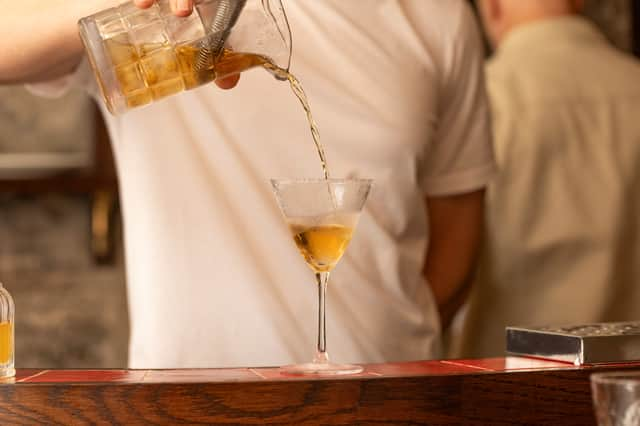
Serves 1
This whisky cocktail is from Jono McDowell, head of beverage at Whirlybird in Edinburgh who said: “The Ceilidh cocktail is an ideal sipper for those colder evenings. A drink that can warm you up but remains interesting with every sip. It is a spirit cocktail that balances warmth, herbal sweetness and a silky texture. Ceilidh is gathering in Gaelic, so I wanted to showcase spirits from different regions whilst still remaining Scottish focused.”
Ingredients
- 20ml Adelphi Blended Whisky
- 20ml Buffalo Trace Bourbon
- 10ml Highland Nectar liqueur
- 10ml Port of Leith Oloroso Sherry
- 2 dots Orange Bitters
- Garnish with an orange zest (discarded) and a maraschino cherry.
Method
Add whisky, bourbon, liqueur, sherry and bitters to a mixing glass with ice and stir gently until diluted.
Strain into a coupette glass (from the freezer preferably), then zest an orange peel over the cocktail and drop a maraschino cherry in.
Comments
Want to join the conversation? Please or to comment on this article.