
What happens if a dog eats chocolate? Chocolate poisoning symptoms, treatment and is white chocolate safe?
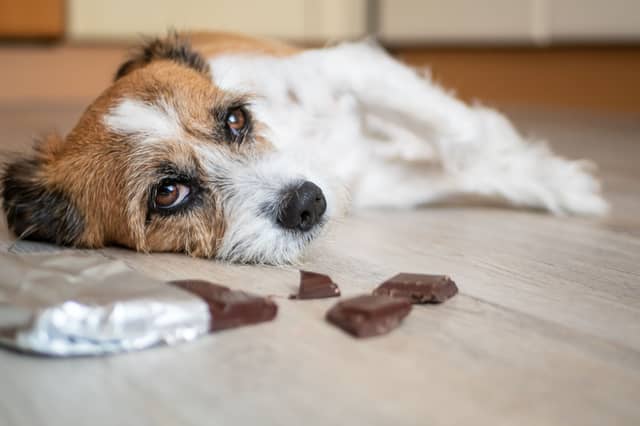

Dogs and chocolate don’t mix - here’s why and what you should do if the worst happens.
With Easter just around the corner there will be large amounts of chocolate around most households - and that can be bad news for our four-legged friends.
Chocolate cause serious issues for dogs, so Catrin George, Animal Wellbeing Specialist at Animal Friends Pet Insurance has teamed up with partner vet, Dr Samantha Webster, Director of Clinical Operations at Joii Pet Care, to shares insights on the different types of chocolate, the dangers they present and what you should do if your dog starts to show symptoms of poisoning.
Here’s what they had to say.
Why is chocolate dangerous to dogs?
Chocolate is made from cocoa, and within this cocoa is a chemical called theobromine. Dogs are unable to break down this chemical unlike humans, and the slower rate of metabolism can have drastic effects on their bodies.
Whilst all chocolate contains theobromine, the impact of ingestion depends on both your dog’s breed and weight and also the type and amount of chocolate. A toxic dose of theobromine could be as low as 20 mg per kg, so it is worth remembering that a small dog could be poisoned by a much smaller amount than a large dog.
What chocolate is worst for dogs?
Different types of chocolate have different levels of danger to dogs.
White chocolate
Containing no cocoa solids, you may wonder whether white chocolate is less harmful to dogs. While it does contain less amounts of theobromine, it is still not safe to give to your dog.
White chocolate contains the least amount of theobromine of all the chocolate types, approximately 0.9 mg per 100g. However, other ingredients in white chocolate could prove fatal for your pup, including cocoa butter, butterfat and milk solids as well as a considerably higher concentration of sugar.
So, don’t be tempted to give your dog a piece of white chocolate as these other ingredients are toxic and could cause illness in your dog.
Milk chocolate
The most popular type of chocolate, milk chocolate, should also be kept away from your dogs.
Classic milk chocolate will contain cocoa solids as well as cocoa butter and other ingredients such as milk and sugar. Whilst these work to water down the toxic theobromine, levels still typically range from 150 to 220 mg per 100g, meaning it still poses a serious threat to your dog and should be avoided at all costs.
Dark chocolate
With high levels of cocoa, dark chocolate can be lethal to dogs.
Cooking chocolate and dark chocolate contain the largest amounts of cocoa and have extremely high levels of theobromine. It is thought to range between 450 to a seriously high 1600 mg per 100g. This makes it extremely dangerous for dogs and possibly fatal, even if only a small portion is consumed.
What are the symptoms of chocolate poisoning in dogs?
It can take several hours for symptoms to appear. Typically, they can develop any time between 4 and 24 hours after consumption so it is important to spot them as soon as they occur.
Tell-tale signs depend on the amount of theobromine ingested. At lower doses around 20 mg per kg, the usual symptoms include:
- Hyperactivity or irritability
- A sore and tender stomach
- Increased urination
- Vomiting
- Diarrhoea
As the dosage increases, the symptoms will generally be more serious. At around 40 mg per kg, cardiac symptoms may present themselves. Look out for:
- Rapid breathing
- Racing heart
- Heart arrhythmias (heart rhythm problems)
- High blood pressure
If your dog has consumed large quantities of chocolate, and around 60 mg per kg of theobromine, they may have neurological effects, such as:
- Muscle tremors or twitching
- Seizures
- Warm to touch
Larger doses will be increasingly serious, with fatalities having been recorded around 200 mg per kg, or as a result of complications occurring from the other effects. This means acting fast is important.
What should you do if you suspect your dog has eaten chocolate?
If you know your dog has eaten chocolate, you should contact your vet immediately and not wait until signs and symptoms start to appear. If you are unaware of any consumption, but notice these symptoms start to present themselves, contact your vet.
It is important to gauge roughly how much chocolate has likely been consumed as well as the type of chocolate, as this will help the vet understand the severity and how to treat the dog.
Comments
Want to join the conversation? Please or to comment on this article.