
Creating a Dog Safe Kitchen: Here's how dog proof a kitchen with a dog - and the foods they shouldn't get their paws on
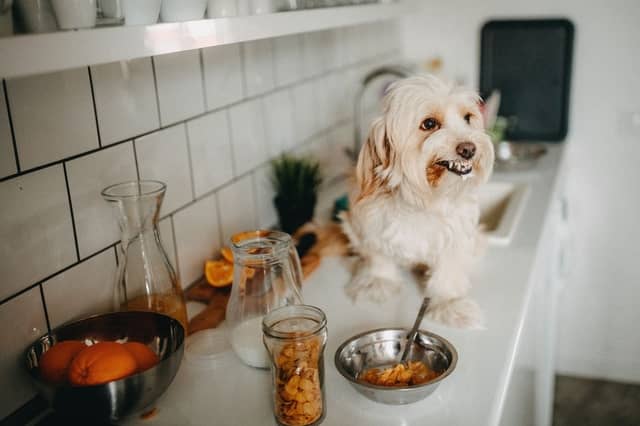

Following this advice should make it unlikely that your dog will come a cropper in your kitchen.
Many dogs are naturally greedy creatures who will need little excuse to root around for food in our kitchens.
An estimated 12 million UK households now own a dog and some newer owners may be unaware that kitchen features and cupboard ingredients could be a hazard to pups - from rubbish bins to raw potatoes.
To help out Darren Watts, Showroom Design Director at Wren Kitchens, Veterinary Surgeon at PetPlan, Brain Faulkner, and Dr Emma Scales-Theobald PhD from Canine Cottages, advise on how to dog-proof your kitchen.
Here are their tips.
Integrate food storage and rubbish disposal
Whilst most households have a free-standing bin, consider incorporating rubbish disposal into cupboards or storage.
Dogs can be attracted to the smell of food and scraps within your rubbish bin, leading them to rummaging and creating mess, or worst-case scenario, hurting themselves on sharp objects in the process. Look to integrate bins into your cabinetry to not only keep your dog safe but create extra space within your kitchen and maintain a sleek design in your space.
Create a designated dog section
To separate food preparation and dining areas from your dog’s space within the kitchen, consider creating a designated area for your pooch.
A clever design idea is to integrate dog food and water bowls into the side of a kitchen unit to avoid spillage or tripping over loose bowls. You can also create an empty space below your worktop to place the dog bed in to create space and reduce obstacles, to limit kitchen traffic. This design hack is exceptionally good for awkwardly shaped kitchens or smaller kitchens, where space is limited.
Additionally, you can store everything in one easy and convenient location. Stack pouches or dog treats vertically to save space. If your pet is taking any medication daily, use a pill organiser marked with days of the week to help keep track.
If your kitchen has a pull out bin drawer, swap the rubbish bin for a large container and store dry cat or dog food in here with a scoop.
What foods need to be kept away from dogs?
Whilst many know the likes of chocolate, grapes and raisins are toxic for dogs, there are a number of surprising everyday foods you should keep far away from dogs in safe storage:
Chives and onions
These kitchen staples can be harmful for your pooch. These are part of the Allum family which is toxic for dogs because they contain a toxin called organosulfides, which can harm your dog’s red blood cells.
Avocado and Guacamole
Although avocado is a nutritious ingredient for humans, these contain persin, which can cause severe vomiting and diarrhoea in your dog. The avocado pit can also be a choking hazard.
Raw potato
A cupboard staple in many households, this root vegetable is toxic for our dogs, as it contains solanine, which can be very toxic, even in small quantities.
Cherries, Peaches and Plums
These delicious fruits contain cyanide and are a choking hazard. It is the seeds and pits of apples, apricots, plums and cherries that contain cyanide, which in large doses can cause vomiting, an irregular heartbeat and possibly seizures.
Lactose
Most dogs are in fact lactose intolerant, and so should steer clear of the likes of milk, cream, and ice cream. Lactose can cause diarrhoea, bloating and abdominal discomfort.
Macadamia nuts
Fatty foods in general can be harmful for dogs as they can cause pancreatitis, a life threatening illness. The high fat content of macadamia nuts makes them poisonous for dogs. Symptoms of poisoning include vomiting, diarrhoea and lack of coordination.
Comments
Want to join the conversation? Please or to comment on this article.