
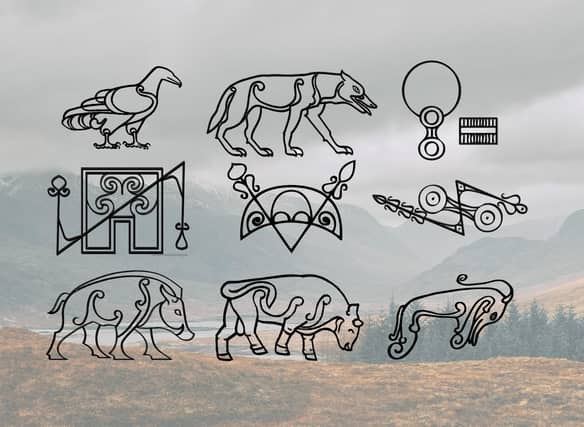

The Picts are famous for erecting majestic standing stones that feature enigmatic symbols. While located across many regions of Scotland, we know areas like Aberdeenshire acted as one of the chief heartlands for northern Picts and this heritage is reflected even in the modern place names used today.
The Picts’ expertly carved symbol stones, according to scholars, may have served as territorial markers, represented Pictish names and ranks, or recorded marriage treaties. Pictish symbols are divided into three groups; Animal, Geometric and Everyday Object symbols, they usually occur in pairs and there are roughly 50 documented symbols.
Some historians suggest that the symbols predate their existence on stones and may have been used for tattoos as was typical with Pictish tribes. Ultimately, our knowledge of Pictish culture is limited to modern scholars’ interpretation, so here are fourteen Pictish stone symbols and their meaning according to them.
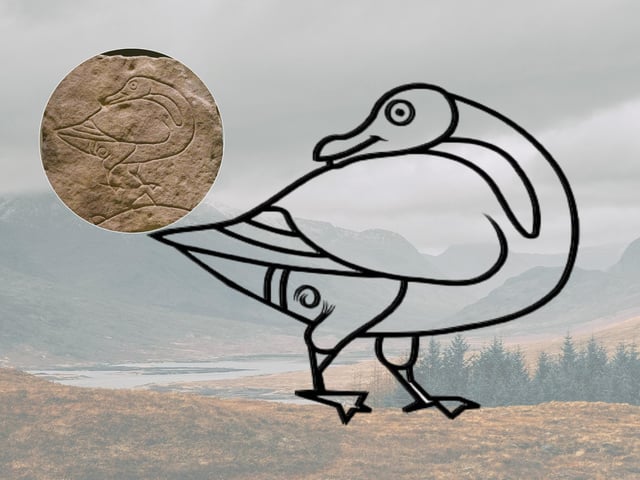
9. Pictish Goose
The Goose (or Duck) is a rare Pictish symbol that dates to the 5-6th century. Its meaning to the Picts is uncertain as not only is the design not common but as the region we know now as Scotland assimilated from Pictish to Gaelic this caused the Pictish language (along with its oral knowledge) to be lost. Interestingly, some ancient Celts saw the Holy Spirit not as a white dove but as a ‘wild goose’, perhaps there’s a connection. Photo: via WikiCommons and Canva Pro
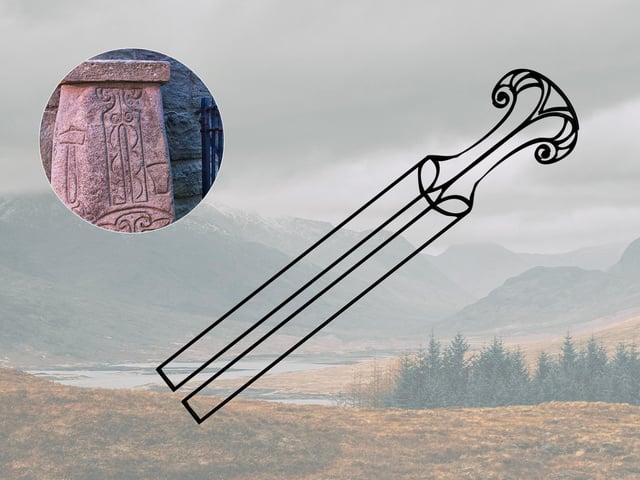
10. Ardlair Tuning Fork
This Pictish design is thought to be a tuning fork but historians debate if it is actually a broken sword. The tuning fork may represent how the Picts used such tools with hammers (another Pictish symbol) to crack open stones, which would make sense given they were expert stone carvers. If the symbol actually depicts a broken sword then it could represent the death of a warrior. Photo: via WikiCommons and Canva Pro

11. Strathpeffer Eagle
This Pictish stone sits on a brae at Strathpeffer in Ross and Cromarty. Some say it represents a heraldic crest like that of the Munros. After the Mackenzies won a bitter feud against the Munros, it is said they set up the Eagle Stone as a memorial to their fallen clansmen as the eagle is a component of their crest. However, the stone existed long before this battle so it is a loose connection. Photo: via WikiCommons and Canva Pro
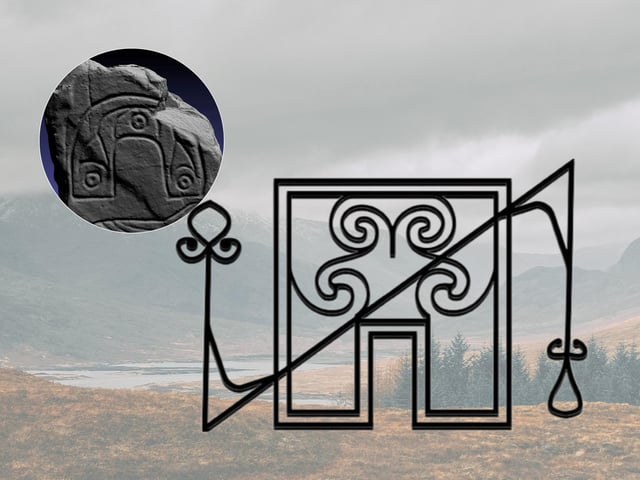
12. Pictish Arch
This symbol is described as an arch, bronze collar or horseshoe. Some scholars believe that, if a horseshoe, the symbol is one of good luck. Others suggest that the arch-shape could be depicting a rainbow which is also connected to good fortune. The ‘bronze collar’ is a type of necklace associated with the Bronze Age, it may have been a symbol of wealth or have a pagan connection. Photo: via WikiCommons and Canva Pro