
Inside the rare Gaelic phonebook that lists the nicknames of Scottish islanders
Almost 50 years old, it was the first phonebook of its kind - and went on to inspire others across the islands.
It lists names, landline numbers and the all important nicknames too - from Zebo, Bimbo and Dolly Droggy to Ginger Maclennan.
The phonebook, which was published in 1977 for residents of Ness in the Isle of Lewis, has been listed among 100 great Gaelic objects given its importance to the community and the way it saw itself.
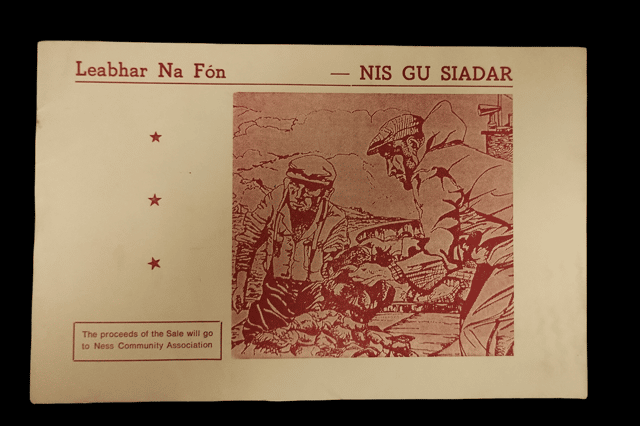

The nicknames were listed partly to distinguish between the many Morrisons, Macleods and Macdonalds in the Ness community.
But their inclusion also reflected the long-standing custom across the Gàidhealtachd of people using nicknames to relate to each other, said Anna MacQuarrie, lead researcher on the 100 Gaelic objects project.
The project has re-examined items from the national collection to better illuminate and record their importance in Gaelic culture.
Ms MacQuarrie said: “Nicknames were sometimes a physical description, but not only that. It might be something that reflected a story about a person or their family.
“The Ness phonebook was the first of its kind made for a really, really strong and confident community. It is a great encapsulation of a very distinctive Gaelic culture.”
John Macleod of 14 Ardbroc was also known as Tigh a’Ghruagain Zebo, with Zebo a type of polish then popular for cleaning a hearth or a grate. Why he was called that is a story only the community will know.

The phonebook went on to inspire other communities to create similar directories. One community in the west of Lewis also recorded the ear markings of the sheep, along with the phone numbers and nicknames of their owners.
Of the Ness phonebook, Ms MacQuarrie said: “The phonebook was created by the community themselves, serving a need that was developing and doing it in a way which suited them and made sense to them.
“For me, one of the most interesting things is that although we can treat it as a historic object, the phonebook is very much a living thing as well. The phone book is still in production and there have been quite a few editions of it since 1977.
“One was produced just pre-Covid and the nicknames are still there. You can see the continuation - a lot of the names in the 1977 book, you will see the names reappearing. So that connection is very much alive and present still.”
Ms MacQuarrie and her colleagues travelled to Lewis to speak to the community to get the best possible information about the phonebook and other Gaelic items in the collection as part of the project Tha sgeul ri innse - or ‘there’s a story for the telling’. A trip to Harris was also made.
Ms MacQuarrie said: “The community engagement sessions were really vital to ensure that myself and my colleagues weren’t just making assumptions about what we knew, but that we were really understanding the objects from the perspective of the people and the community to which it belonged to.”
Other objects examined for the project include the oldest known bagpipe chanter, a glass bottle associated with the sinking of the Iolaire and a framed Gaelic proclamation from 1888 aimed at protestors attempting to reclaim croft land at the farm of Aignish in Lewis.
Comments
Want to join the conversation? Please or to comment on this article.