


Dalry is one of the most popular residential areas of Edinburgh and home to a range of independent shops, restaurants, cafes and pubs.
Historians reckon the name comes from the Scottish Gaelic phrases ‘dail ruigh’ or ‘dail rìgh’ – meaning ‘place of the fields’ or ‘king's field’ respectively.
In the early 14th century the land was owned by William Bisset and became home to the first paper mill recorded in Scotland, with a history stretching back to at least 1478.
The Dalry Mill produced paper for Edinburgh’s printing and publishing businesses until the middle of the 18th century.
In the 17th century Dalry remained outside the old city walls and was part of the agricultural estate of Dalry House, constructed in 1661 by the Chiesley family, and remained largely undeveloped for the next two centuries.
The house was sold to the Walker family in around 1790, then ended up in the hands of the Scottish Episcopal Church in 1870, when it was used as a teacher training college and by the Edinburgh and Leith Old People's Welfare Committee until its closure in 2002.
It wasn’t until the 19th century that serious development transformed Dalry, when a mix of traditional tenements and terraced ‘colonies’ were built to house workers required by local industry, including the railway, the Fountain Brewery, the Caledonian Distillery, the North British Rubber Company's Castle Mill and the Grove Street Biscuit Factory.
To deal with the surging demand for housing, in the late 19th century Scottish businessman Sir James Steel bought three large areas of ground to construct major housing projects – the Caledonian, Downfield and Murieston developments.
During the Victorian and Edwardian eras, a number of well known landmarks were added, including the Dalry Swim Centre and the Haymarket Cinema (now a tattoo parlour).
Modern day Dalry is primarily a residential area, just 10 minutes walk from Princes Street, centred around Dalry Road, which has numerous shops, restaurants and small businesses.
Almost all the industry has now gone, replaced by housing – the most recent major development being Dalry Gait in the early 21st century.
Here are 29 pictures to take you back to the Dalry of the the 1950s and 1960s.
Make sure you don't miss a moment of breaking news from across Scotland by signing up to our free newsletter here.
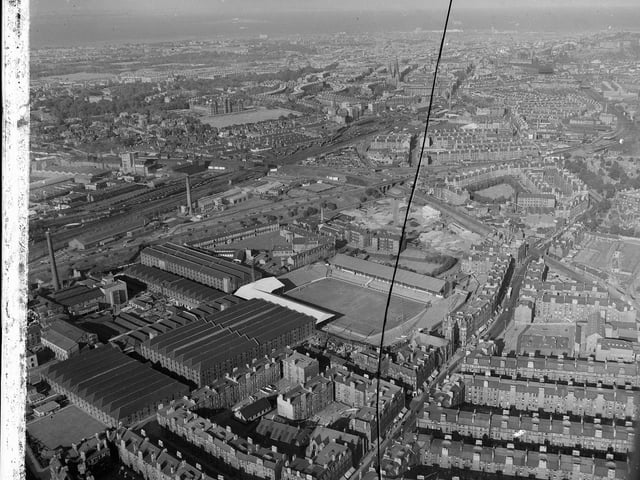
13. Bird's eye view
An aerial picture of Gorgie Road leading onto Dalry Road with the Hearts football ground in foreground and looking over to the West End in November 1961. | Iconic Media
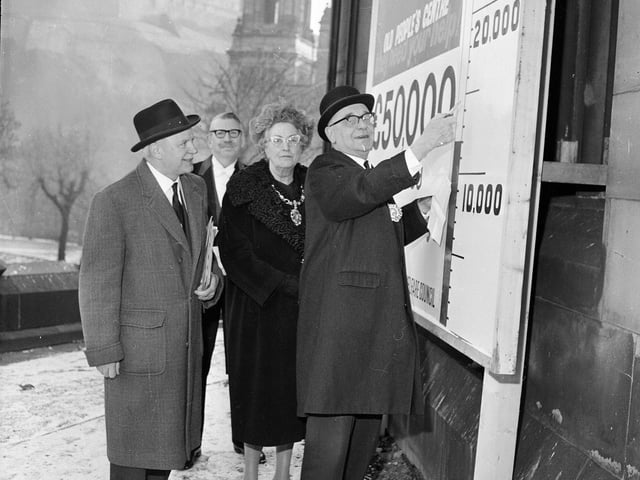
14. New total
The Lord Provost and Lady Weatherstone at the Dalry House fundraising board in December 1964. | Iconic Media
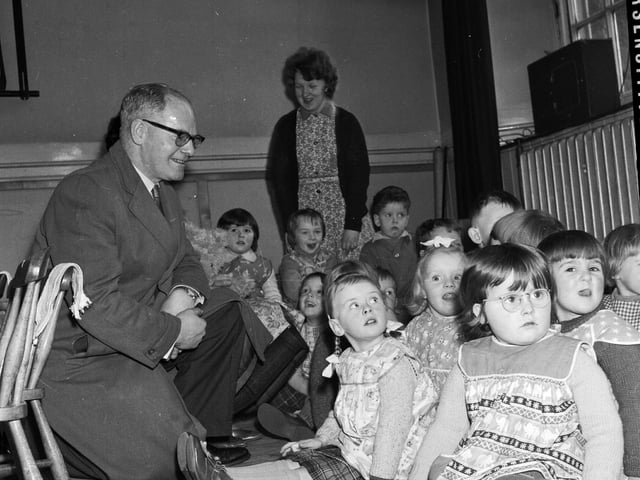
16. Chilly day at school
Baillie Donald Swanson with some of the children at Dalry Primary School which was suffering problems to its heating system in January 1962. | Iconic Media