
'Breath of fresh air': Inside a Scottish GP surgery that has successfully ended the 8am rush
We take a look inside a Scottish GP surgery which is doing things differently - and patients seem to love it.

It is a shared experience across the country - the dreaded 8am rush for a GP appointment.
Plenty of politicians have pledged to end this unpleasant aspect of going to see the doctor, but as of yet all of them have failed.
But one GP surgery has already banished the 8am rush. It has also done away with receptionists triaging patients.
In fact, patients at Newfield Medical Practice in Dundee are actively encouraged not to call first thing in the morning. Instead they can call whenever suits them best, and a GP will answer the phone directly.
The Scotsman went to visit the surgery in the Whitfield area of the city to see how things are being done differently - and for the better.
“If a patient registers with us, the first thing we advise is not to phone at 8am in the morning,” said business manager David Ramsay.
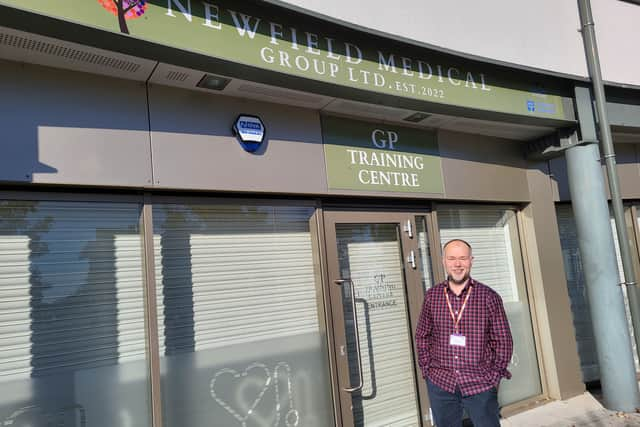

“If I phone my GP practice, I have to phone at 8am, then wait in a queue, and hope. But here the patients can phone any time between 8am and 6pm, and they will have a GP answer the phone who can speak to them directly.
“The GP takes all the details and decides what the best course of action is, and if that is a routine appointment, the GP can arrange that themselves.
“They take the decision on what the best approach is for the patient.”
Dr Rebecca Forrester is the clinical lead at Newfield Medical Practice. As well as making things easier for both doctor and patient, she said she believed this way of working was bringing back the traditional family doctor.
“If a patient phones looking for a sick line, or for some more medication, or just a quick chat for some advice, we can deal with that straight away rather than putting them into the long process of sending messages back and forth and all the frustration that comes with it,” she said. “It hugely improves access and helps us get to know our patients better.
“We all work together. So for instance, I might pick up the phone to an old lady and the doctor opposite me can say ‘I spoke to her yesterday, here is the story’.

“That gives patients continuity and gives you as a doctor a better understanding of your patients. It is more of a family doctor approach.
“In the last few years patients have had fragmented primary care as everything has been taken out of general practice, and patients don’t like that - they want a family doctor.”
Even the feel of the building is very different from a normal GP surgery.
The surgery shares a building with other community services such as social work. There is a cafe on site where customers can pay what they are able, and where they can often speak to a social prescriber. There is also a food larder for those who need an extra helping hand filling their kitchen cupboards.
Even their website feels different - the practice has seven GPs and each one has their specialities and their working days listed online.
It is paying off. Dr Forrester said: “The patients here don’t start off feeling like they’ve got to fight for an appointment, fight to get heard, fight not to be fobbed off or told to call back again tomorrow. We have had very few complaints.
“We thought at the beginning that people would abuse the idea of having a doctor on the phone, but they don’t.”
Mr Ramsay added: “At my last practice, the biggest gripe patients had was ‘I was 40th in the queue, it took an hour and a half to be answered, and then there were no appointments’. We try to educate our patients to call anytime, so we really don’t have an issue with our phones backing up.”
There are other services on offer at this surgery as well, including a drug recovery service, a vulnerable access clinic and its own GP training centre.
The GP training centre is almost a complete replica of the main surgery itself, and it allows medical students from Dundee and St Andrews universities to get real-life experience.
Mr Ramsay said: “It is a breath of fresh air, it really is. We are the only practice in Scotland that has a training [facility] where up to six students get their own room and their own patients.”
The reasons why this medical practice can work differently than most others in Scotland actually happens behind the scenes.
It runs on a co-operative model, giving everyone a say in how it is run. Any profits are reinvested back into the surgery itself.
Dr Forrester said: “When we were setting up the practice, we needed to think about the big issues affecting GPs, which are recruitment, training and sustainability.

“New GPs want a different type of model, which is where the co-operative model works quite well. It provides more security.
“The old GP model is a partnership model where the partners had full liability for the practice. You’re not taught business at medical school and all of a sudden you’re taking on a partnership. Creating a different business model is more attractive for young doctors coming in.
“We have a board of directors which steps down at the end of the year. So if a GP is struggling with personal issues at home and can’t put the energy into the role like they normally would, they can step down from that decision-making role and still carry on.
“But if you are a partner and struggling at home, you still have to be a partner and make all those decisions.”
The changes that have been made at this medical practice in recent years are already proving to be a hit with the local community. In 2020, the practice had 1,800 patients, but that has grown to 7,500. The centire is looking to hire an eighth GP to help deal with the growing patient list.
Mr Ramsay said: “We get quite a few patients registering from other practices when they find out how we operate. We are the only practice in the city that has recently expanded its boundaries.
“I think that is evidence that what we’re doing is working.”
Ending the 8am rush for a GP appointment is becoming a political football in the run up to the 2026 Scottish Parliament election. Both the SNP and Scottish Labour, who are polling first and second, say they will consign this hated experience to the history books.
Last weekend, First Minister John Swinney unveiled his latest plan at the SNP conference in Aberdeen.
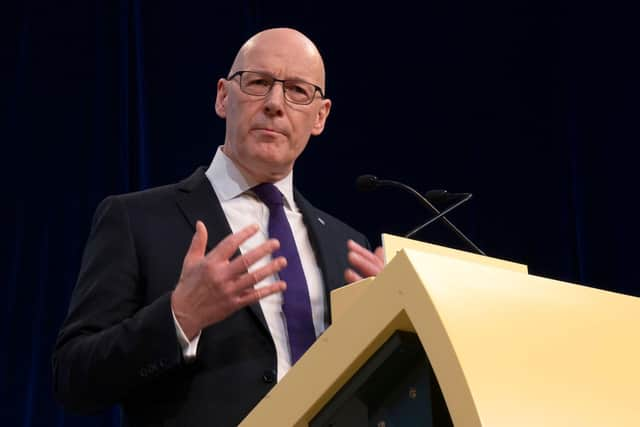
His proposals would see 15 walk-in GP surgeries created across the country. These surgeries would be open from noon until 8pm seven days a week and provide around one million extra appointments annually.
So what do the staff at the surgery that has already done away with the 8am rush think about his latest proposal?
Dr Forrester said: “I think it will be very expensive and will further fragment general practice because it moves patients away from their family GP.
“It will be difficult to run it with GPs, so it will be run by advanced nurse practitioners, people who purely work in out-of-hours services who are more deskilled in general practice.
“In rural areas it might work, but it’s a very top-down approach without any consultation. It’s a quick fix, but it’s not a quick fix.”
Comments
Want to join the conversation? Please or to comment on this article.