
Wild goat survey results throw culling incentive into doubt, group warns
Local community groups and conservation company Oxygen Conservation have defended the need to cull
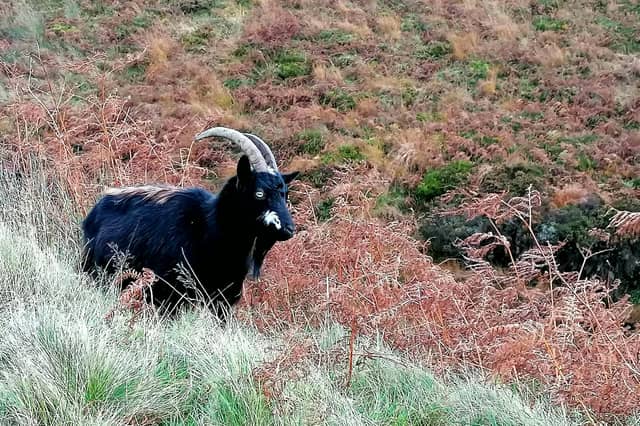


The number of wild goats roaming the hills near the Scottish-English border is far lower than previously estimated, according to a new survey, raising fresh concerns about the future of how the herd is managed.
A new study commissioned by the Wild Goat Conservation Trust (WGCT) recorded just 255 animals across the uplands between Langholm and Newcastleton, a fraction of the 1,000 or more previously believed to inhabit the area.
The findings have reignited a debate over the management of the herd, following a series of culls by landowners seeking to protect tree planting and other nature restoration projects.
Conservation bodies, including the company Oxygen Conservation, which owns land in the area, defended efforts to reduce goat numbers, arguing that too much grazing can prevent vegetation from regenerating and undermine environmental projects.
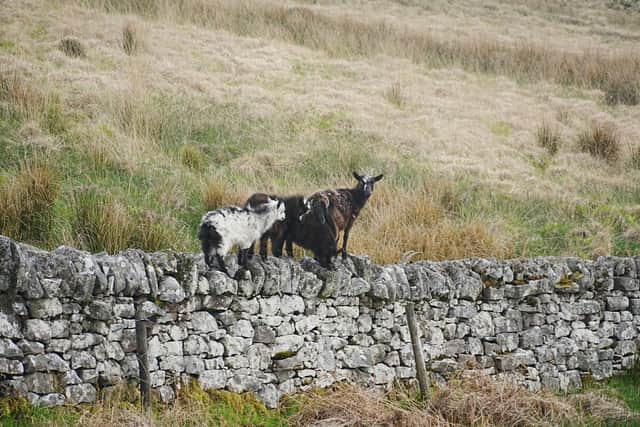
The WGCT survey involved ten field ecologists covering more than 100 miles of routes and scanning about 50,000 acres of hill country. It recorded 255 goats, with 94 per cent found within a designated Site of Special Scientific Interest (SSSI).
Of the total, it said 215 were recorded on the 10,500-acre Tarras Valley Nature Reserve, managed by the community-owned Langholm Initiative, while only 15 were observed across the 11,000-acre Blackburn and Hartsgarth Estate, owned by Oxygen Conservation.
The Langholm Initiative, however, questioned the latest figures, which it claimed were counted during an “unauthorised ground-level goat count” and that none of the main landowners were informed in advance.
It said the resulting count appears “oddly low” compared to the extensive Tarras Valley count and monitoring of the previous year, during which some 900 goats were documented.
A spokeswoman for the Langholm Initiative said the WGCT’s numbers “do not reflect the reality on the ground as we know it.”
She added: “However, should the figures prove accurate, it would be a welcome sign goat numbers may be reaching a manageable, more sustainable level.”
Oxygen Conservation also disputed the WGCT figures. It pointed to its thermal drone surveys of Blackburn and Hartsgarth which found around 138 goats in 2024, 237 in 2025 and 113 in 2026.
The company said it culled 175 goats on the estate last year as part of its aim of returning the population to around 20, the level it first recorded in 2023, “when the impact was limited and manageable across the landscape.”
The company said it continues to actively collaborate with our neighbours by offering to complete a coordinated thermal survey across its land and Tarras Valley to get a thorough understanding of the wider population and that it continues to manage the goats in line with NatureScot advice and its own survey data.
Dr Shirley Goodyer, an adviser to the WGCT, said that although about 200 goats were understood to have been culled in the last year, this was unlikely to explain the discrepancy between the previous estimates and the new count.
“The population is clearly nothing like as strong as many had speculated,” she said.
Dr Goodyer called for a coordinated management plan based on scientific evidence, warning that piecemeal culling could put the herd's long-term survival at risk.
“Intensive control in one area risks displacing goats on to another,” she said.
“These animals have roamed these hills freely for centuries. Neither the WGCT nor the public, who have shown huge concern, want to see this end simply because land has changed hands.”
The herd attracted national attention last year when a Scottish Parliament petition calling for protected status attracted more than 22,000 signatures. The petition was ultimately rejected.
Comments
Want to join the conversation? Please or to comment on this article.